
Overview
Buddhism grew out of the teaching of Siddhārtha Gautama, a wandering teacher in northeastern India whom his followers call the Buddha, "the awakened one". He lived some time between the 6th and 4th centuries BCE. Buddhists hold that ordinary life is marked by suffering, that craving and ignorance drive it, and that it can end, in nirvāṇa, through a path of ethics, meditation and wisdom. Most also accept karma and rebirth. Buddhism does not centre on a creator god; Buddhists take refuge in the Three Jewels: the Buddha, his teaching (Dharma) and the community (Saṅgha). Spreading across Asia, it took many forms, usually grouped as Theravāda in Sri Lanka and mainland Southeast Asia, Mahāyāna in East Asia, and Vajrayāna in Tibet and Mongolia. Since the late 19th century it has also found followers in the West.[2, 4, 8, 11–14]
History

The Buddha and the first community c. 5th century BCE
Buddhist tradition tells of a prince of the Śākya clan, born at Lumbini in the Himalayan foothills, who gave up a comfortable home to seek an end to suffering. After years of austerities he is said to have awakened under a fig tree at Bodh Gayā, preached his first sermon in a deer park near Vārāṇasī, and taught for some 45 years before dying at Kuśinagara at about 80. Historians accept that such a teacher lived but disagree on when: older scholarship favoured c. 563–483 BCE, while many now place his death around 400 BCE. He was one of many śramaṇas, wandering ascetics who rejected Vedic ritual authority.[15–18]
Councils, schools and Ashoka c. 400 – 1st century BCE
By tradition, the Buddha's senior disciples met soon after his death to recite his teaching, and a second council a century later dealt with disputes over monastic rules. The community gradually divided into many early schools, conventionally counted as eighteen. Ashoka, a Mauryan emperor of the 3rd century BCE, remorseful after a bloody war, promoted a moral code he called dhamma and favoured the saṅgha. Sri Lankan chronicles credit his son Mahinda with bringing Buddhism to the island, where, tradition says, monks first wrote down the Pali canon in the 1st century BCE.[19–23]
The Great Vehicle and the road east c. 1st century BCE – 9th century CE
Around the turn of the Common Era new scriptures appeared in India that called their path the Mahāyāna, the "Great Vehicle", and urged followers to become bodhisattvas, who seek awakening for the sake of all beings. Thinkers such as Nāgārjuna gave these ideas philosophical form. By way of Central Asia, Buddhism reached China in the 1st or 2nd century CE, Korea in the 4th century and Japan in the 6th, where it adapted to local cultures and produced new schools such as Chan (Zen) and Pure Land. In India, monasteries such as Nālandā drew students from across Asia.[24–28]
Tantra, Tibet and loss in India c. 7th – 13th century
In the later 1st millennium CE a third movement, the Vajrayāna or tantric Buddhism, took shape in India, offering a swifter path through ritual and mantra. Tibet took up Buddhism from the 7th and 8th centuries and later passed it to the Mongols. From about the 11th century Theravāda, based in Sri Lanka, became the main form in Burma, Thailand, Cambodia and Laos. In India Buddhism lost patronage and ground, and the sack of monasteries such as Nālandā by invading armies around 1200 hastened its end there; only small pockets survived.[29–32]
Revival, upheaval and a global faith 19th century – today
Under colonial rule, Buddhists in Sri Lanka and elsewhere answered Christian missionaries with a revival, and in 1893 Asian teachers addressed Chicago's World's Parliament of Religions. In the 20th century communist regimes in Mongolia, the Soviet Union, Vietnam, North Korea, Chinese-ruled Tibet and, most brutally, Cambodia closed monasteries and persecuted monks; the 14th Dalai Lama escaped to India in 1959, and Tibetan refugees and teachers carried their tradition to India, Europe and North America. In 1956 B. R. Ambedkar led a vast crowd of Dalits into Buddhism at Nagpur, starting a revival in the land of its birth.[33–37]
Key moments
- c. 528 BCEThe Buddha's awakening · Bodh Gaya, Bihar, India
- c. 480 BCEThe First Buddhist Council · Rājagṛha, India
- c. 260 BCEAshoka's edicts · Mauryan Empire, India
- c. 450 CENālandā, the great monastery · Nālandā, Bihar, India
- c. 527 CESilla accepts Buddhism · Gyeongju, Silla (Korea)
- 845 CEThe Huichang suppression of Buddhism · Tang China
- 1868 CEMeiji Japan separates kami from buddhas · Japan
- 1893 CEParliament of the World's Religions · Chicago
- 1945 CEPancasila: Indonesia's five principles · Jakarta, Indonesia
- 1956 CEAmbedkar takes refuge in the Buddha · Nagpur, Maharashtra, India
- 1979 CEInsight meditation goes global · Burma to Massachusetts
Beliefs
The Four Noble Truths · चत्वारि आर्यसत्यानि
catvāri āryasatyāni, "four truths of the noble ones"
By tradition taught in the Buddha's first sermon: life is marked by suffering or unsatisfactoriness (duḥkha); suffering arises from craving; it can cease; and a path leads to its cessation. That path is the Noble Eightfold Path, from right view to right concentration, grouped into three trainings: ethics, concentration and wisdom.[38–39]
Not-self · अनात्मन्
anātman (Pali anattā)
Buddhists hold that a person is a changing bundle of physical and mental processes, the five aggregates (skandhas), with no permanent soul at the core. Impermanence, suffering and not-self are the three marks of conditioned existence, and clinging to a fixed "I" is a root of suffering.[40–41]
Karma and rebirth · कर्म, संसार
karma, "action"; saṃsāra, "wandering"
Intentional actions shape what a being later experiences: good deeds bring pleasant results and harmful ones painful results, in this life or later ones. Beings are reborn again and again in saṃsāra, as gods, humans, animals or in lower realms. Buddhists understand this not as a soul moving between bodies but as a chain of causes driven by craving and ignorance.[42–43]
Nirvāṇa · निर्वाण
nirvāṇa (Pali nibbāna), "blowing out"
The goal of the path: the extinguishing of greed, hatred and delusion, and with them of suffering and rebirth, as a flame goes out. Buddhists say the Buddha reached it at his awakening, aged 35, and entered final nirvāṇa at death. It is described not as a place but as the absence of suffering.[44]
Bodhisattva and emptiness · बोधिसत्त्व, शून्यता
bodhisattva, "awakening being"; śūnyatā, "emptiness"
Mahāyāna Buddhists aim to become bodhisattvas, who vow to reach buddhahood in order to free all beings, practising perfections such as generosity and wisdom. Mahāyāna thinkers also teach that nothing has a fixed essence of its own. Theravāda keeps as its ideal the arhat, a disciple who has reached nirvāṇa.[45–46]
Practice

Refuge and the precepts
A person becomes a Buddhist by taking refuge in the Buddha, the Dharma and the Saṅgha. Lay followers commonly vow five precepts: not to kill, steal, commit sexual misconduct, lie, or take intoxicants. On observance days the devout may take on extra precepts, such as celibacy and not eating after midday.[47–48]
Meditation · भावना
Meditation, called bhāvanā or "cultivation", is central to the path. Teachers distinguish calming practice (śamatha), which steadies the mind in concentration, from insight practice (vipaśyanā), which looks into impermanence, suffering and not-self. Methods range from mindfulness of breathing to Zen sitting and Tibetan visualisation.[49]
Monks, nuns and giving · दान
Lay people support monks and nuns with food, robes and shelter; such giving (dāna) is held to earn merit that ripens in a better rebirth. Full ordination for women died out in Theravāda lands centuries ago; since 1998 some Sri Lankan women have received it again, against conservative opposition.[50–51]
Devotion and pilgrimage · पूजा
Buddhists honour images of the Buddha with flowers, lamps and incense, chant texts, and walk around stūpas, domed monuments that hold relics. The places of the Buddha's birth, awakening, first sermon and death have drawn pilgrims since ancient times, as do relic shrines like Kandy's Temple of the Tooth in Sri Lanka.[52–53]
Holy days
The year ahead
| Date | Holy day | Reckoned |
|---|---|---|
| 20 May 2027 | Vesak (Buddha Day) | Vaiśākha śukla pūrṇimā, the tithi at sunrise |
| 13 August 2027 – 15 August 2027 | Obon (Japan) お盆 | 13 August |
| 16 August 2027 | Ullambana (Ghost Festival) 盂蘭盆 | 15th day of the undefined lunar month, Chinese lunar calendar |
Vesak (Buddha Day)
Full moon of Vesākha (April–May)
For Theravāda Buddhists, the day of the Buddha's birth, awakening and death, held to have fallen on the same full moon. People visit temples, keep the precepts, hear sermons and give to the poor. In East Asia the Buddha's birthday is kept separately by bathing images of the infant Buddha.[54–55]
Uposatha · उपोसथ
New and full moon, often also the quarter moons
Observance days fixed by the moon. Monks gather to recite their monastic rules, while devout laypeople visit the monastery for worship and teaching and may take extra precepts for the day.[56]
Ullambana (Obon) · 盂蘭盆
7th lunar month (Aug–Sept); Obon in summer in Japan
East Asian festival for the dead, based on the story of the monk Maudgalyāyana, who freed his mother from torment by making offerings to monks. Families make offerings for their ancestors; in Japan they welcome ancestral spirits home and visit graves.[57]
People

Siddhārtha Gautama, the Buddha · सिद्धार्थ गौतम
founder · 5th century BCE (debated)
Also called Śākyamuni, "sage of the Śākyas". Buddhists regard him as the buddha of this age, with other buddhas before him and Maitreya still to come. The earliest Indian art evoked him through signs such as footprints or an empty seat; images in human form appeared around the 1st century CE.[58–59]
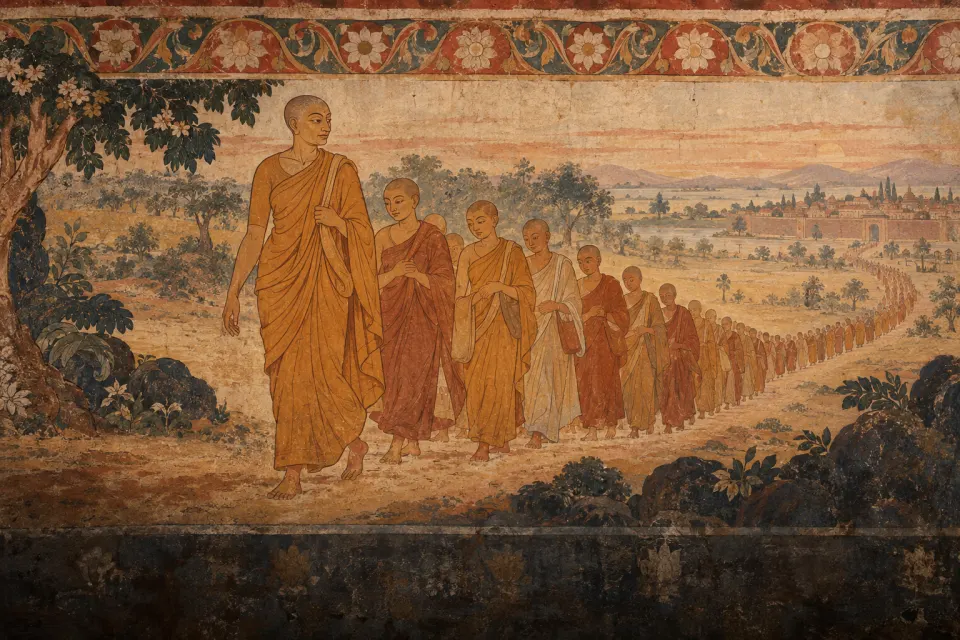
Mahāprajāpatī Gautamī · महाप्रजापती गौतमी
saint · 5th century BCE (by tradition)
The Buddha's aunt and foster mother, remembered as the first Buddhist nun. Tradition says that after three refusals she shaved her head and walked to Vaiśālī with 500 Śākya women; when Ānanda pleaded for them, the Buddha admitted women to the order under eight special rules.[60]

Ashoka · अशोक
ruler · 3rd century BCE
Mauryan emperor whose own inscriptions record his remorse after conquering Kalinga. He promoted an ethic of non-violence, truthfulness and respect for all sects, and marked the Buddha's birthplace with a pillar. Later Buddhist legend made him the model of the righteous king.[61]
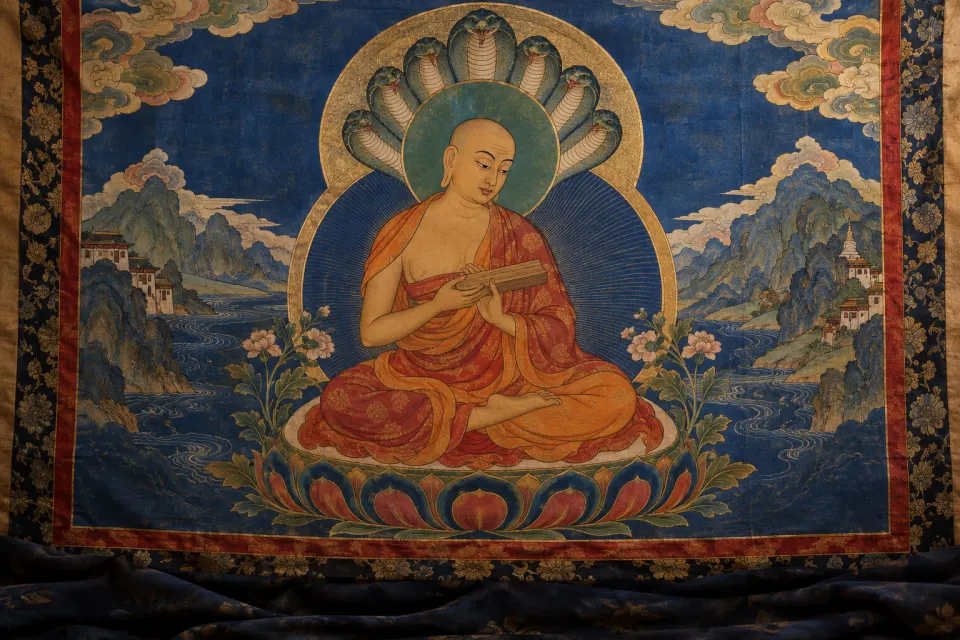
Nāgārjuna · नागार्जुन
scholar · c. 150–250 CE
South Indian philosopher and founder of the Madhyamaka, or "Middle Way", school. His Root Verses on the Middle Way argue that all things are empty of independent existence. Mahāyāna traditions in Tibet and East Asia honour him as one of their greatest teachers.[62]
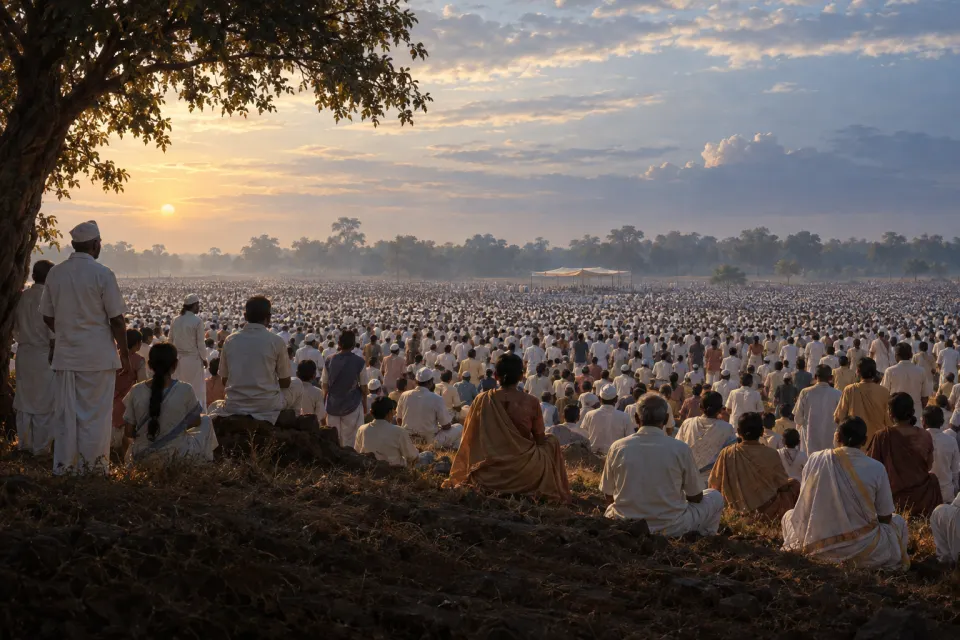
B. R. Ambedkar · भीमराव रामजी आंबेडकर
other · 1891–1956
Indian jurist born into the Dalit Mahar caste, who led the drafting of India's constitution. Seeing Buddhism as a path out of caste, he converted at Nagpur on 14 October 1956 with hundreds of thousands of followers and died seven weeks later. Millions of Dalits have since followed him.[63]
Scripture
Tipiṭaka (Pali canon)
written down 1st c. BCE (tradition)
The "Three Baskets" of the Theravāda: the Vinaya (monastic discipline), the Suttas (the Buddha's discourses) and the Abhidhamma (systematic doctrine). These Pali texts are among the earliest Buddhist sources, and Theravāda Buddhists regard them as the most authoritative.[64]
Dhammapada
A collection of 423 short verses in 26 chapters, part of the Khuddaka Nikāya of the Pali canon. Its sayings on the mind, conduct and the path make it one of the best loved of all Buddhist texts.[65]
Buddhacarita
1st–2nd century CE
"Acts of the Buddha", an epic poem in ornate Sanskrit by Aśvaghoṣa, telling the Buddha's life from birth to the sharing of his relics. Of its 28 cantos, 14 survive in Sanskrit; the rest are known from Tibetan and Chinese translations.[66]
Lotus Sūtra
c. 1st–2nd century CE
One of the most popular Mahāyāna scriptures. It teaches that the Buddha's many paths are really one vehicle and that all beings can become buddhas, and it deeply shaped East Asian Buddhism, especially the Tiantai (Tendai) and Nichiren schools.[67]
Places
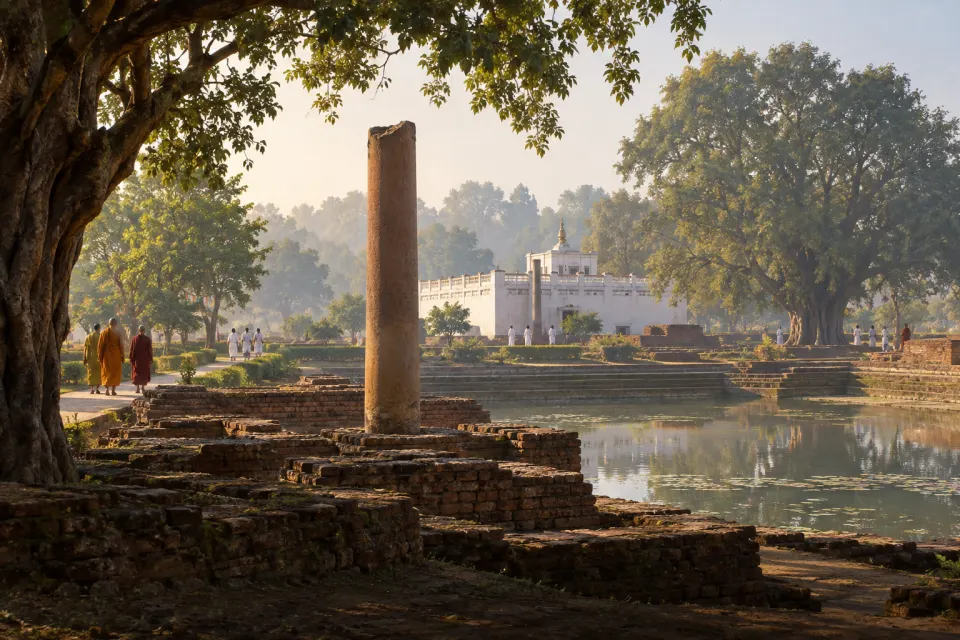
Lumbini
NPL · UNESCO World Heritage, 1997
The Buddha's birthplace by tradition, in southern Nepal. A pillar raised by Ashoka in 249 BCE bears an inscription naming the spot. The site is a UNESCO World Heritage Site.[68]
Mahābodhi Temple, Bodh Gayā
IND · UNESCO World Heritage, 2002
Where Buddhists believe the Buddha awoke, in Bihar, India. A Bodhi tree held to descend from the original grows beside the temple. The complex is a UNESCO World Heritage Site and the most important Buddhist pilgrimage place.[69]
Sarnath
IND · UNESCO World Heritage, 2026
The deer park near Vārāṇasī where, by tradition, the Buddha gave his first sermon. Its ruins include the Dhamek stūpa and an Ashokan pillar whose lion capital became India's national emblem. UNESCO inscribed the site in 2026.[70]
Kuśinagara (Kushinagar)
IND
The town in Uttar Pradesh where, Buddhists believe, the Buddha died and entered final nirvāṇa. With Lumbini, Bodh Gayā and Sarnath it is one of the four chief places of Buddhist pilgrimage.[71]
Where it spread
| Region | From | How |
|---|---|---|
| India | 480 BCE | The Buddha taught in the Ganges plain; his dates are debated |
| Afghanistan | 250 BCE – 1050 CE | Ashoka's edicts at Kandahar, then Bactria and Bamiyan; faded in the 11th century |
| Sri Lanka | 250 BCE | IND. Mission of Mahinda under Ashoka, as the island's chronicles tell it |
| Nepal | 250 BCE | Lumbini, the Buddha's birthplace; Ashoka's pillar there dates to about 249 BCE |
| Pakistan | 250 BCE – 1100 CE | Gandhara and Swat; faded after about the 11th century |
| Bangladesh | 200 BCE | Bengal's monasteries; today mainly in the Chittagong region |
| China | 65 CE | Earliest record: Prince Liu Ying's court |
| Uzbekistan | 100 CE – 900 CE | Termez monasteries in the Kushan era; faded after the Arab conquest |
| Vietnam | 190 CE | Luy Lâu, a Buddhist center by the late 2nd century |
| North Korea | 372 CE | CHN. Goguryeo, by tradition in 372; religion is state-controlled today |
| South Korea | 384 CE | CHN. Baekje; Silla followed in 527 |
| Cambodia | 400 CE | Funan; Theravada became dominant by the 14th century |
| Myanmar | 450 CE | Pyu city-states |
| Thailand | 550 CE | Dvaravati |
| Japan | 552 CE | KOR. Traditional date; some sources give 538 |
| Indonesia | 650 CE | Srivijaya, then Borobudur; an officially recognized religion today |
| Bhutan | 700 CE | Temples traditionally dated to the 7th century |
| Laos | 1353 CE | Lan Xang under Fa Ngum |
| Mongolia | 1585 CE | Erdene Zuu monastery; the Mongol court had adopted Buddhism in the 13th century |
| Malaysia | 1645 CE | Cheng Hoon Teng temple, Malacca; today mainly Chinese Malaysians |
| Russia | 1650 CE | Kalmykia and Buryatia, later Tuva |
| Taiwan | 1661 CE | CHN. Arrived with Han Chinese settlers |
| Singapore | 1819 CE | Chinese settlers; the largest faith in Singapore today |
| United States | 1850 CE | CHN. Chinese immigrants' temples from 1853; Japanese missions from 1899 |
| Australia | 1876 CE | LKA. Sinhalese on Thursday Island, then Japanese pearl divers |
| Brunei | 1900 CE | Chinese Bruneians |
| Canada | 1905 CE | JPN. First temple in Vancouver |
| New Zealand | 1970 CE |
Art & objects
Public-domain objects from museum collections. Select one to see it at the museum.
 Pensive BodhisattvaGandhara, 2nd-3rd century
 Bodhisattva AvalokiteshvaraCambodia, Angkor period, late 12th–early 13th century
 Maitreya BuddhaChina, Tang dynasty (618–906), dated 705
 Stupa ReliquaryGandhara, Kushan period, about 2nd century
 Buddhist God MahakalaTibet, 15th century
 Page from a Buddhist ManuscriptWestern Tibet, 13th/14th century
 BodhisattvaChina, Tang dynasty (618–906), c. 725/50
 Buddha HeadGandhara, 3rd century
 Buddhist Deity Vajrasattva with Bell (Ghanta) and Thunderbolt (Vajra)Tibet, 18th century
 Nehan: Death of the BuddhaJapan, late 17th/early 18th century
 Buddha Calling on Earth to WitnessNortheastern India, Bihar, Tetravan, Pala Period (750-1197), 800s
 Buddha of the Future (Miroku Bosatsu)Japan, Asuka period (538–710), late 600s
 Tantric Buddha Vairochana as VajrasattvaCentral Tibet, c. 1150–1200
 Votive Stupa with Four BuddhasIndia, Bihar, Pala period, 10th–11th century
Numbers
- Buddhists worldwide
- c. 324–531 million (2020 estimates)[9]
Pew counts c. 324 million people who identify as Buddhist (4.1% of humanity); the World Christian Database, counting more broadly, c. 531 million. Many East Asians mix Buddhist practice with other traditions.
National censuses
| Country | Year | Count | Share |
|---|---|---|---|
| India Buddhist | 2011 | 8,442,972 | 0.7% |
| Australia Buddhism | 2021 | 615,823 | 2.4% |
| Canada Buddhist | 2021 | 356,975 | 1.0% |
| United Kingdom (England and Wales) Buddhist | 2021 | 272,508 | 0.5% |
| New Zealand all Buddhism responses | 2018 | 52,779 | 1.1% |
Source: Australian Bureau of Statistics, Census of Population and Housing 2021, 'Religious affiliation in Australia' (Table 4), CC BY 4.0. Source: Office of the Registrar General & Census Commissioner, India, Census of India 2011, Table C-01 Population by religious community and its appendix, under the Government Open Data License – India. Source: Office for National Statistics licensed under the Open Government Licence v.3.0 Adapted from Statistics Canada, Table 98-10-0342-01 Religion by visible minority and generation status: Canada, provinces and territories, census metropolitan areas and census agglomerations with parts, released 2022-10-26. This does not constitute an endorsement by Statistics Canada of this product. Source: Stats NZ, 2018 Census, licensed by Stats NZ for re-use under the Creative Commons Attribution 4.0 International licence.
How we know
Dating the Buddha
No record from the Buddha's lifetime survives, and his teachings were passed on orally for centuries. Sri Lankan chronicles put his death in 544/543 BCE; once Ashoka's reign was fixed, scholars corrected this "long chronology" to about 486–483 BCE, while texts from mainland India imply a date about a century later. A 1988 symposium led by Heinz Bechert left the question open, and many scholars now favour about 400 BCE. Ashoka's 3rd-century BCE inscriptions are the earliest datable evidence for Buddhism.[72–73]
Common misconceptions
Myth The laughing, pot-bellied figure is the Buddha.
Fact That jolly figure is Budai (Hotei in Japan), modelled on a 10th-century Chinese wandering monk and later identified with Maitreya, the buddha to come. Images of the historical Buddha show a calm, usually slender figure, often seated in meditation.[74]
Myth Buddhists worship the Buddha as a god who created the world.
Fact Buddhists revere the Buddha as a fully awakened teacher, not a creator. Bowing and offerings before his image express honour and are believed to cultivate the mind and earn merit. Popular practice across Asia also seeks blessings and protection from buddhas, bodhisattvas and local gods.[75]
Myth All Buddhists are vegetarian.
Fact Practice varies. Theravāda monks may eat meat given as alms, provided they have no reason to think the animal was killed for them. Under the Mahāyāna stress on compassion for all beings, vegetarianism came to be seen as the ideal diet, and in China it became part of a monk's identity.[76]
Glossary
- Buddha · बुद्ध
- "Awakened one": one who has found the path to nirvāṇa and teaches it; above all, the title of Siddhārtha Gautama.[77]
- Dharma · धर्म
- The Buddha's teaching and the truth it describes (Pali dhamma).[78]
- Saṅgha · संघ
- The Buddhist community; in the narrow sense, the order of monks and nuns.[79]
- Arhat · अर्हत्
- "Worthy one" (Pali arahant): a disciple who has reached nirvāṇa and will not be reborn.[80]
- Stūpa · स्तूप
- A domed monument holding relics of the Buddha or a saint, walked around in devotion; in East Asia it took the form of the pagoda.[81]
- Sūtra · सूत्र
- A discourse presented as the word of the Buddha (Pali sutta).[82]
- Vinaya · विनय
- The monastic discipline: the code of rules for monks and nuns, forming one of the three "baskets" of the canon.[83]
- Śramaṇa · श्रमण
- A wandering ascetic of ancient India outside the Vedic priesthood; the Buddha and the Jain teacher Mahāvīra were both śramaṇas.[84]
- Merit · पुण्य
- Puṇya (Pali puñña): the good karmic fruit of wholesome acts such as giving to monks, keeping the precepts and meditating.[85]
Sources
Each statement above was checked against published sources; the verdict says whether it stood as written, was corrected or was hedged.
- VerifiedBritannica, Buddhism; EoR, Buddhism: Buddhism in India, via Encyclopedia.com; Stanford Encyclopedia of Philosophy, Buddha.
- VerifiedBritannica, Buddha; SEP, Buddha; Britannica, Buddhism.
- VerifiedBritannica, Pali canon; EoR, Buddhist Books and Texts: Canon and Canonization, via Encyclopedia.com.
- VerifiedInternet Encyclopedia of Philosophy, Buddha; EoR / Encyclopedia of Philosophy, Buddhist Philosophy, via Encyclopedia.com; Britannica, Theravada.
- VerifiedThe Met, Heilbrunn Timeline, Buddhism and Buddhist Art; Britannica, stupa; Britannica, Vesak.
- VerifiedBritannica, sangha; EoR, Nuns: Buddhist Nuns, via Encyclopedia.com.
- VerifiedBritannica, Buddhism; EoR, Buddhist Books and Texts: Canon and Canonization.
- VerifiedPew Research Center, The Global Religious Landscape: Buddhists; Britannica, Theravada; Britannica, Mahayana.
- HedgedPew Research Center, Buddhist population change; Pew, Why is Buddhism shrinking worldwide?; Zurlo, Johnson & Crossing, Status of Global Christianity, 2025, in the Context of 1900–2050, Center for the Study of Global Christianity, Go; Pew, Global Religious Landscape: Buddhists.
- VerifiedBritannica, dharmachakra; New Catholic Encyclopedia, Buddhism, via Encyclopedia.com.
- VerifiedSEP, Buddha; Britannica, Four Noble Truths; Britannica, Eightfold Path.
- VerifiedSEP, Buddha §4 Karma and Rebirth; Britannica, karma; The Met, Buddhism and Buddhist Art.
- VerifiedBritannica, Buddhism; Britannica, sangha; Encyclopedia of Buddhism, Precepts, via Encyclopedia.com.
- VerifiedEoR, Buddhism: Buddhism in the West, via Encyclopedia.com; EoR, World's Parliament of Religions; Pew, Buddhist population change; Britannica, Buddhism.
- VerifiedBritannica, Buddha; The Met, Buddhism and Buddhist Art; SEP, Buddha.
- VerifiedEoR, Buddhism in India; Britannica, Bodh Gaya; Britannica, Sarnath; SEP, Buddha; Britannica, Buddha; The Met.
- VerifiedBritannica, Buddhism; SEP, Buddha; EoR, Buddhism in India.
- VerifiedSEP, Buddha; EoR, Buddhism in India.
- VerifiedEoR, Buddhism in India; Britannica, Theravada.
- VerifiedEoR, Buddhism: An Overview, via Encyclopedia.com; Britannica, Theravada.
- VerifiedBritannica, Ashoka; Columbia Encyclopedia / EoR, Asoka, via Encyclopedia.com.
- VerifiedBritannica, Sri Lanka: Conversion to Buddhism; Britannica, Theravada; EoR, Buddhist Books and Texts: Canon and Canonization.
- VerifiedBritannica, Pali canon; EoR, Buddhist Books and Texts: Canon and Canonization, via Encyclopedia.com.
- CorrectedBritannica, Mahayana; New Catholic Encyclopedia, Buddhism, via Encyclopedia.com.
- VerifiedSEP, Nāgārjuna; Britannica, Nagarjuna.
- CorrectedEoR, Buddhism in China, via Encyclopedia.com; Britannica, Buddhism: Central Asia and China; Britannica, Buddhism: Korea and Japan; EoR, Buddhism in Korea; EoR, Buddhism in Japan; Asian Art Museum.
- VerifiedBritannica, Zen; Britannica, Pure Land Buddhism; EoR, Buddhism in China, via Encyclopedia.com; EoR, Buddhist Meditation: East Asian Buddhist Meditation.
- VerifiedEoR, Buddhism in India; UNESCO World Heritage Centre, Archaeological Site of Nalanda Mahavihara.
- VerifiedBritannica, Buddhism; The Met, Cosmic Buddhas in the Himalayas.
- VerifiedEoR, Buddhism in Tibet, via Encyclopedia.com; Britannica, Dalai Lama; EoR, Buddhism: An Overview.
- VerifiedBritannica, Theravada; EoR, Buddhism: Buddhism in Southeast Asia, via Encyclopedia.com.
- VerifiedBritannica, Buddhism: The demise of Buddhism in India; EoR, Buddhism in India; UNESCO, Nalanda Mahavihara.
- VerifiedEoR, Buddhism: An Overview; EoR, World's Parliament of Religions; Britannica, Maha Bodhi Society; Britannica, history of Sri Lanka.
- VerifiedEoR, World's Parliament of Religions, via Encyclopedia.com; EoR, Buddhism in the West; Britannica, Christianity: Christianity and world religions.
- VerifiedEoR, Buddhism: An Overview; Britannica, Cambodian genocide; Britannica, Dalai Lama.
- VerifiedBritannica, Dalai Lama; EoR, Buddhism: An Overview, via Encyclopedia.com; EoR, Buddhism: Buddhism in the West, via Encyclopedia.com; Nobel Prize, The 14th Dalai Lama: Biographical (supporting).
- VerifiedBritannica, Buddhism: The demise of Buddhism in India; EoR, Ambedkar, B. R., via Encyclopedia.com.
- VerifiedBritannica, Four Noble Truths; EoR, Four Noble Truths, via Encyclopedia.com; SEP, Buddha.
- VerifiedBritannica, Eightfold Path; EoR, Four Noble Truths, via Encyclopedia.com.
- VerifiedBritannica, anatta; SEP, Buddha §3 Non-Self.
- VerifiedBritannica, anatta; SEP, Buddha.
- VerifiedIEP, Buddha; Britannica, karma; SEP, Buddha §4.
- VerifiedIEP, Buddha; Britannica, samsara; SEP, Buddha.
- VerifiedBritannica, nirvana; EoR, Four Noble Truths, via Encyclopedia.com; SEP, Buddha.
- VerifiedBritannica, Mahayana; Encyclopedia of Buddhism, Bodhisattva Path, via Encyclopedia.com; Britannica, arhat.
- VerifiedBritannica, Mahayana; SEP, Nāgārjuna; Britannica, arhat.
- VerifiedEncyclopedia of Buddhism, Precepts; Britannica, sangha; Britannica, Eightfold Path.
- CorrectedEncyclopedia of Buddhism, Precepts; Britannica, uposatha; Concise Oxford Dictionary of World Religions, Uposatha, via Encyclopedia.com.
- VerifiedBritannica, Buddhist meditation; Concise Oxford Dictionary of World Religions, Samatha; Britannica, Zen; EoR, Buddhist Meditation: Tibetan Buddhist Meditation.
- VerifiedBritannica, sangha; EoR, Buddhist Religious Year, via Encyclopedia.com; The Met.
- VerifiedEoR, Nuns: Buddhist Nuns; Bhikkhu Anālayo, The Revival of the Bhikkhunī Order and the Decline of the Sāsana, Journal of Buddhist Ethics 20.
- VerifiedBritannica, Vesak; Britannica, stupa; The Met, Buddhism and Buddhist Art; EoR, Buddhist Religious Year, via Encyclopedia.com.
- VerifiedEoR, Pilgrimage: Buddhist Pilgrimage in South and Southeast Asia, via Encyclopedia.com; UNESCO, Mahabodhi Temple Complex at Bodh Gaya; Britannica, Temple of the Tooth.
- VerifiedBritannica, Vesak; EoR, Buddhist Religious Year.
- VerifiedBritannica, Vesak; EoR, Buddhist Religious Year, via Encyclopedia.com.
- VerifiedBritannica, uposatha; Concise Oxford Dictionary of World Religions, Uposatha.
- VerifiedEoR, Buddhist Religious Year; Britannica, Hungry Ghost Festival.
- VerifiedBritannica, Buddha; SEP, Buddha; Concise Oxford Dictionary of World Religions / EoR, Maitreya, via Encyclopedia.com.
- VerifiedThe Met, Buddhism and Buddhist Art; EoR, Iconography: Buddhist Iconography, via Encyclopedia.com.
- VerifiedEncyclopedia of Buddhism, Mahāprajāpatī Gautamī, via Encyclopedia.com; Anālayo, Journal of Buddhist Ethics 20.
- VerifiedBritannica, Ashoka; Columbia Encyclopedia / EoR, Asoka; UNESCO, Lumbini.
- VerifiedSEP, Nāgārjuna; Britannica, Nagarjuna; Encyclopedia of Buddhism, Nāgārjuna.
- VerifiedBritannica, B. R. Ambedkar; EoR, Ambedkar, B. R.; Britannica, The demise of Buddhism in India.
- VerifiedBritannica, Pali canon; EoR, Buddhist Books and Texts: Canon and Canonization, via Encyclopedia.com.
- VerifiedBritannica, Dhammapada; World Religions Reference Library.
- CorrectedBritannica, Buddhacarita; Encyclopedia of Buddhism, Buddhacarita, via Encyclopedia.com.
- VerifiedBritannica, Lotus Sutra; Encyclopedia of Buddhism, Lotus Sūtra, via Encyclopedia.com.
- VerifiedUNESCO, Lumbini, the Birthplace of the Lord Buddha; Britannica, Lumbini.
- VerifiedUNESCO, Mahabodhi Temple Complex at Bodh Gaya; Britannica, Bodh Gaya; EoR, Pilgrimage ... South and Southeast Asia.
- VerifiedUNESCO, Ancient Buddhist Site of Sarnath; Britannica, Sarnath.
- VerifiedBritannica, Buddha; Concise Oxford Dictionary of World Religions, Kuśinagara, via Encyclopedia.com; EoR, Pilgrimage ... South and Southeast Asia.
- VerifiedH. Bechert; SEP, Buddha; Britannica, Buddha.
- HedgedBritannica, Lumbini; EoR, Buddhism: Buddhism in India, via Encyclopedia.com; Britannica, Ashoka.
- VerifiedBritannica, Hotei; EoR, Maitreya, via Encyclopedia.com; Concise Oxford Dictionary of World Religions, Laughing Buddha; The Met, Buddhism and Buddhist Art.
- VerifiedIEP, Buddha; EoR, Buddhist Religious Year; Britannica, Buddhism.
- CorrectedConcise Oxford Dictionary of World Religions, Food and religion, via Encyclopedia.com; Encyclopedia of Buddhism, Monks; Britannica, vegetarianism.
- VerifiedSEP, Buddha; Britannica, Buddha.
- VerifiedBritannica, dharma; EoR, Buddhism: Buddhism in India, via Encyclopedia.com.
- VerifiedBritannica, sangha; EoR, Saṃgha: An Overview, via Encyclopedia.com.
- VerifiedBritannica, arhat; Encyclopedia of Buddhism, Bodhisattva Path.
- VerifiedBritannica, stupa; The Met, Buddhism and Buddhist Art.
- VerifiedBritannica, sutra; EoR, Buddhist Books and Texts: Canon and Canonization, via Encyclopedia.com.
- VerifiedBritannica, Pali canon; EoR, Nuns: Buddhist Nuns, via Encyclopedia.com.
- VerifiedSEP, Buddha; EoR, Buddhism: Buddhism in India, via Encyclopedia.com.
- CorrectedEoR, Merit: Buddhist Concepts, via Encyclopedia.com; Britannica, Vesak; Britannica, Buddhist meditation.
Last fact-checked 3 October 2026.