
Overview
The Śramaṇa movement is the name scholars give to the wandering ascetics who, from around the eighth century BCE, broke with the Brahman priests of Vedic India and their claim to ritual authority. Śramaṇa means roughly "one who strives" or "striver", and the word was set against brāhmaṇa, a priest who accepted the Vedas as revealed truth. Śramaṇas instead wandered as beggars, practised extreme bodily discipline, and sought release from an endless cycle of rebirth through their own effort rather than through sacrifice. The movement was not one school but many competing ones, most now lost; the ones that survived longest grew into Jainism, Buddhism and the now-extinct Ājīvika order. Because so few Śramaṇa texts survive in their own words, most of what is known about the movement as a whole comes from how the Buddhist and Jain traditions that outlasted it described their rivals.[2–6]
History
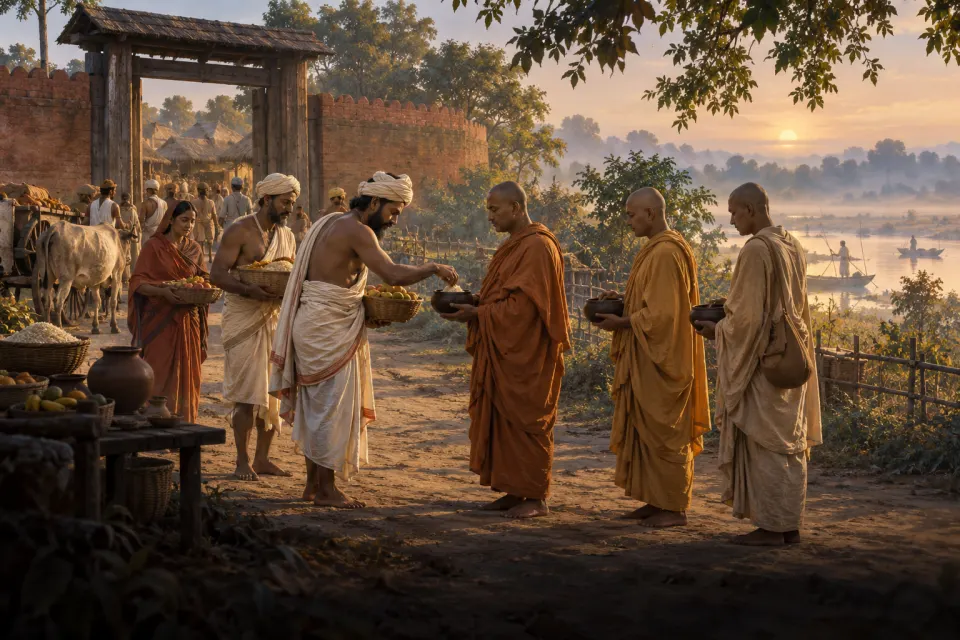
Ferment on the Ganges plain c. 800–500 BCE
In the centuries before the Buddha and Mahavira, northern India saw growing unease with the costly animal sacrifices of Vedic religion, sharpened by a spreading belief that humans and animals shared one cycle of rebirth. Much of the opposition to Brahman ritual authority came from the Kshatriya, or warrior, caste, and from the wealthy merchant class of growing cities such as Shravasti and Vaishali, who backed wandering teachers rather than temple priests.[1, 7]
Rival teachers and schools c. 6th–5th century BCE
Buddhist scripture remembers six leading non-Vedic teachers active in this period, including Mahavira (called Nigantha Nataputta in Pali texts), the reformer of Jainism, and Makkhali Gosala, founder of the Ājīvika order; the Buddha, Siddhartha Gautama, was their contemporary. Each led a following of wandering renunciants, and rival groups treated one another as dangerous competitors for the same lay support.[8–9]
Beliefs
śramaṇa · श्रमण
striver, one who exerts effort
Śramaṇas held that liberation from rebirth came through an individual's own ascetic effort, not from Vedic sacrifice performed by a priest on someone's behalf; most of their schools rejected the Vedas as authoritative at all.[5, 10]
Practice
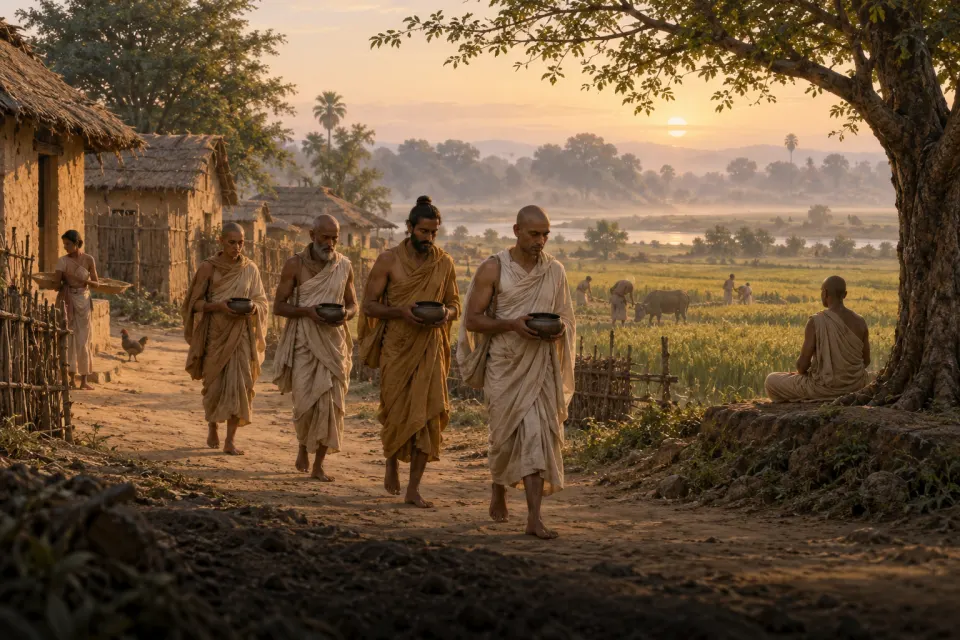
Wandering asceticism
Common to Śramaṇa groups was a life of homeless wandering, begging for food, and deliberately harsh bodily discipline such as fasting or exposure, meant to work off or burn away whatever bound the soul to further rebirth.[4]
Art & objects
Public-domain objects from museum collections. Select one to see it at the museum.
![Buddha Shakyamuni Meditating in the Indrashala Cave [top] and Buddha Dipankara [bottom]](https://cdn.holymap.app/museum/aic-151081.webp?v=fb13eef937e2) Buddha Shakyamuni Meditating in the Indrashala Cave [top] and Buddha Dipankara [bottom]Gandhara, 2nd/3rd century
Buddha Shakyamuni Meditating in the Indrashala Cave [top] and Buddha Dipankara [bottom]Gandhara, 2nd/3rd century Stamped Tile with Crouching AsceticsKashmir, 4th/6th century
 Seated AsceticsIndia, Kashmir, Harwan, 300s CE
 Base for a Seated Buddha with Figures of AsceticsPakistan, Gandhara, Kushan period, c. late 100s CE
 Fasting Buddha ShakyamuniPakistan (ancient region of Gandhara), Kushan period, 3rd–5th century
 Tile with Impressed Figures of Emaciated Ascetics and Couples behind Balconies and GandersIndia (ancient kingdom of Kashmir, Harwan), 5th–6th century
 Four Ascetic BrahmansPakistan (ancient region of Gandhara), ca. 2nd century
 Ascetic YouthPakistan (ancient region of Gandhara), 1st–3rd century
 Seated Ascetic, Deified King, Agni (The God of Fire)India (Kaushambi, Uttar Pradesh), ca. 3rd century
 Dipankara Jataka (The Story of the Ascetic Megha and the Buddha Dipankara)Pakistan (ancient region of Gandhara, Swat Valley), ca. 2nd century
How we know
How we know
No Śramaṇa text written by a non-Jain, non-Buddhist member of the movement survives. What is known of rival teachers such as Makkhali Gosala comes almost entirely from Buddhist and Jain scripture, which presented them as rivals to be refuted, so their own doctrines are reconstructed at one remove and may be distorted or incomplete.[6]
Common misconceptions
Myth "Śramaṇa" is simply an old word for a Buddhist monk.
Fact The term is older than Buddhism and never belonged to one school. It covered the whole range of wandering ascetic teachers who rejected Brahmanical ritual authority, including the rival Jain and Ājīvika orders and schools that left no later tradition to preserve their name.[2–3]
Glossary
- śramaṇa · श्रमण
- "Striver": a wandering ascetic who rejected the ritual authority of the Vedas and the Brahman priesthood, as opposed to an orthodox brāhmaṇa.[2, 5]
- brāhmaṇa · ब्राह्मण
- A priest of the orthodox Vedic tradition who accepted the Vedas as revealed authority; the term against which śramaṇa was defined.[2]
- nāstika · नास्तिक
- "One who denies": a school, such as Buddhism, Jainism or the Ājīvikas, that does not accept the authority of the Vedas, as opposed to an orthodox āstika school.[10]
Sources
Each statement above was checked against published sources; the verdict says whether it stood as written, was corrected or was hedged.
- VerifiedBritannica, Mahavira; Oxford Reference, A Dictionary of Hinduism.
- VerifiedOxford Reference, A Dictionary of Hinduism; Britannica, Mahavira.
- VerifiedOxford Reference, A Dictionary of Buddhism; Britannica, Ajivika.
- VerifiedBritannica, Mahavira; Encyclopedia.com, reprint of Encyclopedia of Religion.
- VerifiedOxford Reference, A Dictionary of Hinduism; Britannica, Mahavira.
- VerifiedBritannica, Ajivika; Encyclopedia.com, reprint of Encyclopedia of Religion.
- VerifiedOxford Reference, The Princeton Dictionary of Buddhism; Encyclopedia.com, reprint of Encyclopedia of Religion.
- VerifiedBritannica, Mahavira; Encyclopedia.com, reprint of Encyclopedia of Religion.
- VerifiedEncyclopedia.com, reprint of Encyclopedia of Religion; Oxford Reference, The Princeton Dictionary of Buddhism.
- VerifiedBritannica, Indian philosophy; Oxford Reference, A Dictionary of Buddhism.
Last fact-checked 6 October 2026.