
Overview
Jainism is one of India's three ancient living religions, alongside Hinduism and Buddhism, and an independent tradition rather than an offshoot of either. Its goal is to free the soul from rebirth through non-violence and disciplined self-restraint. Jains hold that their teaching is eternal, proclaimed afresh in each age by twenty-four Tīrthaṅkaras, or Jinas ("conquerors"), the most recent being Mahāvīra; historians see Pārśva and Mahāvīra as real teachers of the first millennium BCE. There is no creator god. Every soul is bound by karma, which Jains understand as a fine kind of matter, and can win release by its own effort. Non-violence (ahiṃsā), many-sidedness (anekāntavāda) and non-possession (aparigraha) shape Jain ethics. The community divides into Śvetāmbara and Digambara branches, and most of its four and a half to seven million members live in India.[2–3, 8–13]
History
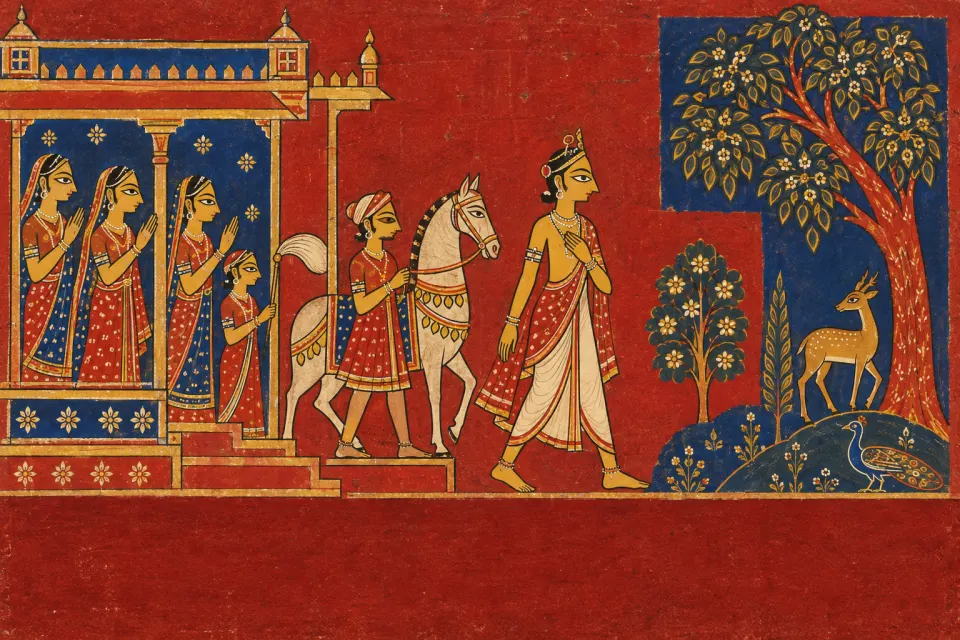
Ford-makers and Mahāvīra c. 8th–5th century BCE
Jains teach that time turns as an endless wheel, and that in each half-turn twenty-four Tīrthaṅkaras, "ford-makers", show the way across the stream of rebirth. Historians find the first plausible evidence in the twenty-third, Pārśva, a renunciant who may have lived in the 8th or 7th century BCE. The twenty-fourth, Vardhamāna, called Mahāvīra ("great hero"), was by tradition a Kṣatriya prince who renounced home at thirty, spent some twelve years in austerity, gained omniscience and taught until his death at Pāvāpurī, in Bihar. Śvetāmbaras date him 599–527 BCE and Digambaras his death to 510 BCE; many scholars place him up to a century later, beside the Buddha.[14–17]
Spread and the great division c. 4th century BCE–5th century CE
Archaeology shows Jain monks in the south before the Common Era, and by the Gupta period most Jains lived in western and central India. Digambara tradition tells that during a twelve-year famine the teacher Bhadrabāhu led monks to Karnataka, with the emperor Chandragupta Maurya as his disciple, while those who stayed north took to wearing white. Historians treat each sect's origin story as late and partisan, seeing instead a gradual parting over monastic nudity and whether women can be liberated. It became final after a council at Valabhī in Gujarat in the mid-5th century codified the Śvetāmbara canon without Digambara monks.[18–20]
Patrons, temples and decline c. 500–1600
Digambara monks advised the Ganga, Rāṣṭrakūṭa and Hoysala kings of the south, and Cāmuṇḍarāya, a Ganga general, had a colossal Bāhubali carved at Śravaṇabeḷagoḷa late in the 10th century. In Gujarat the monk-scholar Hemacandra is credited with persuading King Kumārapāla to rule partly by Jain principles. Ministers and merchants raised marble temples at Mount Abu from 1031 and at Ranakpur, consecrated in 1441. Royal support ebbed as Lingāyat devotion spread in Karnataka and Muslim armies conquered western India from the 12th century, destroying many shrines. Jains adapted: some advised Muslim rulers, and the monk Hīravijaya taught the Mughal emperor Akbar.[21–24]
Reformers and new sects 15th–20th century
In the 15th century a layman, Loṅkā, argued that the scriptures gave no warrant for image worship; the order his followers formed gave rise, through later reformers, to the Sthānakavāsīs, who gather in plain halls. Around 1760 the monk Bhikṣu broke away from them to found the Terāpanth, which vests authority in a single ācārya. Among Digambaras, the 17th-century poet Banārsīdās led a lay movement against empty ritual. After a 19th-century low, monks such as Ātmārāmjī (1837–96) revived Śvetāmbara monastic life, and Ācārya Śāntisāgar (1873–1955) renewed the line of naked Digambara monks.[25–28]
Gandhi, migration and the present 1891–present
In 1891 the young Mohandas Gandhi met the Jain jeweller and poet Rājacandra (Raychandbhai) in Bombay. Gandhi later wrote that this friend was his refuge in spiritual crises and judged their exchanges important to his thinking on non-violence. Gujarati Jains had long traded in East Africa; after political crises there in the 1960s many moved to Britain and then North America, where the federation JAINA was formed in 1981. India's 2011 census counted 4,451,753 Jains, about 0.4 percent of the population.[29–31]
Key moments
- c. 527 BCEMahāvīra · Bihar, India
Beliefs
Tīrthaṅkara · तीर्थंकर
ford-maker; also Jina, conqueror
Jains revere the Tīrthaṅkaras as human beings who conquered their passions, became omniscient and taught the way out of rebirth. In Jain doctrine they are not gods who intervene: liberated and detached, they cannot respond to worship, which serves as homage and self-discipline, though some devotees do hope for their help. In the present age the first was Ṛṣabha and the last Mahāvīra.[32]
Jīva and ajīva · जीव, अजीव
soul and non-soul
Reality consists of jīva, conscious soul, and ajīva: matter, space, the media of motion and of rest, and time, which Digambaras count as a sixth substance. Souls are infinite in number and uncreated. They inhabit not only humans and animals but plants and tiny beings of earth, water, fire and air that have only the sense of touch.[33]
Karma · कर्म
subtle matter that binds the soul
Where Hindu and Buddhist thought treat karma as a process, Jainism treats it as a fine physical substance. Actions driven by passion pull in karmic matter, which adheres to the soul and ties it to body after body. Restraint stops the inflow, and austerities such as fasting, meditation and study wear away what has built up.[34]
Ahiṃsā · अहिंसा
non-injury
Non-violence is the standard by which Jains judge every act, and harm in thought or speech counts as well as harm in deed. It underlies Jain vegetarianism, the custom of not eating after dark, and the brooms and mouth-cloths with which monks and nuns protect the smallest creatures.[35]
Anekāntavāda · अनेकान्तवाद
the doctrine of many-sidedness
Reality has countless aspects, so no single statement captures it whole, and any judgment holds only from a given standpoint (naya). Jain logicians built this into syādvāda, a sevenfold scheme of statements each qualified by syāt, "perhaps". Only the omniscient know reality completely.[36]
Aparigraha · अपरिग्रह
non-possession, non-attachment
The fifth great vow targets the inner sense that things are "mine" as much as the things themselves. Monks and nuns keep almost nothing, and fully initiated Digambara monks not even clothing; lay Jains vow instead to set limits on what they own.[37]
Kevala and mokṣa · केवल, मोक्ष
omniscience and liberation
The path is the Three Jewels: correct faith, knowledge and conduct, cultivated together. A soul that sheds the karma clouding it gains kevala, omniscience; at death, free of all karma, it rises to the summit of the universe and dwells there forever as a siddha. Jains hold that no one can be liberated in the present declining age, so ascetics aim for a better rebirth.[38–39]
Practice

Monks and nuns · साधु, साध्वी
Ascetics take five great vows (mahāvrata): non-violence, truth, not stealing, celibacy and non-possession. They walk barefoot, live on alms and keep wandering, settling only for the four rainy months. Śvetāmbara monks and nuns wear white. Full Digambara monks go naked and eat once a day from cupped hands; Digambara nuns wear robes.[40–41]
Lay vows and diet
Lay Jains may take lesser forms of the same vows (aṇuvrata), with further vows of restraint, giving and fasting. Their diet excludes meat, alcohol and honey, often any food after dark, and for many root vegetables, since uprooting kills the whole plant. In a 2021 Pew Research Center survey, 92% of Indian Jains said they were vegetarian. Lay Jains have traditionally worked in business and the professions.[42–44]
Worship and daily rites · पूजा
Image-worshipping Jains, the Śvetāmbara Mūrtipūjakas and the Digambaras, bathe Tīrthaṅkara images and offer flowers, fruit and rice in temples and home shrines; Sthānakavāsīs and Terāpanthīs reject images. Jains of every group know the Namaskāra mantra, five homages to the supreme beings, and the daily duties include sāmāyika, a set period of equanimity, and pratikramaṇa, repentance.[45–47]
Fasting and sallekhanā · सल्लेखना
Fasting, which Jains hold wears away karma, is central to Jain practice. Sallekhanā is a vowed, gradual giving up of food and drink at life's end, under a teacher's guidance, which Jains distinguish from suicide as a calm, controlled death; once widespread, it is uncommon today. In August 2015 the Rajasthan High Court ruled the practice illegal as suicide; within weeks India's Supreme Court stayed that judgment.[48–50]
Pilgrimage · तीर्थयात्रा
Journeys to tīrthas, places linked to the lives of Tīrthaṅkaras or famed for their images, earn merit for ascetics and lay people alike. Śvetāmbaras and Digambaras have long disputed control of some shared sites in the courts. Those who cannot travel may venerate painted cloths or images of the holy places in local temples.[51–53]
Holy days
The year ahead
| Date | Holy day | Reckoned |
|---|---|---|
| 8 November 2026 | Dīvālī (Mahāvīra's nirvāṇa) दीवाली | Āśvina kṛṣṇa amāvāsyā, the tithi at sunset |
| 19 April 2027 | Mahāvīr Jayantī महावीर जयन्ती | Caitra śukla 13th, the tithi at sunrise |
| 28 August 2027 – 4 September 2027 | Paryuṣaṇa पर्युषण | 7 days before Bhādrapada śukla 4th, the tithi at sunrise |
| 4 September 2027 | Saṃvatsarī संवत्सरी | Bhādrapada śukla 4th, the tithi at sunrise |
| 5 September 2027 – 14 September 2027 | Daśalakṣaṇa Parva दशलक्षण पर्व | Bhādrapada śukla 5th, the tithi at sunrise |
Paryuṣaṇa · पर्युषण
Eight days in Bhādrapada (August–September)
The most important Śvetāmbara festival, within the rainy-season retreat. Jains fast and hear sermons and the Kalpa Sūtra; on the last day, Saṃvatsarī, they confess together and ask pardon of all they may have wronged during the year.[54]
Daśalakṣaṇa Parva · दशलक्षण पर्व
Ten days following Paryuṣaṇa (August–September)
The Digambara counterpart. Each day honours one of ten virtues, among them forbearance, truth, restraint and renunciation, and the ten chapters of the Tattvārthasūtra are recited, ending in a day of asking forgiveness.[55]
Mahāvīr Jayantī · महावीर जयन्ती
Caitra, bright half, 13th day (March–April)
Mahāvīra's birthday, kept by Śvetāmbaras and Digambaras on the same day, unlike most Jain festivals. Communities meet in temples to hear Mahāvīra's teachings and carry his image in street processions.[56]
Dīvālī · दीवाली
New moon ending Āśvina or Kārttika (October–November)
Jains share the festival of lights with Hindus and Sikhs but mark Mahāvīra's final liberation, when, by tradition, kings lit lamps because the light of knowledge had gone out. The next day honours his disciple Gautama's omniscience and opens the new year.[57]
People

Ṛṣabha (Ādinātha) · ऋषभ
teacher · legendary
The first Tīrthaṅkara of the present age, marked by the bull. Jain legend makes him the king who taught humanity the arts of civilisation before renouncing the world, and father of Bharata and Bāhubali. His main temples include those of Shatrunjaya and Ranakpur.[58]

Pārśva (Pārśvanātha) · पार्श्व
teacher · c. 8th–7th century BCE (uncertain)
The twenty-third Tīrthaṅkara and the earliest with reasonable historical evidence. Tradition says he was born in Banaras, taught four restraints that Mahāvīra expanded into five vows, and reached liberation on Mount Sammeta about 250 years before Mahāvīra. A hood of snakes marks him in art.[59]

Mahāvīra (Vardhamāna) · महावीर
teacher · 599–527 BCE by Śvetāmbara tradition
The twenty-fourth and last Tīrthaṅkara of this age. Jains regard him as renewing an existing path, not founding one, though some historians call him the founder of Jainism as we know it. He systematised its doctrine and set rules of life for monks, nuns and lay followers.[60]

Kundakunda
scholar · 2nd–3rd century CE, or later (disputed)
Among the most revered Digambara teachers and by tradition founder of the main Digambara monastic lineage. His Prakrit works, such as the Samayasāra, subordinate outward practice to inner realisation of the self. Nothing certain is known of his life, and his date is disputed.[61]

Hemacandra · हेमचन्द्र
scholar · 1089–1172
A Śvetāmbara monk and polymath who served as court scholar to the Caulukya kings of Gujarat and is credited with steering Kumārapāla's accession. Among his many works is a Sanskrit history of the sixty-three illustrious men of Jain legend, long the standard telling of Mahāvīra's life.[62]
Scripture
The Āgamas (Śvetāmbara canon) · आगम
fixed in writing c. 450s CE
Teachings believed to come from Mahāvīra through his disciples, transmitted orally and later fixed in writing. Image-worshipping Śvetāmbaras count 45 texts, headed by eleven Aṅgas; Sthānakavāsīs and Terāpanthīs accept 32. Digambaras hold the original canon lost and give canonical status to later Prakrit works such as the Ṣaṭkhaṇḍāgama.[63]
Ācārāṅga Sūtra · आचारांग सूत्र
first book among the oldest layers
The first of the Aṅgas, a guide to monastic conduct. Scholars count its first book, with the Sūtrakṛtāṅga and parts of the Uttarādhyayana, among the oldest layers of the canon.[64]
Kalpa Sūtra · कल्पसूत्र
A Śvetāmbara text telling the lives of the Jinas, above all Mahāvīra, with a list of early teachers and rules for monks. It is recited during Paryuṣaṇa, and its illustrated manuscripts are treasured.[65]
Tattvārthasūtra · तत्त्वार्थसूत्र
early centuries CE (disputed)
A compact Sanskrit summary of Jain doctrine in aphorisms by Umāsvāti (Umāsvāmī to Digambaras), covering knowledge, cosmology, karma, ethics and liberation. It is the one scripture accepted by all Jain sects, though in slightly differing versions.[66]
Places

Shatrunjaya, Palitana
IND
A two-peaked hill outside Palitana in Gujarat, covered in shrines and among the foremost Śvetāmbara pilgrimage sites. Its principal temple honours Ṛṣabha, and pilgrims climb some thousands of steps to the summits.[67]
Shravanabelagola
IND
The chief Digambara holy place, in Karnataka. The 17-metre Bāhubali on Vindhyagiri hill is anointed in the Mahāmastakābhiṣeka about every twelve years; by Digambara tradition Bhadrabāhu ended his life here by sallekhanā.[68]
Dilwara temples, Mount Abu
IND
Śvetāmbara temples in Rajasthan famed for intricately carved white marble. The Vimala Vasahī, built by the minister Vimala about 1031, was followed by the Lūṇa Vasahī in the 13th century; both draw tourists as well as pilgrims.[69]
Ranakpur
IND
The great Ādinātha temple in southern Rajasthan, commissioned by the merchant Dharna Śāh and consecrated in 1441. Its sober exterior hides an ornate interior of more than 1,400 carved columns around a four-faced image of Ṛṣabha.[70]
Sammed Shikharji (Parasnath Hill)
IND
A granite peak of about 1,365 metres in Jharkhand where, by Jain tradition, twenty of the twenty-four Tīrthaṅkaras, Pārśva among them, attained liberation. Sacred to both sects, it has been the subject of Śvetāmbara–Digambara litigation since the late 19th century.[71]
Where it spread
| Region | From | How |
|---|---|---|
| India | 600 BCE | Ganges plain; tradition dates Mahavira to 599–527 BCE, many historians somewhat later |
| Pakistan | 600 CE – 1947 CE | Punjab and Sindh, e.g. the Nagarparkar temples; nearly all Jains moved to India in 1947 |
| Kenya | 1900 CE | IND. Gujarati traders, mainly Oshwal; Mombasa's temple was consecrated in 1963 |
| Tanzania | 1900 CE | IND. Gujarati traders; a temple in Zanzibar by about 1905 |
| Uganda | 1900 CE – 1972 CE | IND. Gujarati traders; Asians were expelled in 1972 |
| Singapore | 1910 CE | IND. Gujarati families |
| Belgium | 1960 CE | IND. Palanpuri Jain diamond traders in Antwerp |
| United Kingdom | 1960 CE | KEN. Many came from East Africa, more after 1972; the Jain Centre in Leicester opened in 1979 |
| United States | 1970 CE | IND. Immigration after 1965; the JAINA federation was founded in 1981 |
| Canada | 1974 CE | Jain Society of Toronto |
Art & objects
Public-domain objects from museum collections. Select one to see it at the museum.
 Jaina Tirthankara Seated in Meditation (Dhyanamudra)Gujarat, 15th century
 Queen Trishala Gives Birth to Mahavira, from a copy of the KalpasutraIndia, c. 1475-1500
 Altarpiece with the First Jaina Tirthankara Rishabhanatha Surrounded by Twenty-Three Other TirthankarasIndia, 1089 A.D.
 Jaina Tirthankara Parshvanatha Seated in Meditation (Dhyanamudra) under a Snake HoodUttar Pradesh, 6th century
 Jaina Tirthankara Parshvanatha with Serpent Hood Seated in Meditation (Dhyanamudra)Karnataka, 12th century
 Mahavira's Omniscience and First Teaching (Samavasarana), Folio 39 (verso), from a Kalpa-sutraWestern India, Gujarat, last quarter of the 15th century, c. 1475–1500
 Head of JinaIndia, Mathura, Kushan period, c. 150–75 CE
 Narrative Frieze: Dignitaries in Palanquin and Bullock Cart - Architrave from a Jain TempleIndia, Gujarat, 16th-17th century, 1500s-1600s
 Jain Ascetic Walking Along a RiverbankMughal India, court of Akbar (reigned 1556–1605), c. 1600
 Jina (Tirthankara)India, Rajasthan, Medieval period, 900s–1000s
 Shvetambara Jain Teacher Giving InstructionNorthwestern India, Rajasthan, Rajput Kingdom of Jaipur, c. 1750–60
 Devananda's Fourteen Auspicious Dreams Foretelling the Birth of Mahavira: Folio from a Kalpasutra ManuscriptIndia, (Gujarat, Jaunpur), ca. 1465
 One of a Pair of Jain Manuscript Covers (Patli)India (Gujarat), early 12th century
 Jain Siddha Bahubali, Entwined with Forest VinesIndia (Karnataka), Chalukyan period, late 6th–7th century
Numbers
- Jains worldwide
- c. 4.5–7 million (estimate)[72]
India's 2011 census counted 4.45 million; other reference works put the current worldwide total higher, from about six million (Britannica) to seven million, including a diaspora of a few hundred thousand.
- Jains in India (2011 census)
- 4,451,753, about 0.4% of the population[31, 73]
Maharashtra has the most; large communities also live in Rajasthan, Gujarat, Madhya Pradesh and Karnataka.
- Jains in Western censuses (2021)
- England and Wales 24,991; Canada 8,275; Australia 5,851[74]
Census counts. The United States has no religion census; a 2017 report put US Jains at almost 80,000.
National censuses
| Country | Year | Count | Share |
|---|---|---|---|
| India Jain | 2011 | 4,451,753 | 0.4% |
| United Kingdom (England and Wales) Other religion: Jain | 2021 | 24,991 | 0.0% |
| Canada Jain | 2021 | 8,275 | 0.0% |
| Australia Jainism | 2021 | 5,851 | 0.0% |
| New Zealand Jainism | 2018 | 612 | 0.0% |
Source: Australian Bureau of Statistics, Census of Population and Housing 2021, 'Religious affiliation in Australia' (Table 4), CC BY 4.0. Source: Office of the Registrar General & Census Commissioner, India, Census of India 2011, Table C-01 Population by religious community and its appendix, under the Government Open Data License – India. Source: Office for National Statistics licensed under the Open Government Licence v.3.0 Adapted from Statistics Canada, Table 98-10-0342-01 Religion by visible minority and generation status: Canada, provinces and territories, census metropolitan areas and census agglomerations with parts, released 2022-10-26. This does not constitute an endorsement by Statistics Canada of this product. Source: Stats NZ, 2018 Census, licensed by Stats NZ for re-use under the Creative Commons Attribution 4.0 International licence.
How we know
How we know about early Jainism
Mahāvīra's life is known mainly from Jain scriptures fixed in writing centuries after him, so historians read it as legend with a historical core. The canon was revised and expanded over time, and scholars date its layers by language and metre. Archaeology adds firmer anchors: inscribed Tīrthaṅkara images from a Jain stūpa at Mathura date from the early centuries CE, and the fact that all of them are naked suggests the Śvetāmbara–Digambara split had not yet hardened.[75–76]
Common misconceptions
Myth Jainism is a sect of Hinduism or an offshoot of Buddhism.
Fact Jainism shares ideas such as karma and rebirth with its neighbours because all three grew in the same culture, but scholars treat it as an independent tradition. The older Western view of it as a Hindu sect or Buddhist heresy has been abandoned. Jains have their own scriptures, doctrine of the soul, monastic orders and history.[77]
Myth Mahāvīra founded Jainism.
Fact Jains see Mahāvīra as the last of twenty-four ford-makers in this age, renewing an eternal teaching rather than inventing one. Historians agree he built on an earlier community associated with Pārśva, even if some describe him as the founder of Jainism in its historical form.[78]
Myth Jains pray to the Tīrthaṅkaras as gods who grant favours.
Fact In Jain doctrine the liberated Tīrthaṅkaras are detached from the world and grant nothing; worship before their images is homage and a meditative discipline, even if some devotees hope for their help. Requests for worldly aid usually go to guardian deities, such as the goddess Ambikā, whose images stand near temple entrances.[79]
Glossary
- Jina · जिन
- "Conqueror": one who has conquered the passions and gained omniscience; another name for a Tīrthaṅkara. Jains, as followers of the Jinas, take their name from it.[80]
- Siddha · सिद्ध
- A fully liberated soul, free of body and karma, dwelling in bliss at the apex of the universe.[81]
- Mūrtipūjaka
- "Image-worshipper": the Śvetāmbara grouping that venerates Jina images in temples; its monastic orders include the Tapā and Kharatara Gacchas.[82]
- Muhpattī (mukhavastrikā)
- A cloth held or tied over the mouth by Śvetāmbara ascetics to avoid harming tiny beings; Sthānakavāsī and Terāpanthī monks and nuns wear it at all times.[83]
- Cāturmāsa · चातुर्मास
- The "four months" of the monsoon, roughly July to November, when monks and nuns stop wandering and stay among a lay community; a season of heightened fasting and devotion.[84]
- Saṃvatsarī
- The last day of Paryuṣaṇa, marked by communal confession and requests for forgiveness sent to relatives, friends and associates.[85]
- Gaccha · गच्छ
- A Śvetāmbara monastic order with its own lay followers, such as the Kharatara Gaccha (11th century) and the Tapā Gaccha (13th century), today the largest.[86]
- Bhaṭṭāraka · भट्टारक
- A Digambara cleric who takes monastic initiation but wears orange robes and administers temples and holy places instead of wandering naked.[87]
- Namaskāra mantra
- The best-known Jain prayer: five homages in Prakrit to the arhats, siddhas, ācāryas, teachers and all monks, recited by Jains of every sect.[88]
Sources
Each statement above was checked against published sources; the verdict says whether it stood as written, was corrected or was hedged.
- CorrectedBritannica, Jainism; Britannica, Mahavira Jaina teacher; iep.utm.edu, Jain.
- VerifiedBritannica, Jainism; iep.utm.edu, Jain; Britannica, Parshvanatha.
- Verifiediep.utm.edu, Jain; Britannica, Tirthankara; Brit-Siddha.
- VerifiedBritannica, Festivals; jainpedia.org, Tattvartha sutra; Dundas ISBN 0-415-26605-X.
- VerifiedDundas ISBN 0-415-26605-X; jainpedia.org, Svetambara canon; Britannica, Festivals.
- VerifiedBritannica, Ritual practices and religious institutions; jainpedia.org, Svetambara stanaka vasin; Brit-Sthana; Encyclopedia.com, Jainism.
- VerifiedBritannica, Ritual practices and religious institutions; Dundas ISBN 0-415-26605-X; Encyclopedia.com, Jainism; Flügel, P., Demographic Trends in Jaina Monasticism.
- VerifiedBritannica, Shvetambara; Encyclopedia.com, Jainism; Dundas ISBN 0-415-26605-X.
- CorrectedPress Information Bureau of India, Printrelease; censusindia.gov.in; Britannica, Jainism; Encyclopedia.com, Jainism.
- VerifiedBritannica, Jainism; iep.utm.edu, Jain; Encyclopedia.com, Jainism.
- VerifiedBritannica, Tirthankara; iep.utm.edu, Jain; Britannica, Jainism.
- Verifiediep.utm.edu, Jain; Britannica, Important figures of Jain legend; Encyclopedia.com, Jainism.
- VerifiedBritannica, Important figures of Jain legend; Jaini ISBN 81-208-0700-6; jainpedia.org, Five fundamental vows; iep.utm.edu, Jain.
- VerifiedBritannica, Important figures of Jain legend; Britannica, Tirthankara; Jaini ISBN 81-208-0700-6.
- HedgedBritannica, Jainism; Dundas ISBN 0-415-26605-X; Britannica, Parshvanatha.
- VerifiedBritannica, Jainism; Britannica, Mahavira Jaina teacher; jainpedia.org, Divali; Encyclopedia.com, Jainism.
- VerifiedBritannica, Mahavira Jaina teacher; jainpedia.org, Divali; Dundas ISBN 0-415-26605-X; events.ts `mahavira-500-bce`.
- VerifiedBritannica; Britannica, Jainism; jainpedia.org, Sravana belgola.
- VerifiedBritannica, Digambara; jainpedia.org, Sravana belgola; Jaini ISBN 81-208-0700-6.
- VerifiedBritannica, Digambara; Britannica, Jainism; Encyclopedia.com, Jainism; Dundas ISBN 0-415-26605-X.
- VerifiedBritannica; Dundas ISBN 0-415-26605-X; jainpedia.org, Sravana belgola.
- VerifiedEncyclopedia.com, Jainism; Britannica; Dundas ISBN 0-415-26605-X.
- VerifiedBrit-Vimala; Dundas ISBN 0-415-26605-X; Encyclopedia.com, Jainism.
- VerifiedBritannica; Dundas ISBN 0-415-26605-X; Encyclopedia.com, Jainism.
- VerifiedBritannica; jainpedia.org, Svetambara stanaka vasin; Dundas ISBN 0-415-26605-X.
- HedgedDundas ISBN 0-415-26605-X; jainpedia.org, Svetambara terapanthin; Britannica.
- VerifiedBritannica; Dundas ISBN 0-415-26605-X.
- VerifiedBritannica; Dundas ISBN 0-415-26605-X; Encyclopedia.com, Jainism.
- VerifiedDundas ISBN 0-415-26605-X; Britannica, Important figures of Jain legend; globe-story table rows 32–33.
- VerifiedBritannica; Dundas ISBN 0-415-26605-X; Encyclopedia.com, Jainism.
- Verifiedcensusindia.gov.in; Press Information Bureau of India, Printrelease; Pew Research Center, Population growth and religious composition.
- VerifiedBritannica, Ritual practices and religious institutions; Britannica, Tirthankara; Britannica, Jainism; Encyclopedia.com, Jainism.
- VerifiedBritannica, Important figures of Jain legend; iep.utm.edu, Jain.
- VerifiedBritannica, Important figures of Jain legend; iep.utm.edu, Jain; Brit-Ahimsa.
- VerifiedBrit-Ahimsa; Britannica, Important figures of Jain legend; Britannica, Ritual practices and religious institutions; Encyclopedia.com, Jainism.
- Verifiediep.utm.edu, Jain; Britannica, Important figures of Jain legend; Britannica, Anekantavada.
- VerifiedJaini ISBN 81-208-0700-6; jainpedia.org, Five fundamental vows; Britannica, Ritual practices and religious institutions.
- VerifiedBritannica, Important figures of Jain legend; Brit-Siddha; Jaini ISBN 81-208-0700-6; iep.utm.edu, Jain.
- VerifiedBritannica, Important figures of Jain legend; Dundas ISBN 0-415-26605-X.
- VerifiedBritannica, Ritual practices and religious institutions; Britannica, Festivals; jainpedia.org, Five fundamental vows; Encyclopedia.com, Jainism.
- VerifiedBritannica, Ritual practices and religious institutions; Britannica, Digambara; Britannica, Shvetambara; Encyclopedia.com, Jainism.
- VerifiedBritannica, Ritual practices and religious institutions; jainpedia.org, Five fundamental vows; Jaini ISBN 81-208-0700-6.
- VerifiedBritannica, Ritual practices and religious institutions; Pew Research Center, Religion and food; Encyclopedia.com, Jainism.
- VerifiedBritannica, Ritual practices and religious institutions; Encyclopedia.com, Jainism; pluralism.org, Jain immigration.
- VerifiedBritannica, Ritual practices and religious institutions; Encyclopedia.com, Jainism; Britannica, Digambara.
- VerifiedBritannica, Ritual practices and religious institutions; jainpedia.org, Svetambara terapanthin; Encyclopedia.com, Jainism.
- VerifiedDundas ISBN 0-415-26605-X; Encyclopedia.com, Jainism; Britannica, Ritual practices and religious institutions.
- VerifiedBritannica, Important figures of Jain legend; Dundas ISBN 0-415-26605-X; Encyclopedia.com, Jainism.
- VerifiedBritannica, Ritual practices and religious institutions; Encyclopedia.com, Jainism; Dundas ISBN 0-415-26605-X; Jaini ISBN 81-208-0700-6.
- VerifiedIndiankanoon; Sethi: Manisha Sethi; livelaw.in, Supreme court stays rajasthan hc ban on santhara (supporting); ili.ac.in.
- VerifiedBritannica, Festivals; Jaini ISBN 81-208-0700-6; jainpedia.org, Pilgrimage.
- VerifiedBritannica, Digambara; Dundas ISBN 0-415-26605-X.
- Verifiedjainpedia.org, Pilgrimage; Britannica, Festivals.
- VerifiedBritannica, Festivals; jainpedia.org, Paryusan; Dundas ISBN 0-415-26605-X; Encyclopedia.com, Jainism.
- VerifiedDundas ISBN 0-415-26605-X; Britannica, Festivals; Encyclopedia.com, Jainism.
- Verifiedjainpedia.org, Mahavir jayanti; Britannica, Festivals; Encyclopedia.com, Jainism; Dundas ISBN 0-415-26605-X.
- VerifiedDundas ISBN 0-415-26605-X; jainpedia.org, Divali; Britannica, Festivals.
- VerifiedBritannica, Tirthankara; Jaini ISBN 81-208-0700-6; Dundas ISBN 0-415-26605-X; jainpedia.org, Mount satrunjaya.
- VerifiedBritannica, Parshvanatha; Britannica, Mahavira Jaina teacher; Dundas ISBN 0-415-26605-X; jainpedia.org, Parsva (supporting).
- VerifiedBritannica, Mahavira Jaina teacher; iep.utm.edu, Jain; Britannica, Jainism.
- VerifiedDundas ISBN 0-415-26605-X; Britannica, Festivals; jainpedia.org, Kundakunda.
- VerifiedEncyclopedia.com, Jainism; Britannica; Dundas ISBN 0-415-26605-X; jainpedia.org, Mahavir jayanti.
- VerifiedBritannica, Festivals; jainpedia.org, Svetambara canon; Britannica, Digambara; Dundas ISBN 0-415-26605-X.
- VerifiedBritannica, Festivals; Dundas ISBN 0-415-26605-X; jainpedia.org, Svetambara canon.
- VerifiedBritannica, Festivals; Dundas ISBN 0-415-26605-X; Encyclopedia.com, Jainism.
- VerifiedBritannica, Festivals; jainpedia.org, Tattvartha sutra.
- Verifiedjainpedia.org, Mount satrunjaya; Encyclopedia.com, Jainism; Dundas ISBN 0-415-26605-X; Britannica, Festivals.
- VerifiedBritannica, Festivals; jainpedia.org, Sravana belgola; Dundas ISBN 0-415-26605-X; Jaini ISBN 81-208-0700-6; Britannica, Shravanabelagola.
- VerifiedBrit-Vimala; Dundas ISBN 0-415-26605-X; Encyclopedia.com, Jainism.
- VerifiedDundas ISBN 0-415-26605-X; jainpedia.org, Mandapa line temples; Encyclopedia.com, Jainism; JAINpedia Ṛṣabha.
- VerifiedBritannica, Parasnath; Jaini ISBN 81-208-0700-6; jainpedia.org, Jain holy places; Encyclopedia.com, Jainism; Dundas ISBN 0-415-26605-X.
- CorrectedPress Information Bureau of India, Printrelease; censusindia.gov.in; Britannica, Jainism; Encyclopedia.com, Jainism; pluralism.org, Jain immigration.
- VerifiedPew Research Center, Population growth and religious composition; Encyclopedia.com, Jainism.
- Verifiednomisweb.co.uk; www150.statcan.gc.ca; abs.gov.au; pluralism.org, Jain immigration.
- VerifiedBritannica, Jainism; Britannica, Festivals; jainpedia.org, Svetambara canon.
- VerifiedBritannica, Ritual practices and religious institutions; Dundas ISBN 0-415-26605-X; Britannica, Shvetambara.
- VerifiedBritannica, Jainism; iep.utm.edu, Jain; Encyclopedia.com, Jainism.
- VerifiedBritannica, Jainism; Britannica, Mahavira Jaina teacher; iep.utm.edu, Jain; Britannica, Parshvanatha.
- VerifiedBritannica, Ritual practices and religious institutions; Britannica, Tirthankara; Dundas ISBN 0-415-26605-X; Encyclopedia.com, Jainism.
- VerifiedBritannica, Jainism; Britannica, Mahavira Jaina teacher; Encyclopedia.com, Jainism.
- VerifiedBrit-Siddha; Jaini ISBN 81-208-0700-6; iep.utm.edu, Jain.
- VerifiedEncyclopedia.com, Jainism; Britannica; jainpedia.org, Svetambara canon.
- VerifiedBritannica, Ritual practices and religious institutions; Encyclopedia.com, Jainism.
- VerifiedBritannica, Festivals; Dundas ISBN 0-415-26605-X; Encyclopedia.com, Jainism.
- VerifiedBritannica, Festivals; Dundas ISBN 0-415-26605-X; Encyclopedia.com, Jainism.
- VerifiedBritannica; Dundas ISBN 0-415-26605-X.
- VerifiedBritannica; Dundas ISBN 0-415-26605-X.
- VerifiedDundas ISBN 0-415-26605-X; Encyclopedia.com, Jainism.
Last fact-checked 3 October 2026.