
The story behind the day
The Ghost Festival is East Asia's great rite of the dead, held in the seventh lunar month and centred on its fifteenth day. Buddhists know it as Ullambana, after the legend of Mulian, who sought to rescue his mother from suffering, and they make offerings to monks on behalf of their ancestors. Daoists mark the same day as Zhongyuan, which honours the Earth Official's birthday. In Chinese communities the gates of the underworld are said to open and hungry ghosts are fed; in Japan the festival is Obon, when the family's ancestors are welcomed home.[1–5]
Origins
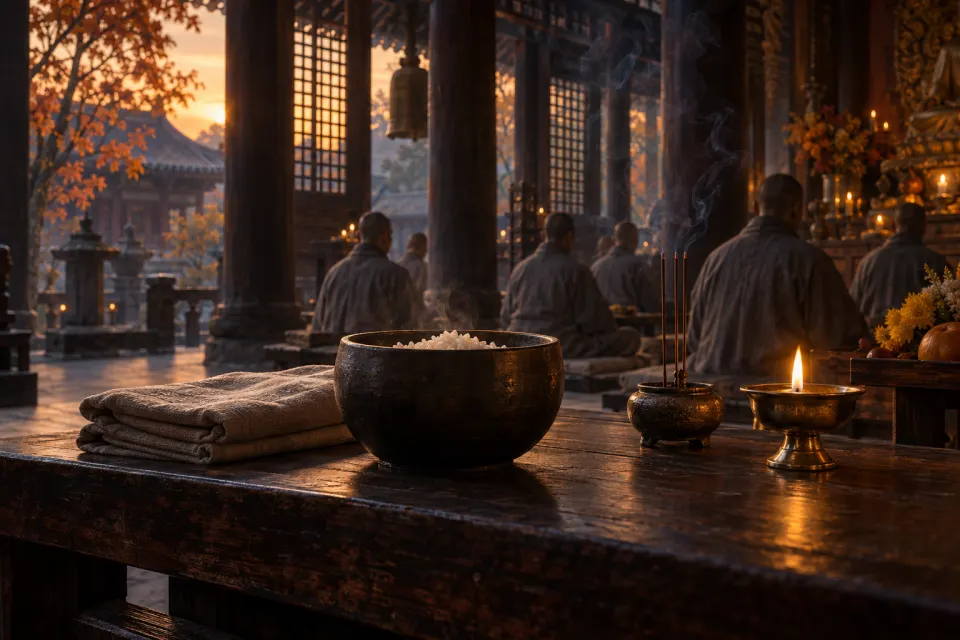
The Buddhist legend tells how Mahāmaudgalyāyana, called Mulian in Chinese, searches the cosmos for his dead mother and finds her suffering in hell. He cannot free her alone, and the Buddha replies that sons and daughters can rescue their parents through gifts to the monks at the seventh month's full moon. The Bussetsu Urabon Sutra, which Sōtō Zen cites for the tradition, describes a ceremony the Buddha held for Maudgalyāyana's deceased mother. Offerings at the Ullambana feast were thought to free ancestors across seven earlier generations. The Yulanpen Sutra, which tells the story in Chinese, is widely thought to have been composed in China, although a 2023 study argues for an Indic origin, and scholars debate the Sanskrit source of the name.[10–13]
How it came to be
The festival took shape in China. Its parts, a ritual of the monastic rains retreat and the giving between laity and monks, came from early Indian Buddhism, and they joined with Chinese family religion in a single ritual and story by the fifth or sixth century. Daoism came to keep its own observance on that date: the early Celestial Masters celebrated the Three Bureaus of Heaven, Earth and Water at festivals on day fifteen of the first, seventh and tenth months, and Daoists make offerings to Zhongyuan, the Middle Primordial, for the salvation of ancestors. Japanese Buddhists call the festival Urabon-e, a name derived from Ullambana, and shortened it to Obon.[6, 14–15]
How it is kept
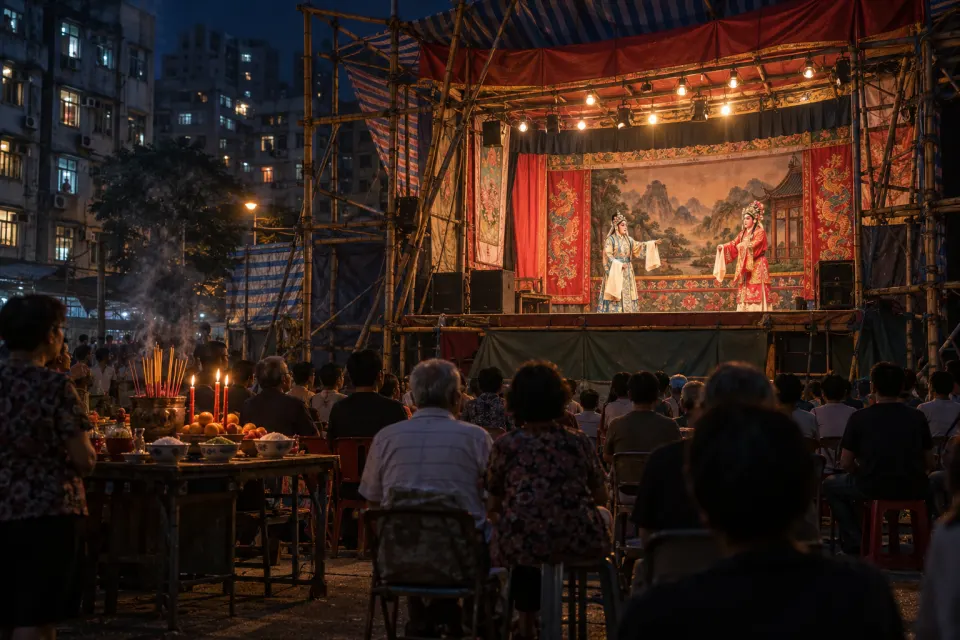
In Chinese communities the seventh month is the time when the gates of the underworld open and spirits roam the earth. The ghosts are called hungry because they have no descendants to make offerings, and people burn joss sticks, paper money and special clothing, and set out food. The Encyclopedia of Religion describes three rituals in the month: offerings at the doorway at its start, a great feast for the ghosts on the fifteenth with Buddhist and Daoist priests chanting, and a closing of the gates on its last day. Lanterns on tall posts and floating rafts guide the spirits. In Singapore the month-long observance includes getai stage shows with the front row left empty for the spirits.[4, 8–9, 16–17]
Across traditions
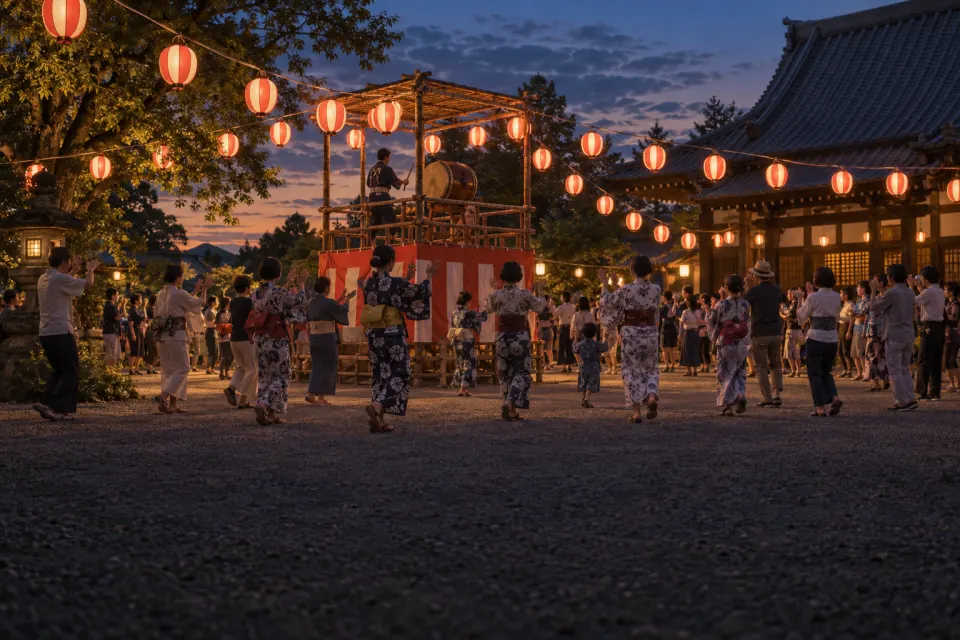
In Japan the same festival is Obon, observed over several days numbered from the thirteenth, in July or August depending on the region. Fires of hemp stalks guide the ancestors home on the thirteenth, a shelf of offerings is set up, graves are cleaned, and the spirits are sent back on the fifteenth or sixteenth, in some places with lantern-lit boats. Obon is above all a family occasion, when relatives return home and welcome the ancestors at the household altar.[5, 7, 18]
Sources
Each statement above was checked against published sources; the verdict says whether it stood as written, was corrected or was hedged.
- VerifiedEncyclopedia.com, Stephen F. Teiser, Ghost Festival, Encyclopedia of Buddhism; Princeton University Press, Teiser, The Ghost Festival in Medieval China; National Heritage Board, Singapore; Singapore Chinese Cultural Centre, Discover the origins and practices behind the Zhongyuan Festival.
- VerifiedJodo Shinshu Hongwanji-ha, Calendar of Observances; Princeton University Press, Teiser, The Ghost Festival in Medieval China; Douglas Gildow, The Chinese Buddhist Ritual Field; Encyclopedia.com, Ullambana, The Concise Oxford Dictionary of World Religions.
- CorrectedSingapore Chinese Cultural Centre, Choi Chi-cheung, Zhong Yuan Festival; Encyclopedia.com, Laurence G. Thompson, Chinese Religious Year, Encyclopedia of Religion; National Heritage Board, Singapore; chinaculture.org, Zhongyuan Festival (supporting).
- VerifiedNational Heritage Board, Singapore; Encyclopedia.com, Laurence G. Thompson, Chinese Religious Year, Encyclopedia of Religion; Singapore Chinese Cultural Centre, Discover the origins and practices behind the Zhongyuan Festival.
- VerifiedSoto Zen, Annual Event Calendar; Encyclopedia.com, Stephen F. Teiser, Ghost Festival, Encyclopedia of Buddhism; Encyclopedia.com, Jonathan S. Walters, Festivals and Calendrical Rituals, Encyclopedia of Buddhism.
- VerifiedSoto Zen, Annual Event Calendar; Jodo Shinshu Hongwanji-ha, Calendar of Observances; Encyclopedia.com, Ullambana, The Concise Oxford Dictionary of World Religions.
- VerifiedSoto Zen, Annual Event Calendar; Encyclopedia.com, Jonathan S. Walters, Festivals and Calendrical Rituals, Encyclopedia of Buddhism; Encyclopedia.com, Donald K. Swearer, Buddhist Religious Year, Encyclopedia of Religion; Encyclopedia.com, Ullambana, The Concise Oxford Dictionary of World Religions; Jodo Shinshu Hongwanji-ha, Calendar of Observances.
- VerifiedNational Heritage Board, Singapore; Encyclopedia.com, Chung Yüan, The Concise Oxford Dictionary of World Religions.
- VerifiedNational Heritage Board, Singapore; Encyclopedia.com, Laurence G. Thompson, Chinese Religious Year, Encyclopedia of Religion; Singapore Chinese Cultural Centre, Choi Chi-cheung, Zhong Yuan Festival; Encyclopedia.com, Ullambana, The Concise Oxford Dictionary of World Religions.
- VerifiedEncyclopedia.com, Stephen F. Teiser, Ghost Festival, Encyclopedia of Buddhism; Soto Zen, Annual Event Calendar; Jodo Shinshu Hongwanji-ha, Calendar of Observances.
- VerifiedEncyclopedia.com, Donald K. Swearer, Buddhist Religious Year, Encyclopedia of Religion; Singapore Chinese Cultural Centre, Choi Chi-cheung, Zhong Yuan Festival.
- VerifiedEncyclopedia.com, Stephen F. Teiser, Ghost Festival, Encyclopedia of Buddhism; Anthem Press, Xiaohuan Zhao, Chindian Myth of Mulian Rescuing His Mother: On Indic Origins of the Yulanpen Sutra.
- VerifiedEncyclopedia.com, Stephen F. Teiser, Ghost Festival, Encyclopedia of Buddhism; Douglas Gildow, The Chinese Buddhist Ritual Field.
- VerifiedEncyclopedia.com, Stephen F. Teiser, Ghost Festival, Encyclopedia of Buddhism; Princeton University Press, Teiser, The Ghost Festival in Medieval China.
- CorrectedEncyclopedia.com, Stephen F. Teiser, Ghost Festival, Encyclopedia of Buddhism; Encyclopedia.com, Priesthood: Daoist Priesthood, Encyclopedia of Religion; Singapore Chinese Cultural Centre, Choi Chi-cheung, Zhong Yuan Festival.
- CorrectedEncyclopedia.com, Laurence G. Thompson, Chinese Religious Year, Encyclopedia of Religion; Singapore Chinese Cultural Centre, Choi Chi-cheung, Zhong Yuan Festival.
- CorrectedNational Heritage Board, Singapore; Singapore Chinese Cultural Centre, Discover the origins and practices behind the Zhongyuan Festival.
- VerifiedSoto Zen, Annual Event Calendar; Encyclopedia.com, Jonathan S. Walters, Festivals and Calendrical Rituals, Encyclopedia of Buddhism; Encyclopedia.com, Donald K. Swearer, Buddhist Religious Year, Encyclopedia of Religion.