
Overview
Rabbinic Judaism took shape after Roman troops destroyed the Second Temple in Jerusalem in 70 CE, and it has been the mainstream of Jewish religious life ever since. Its teachers, the rabbis, heirs of the Pharisees, put prayer, study and the keeping of God's commandments where sacrifice had been. Jews hold that God revealed the Torah to Moses at Sinai as written scripture and as an oral tradition, which the rabbis set down in the Mishnah and the Talmud. Their debates produced halakha, the law that guides daily life. About 15 million Jews live today, some 45 percent of them in Israel and most of the rest in North America. Modern Judaism spans Orthodox, Conservative, Reform and Reconstructionist movements, and many Jews are secular while keeping some traditions.[1–2, 8–9, 11–12]
History
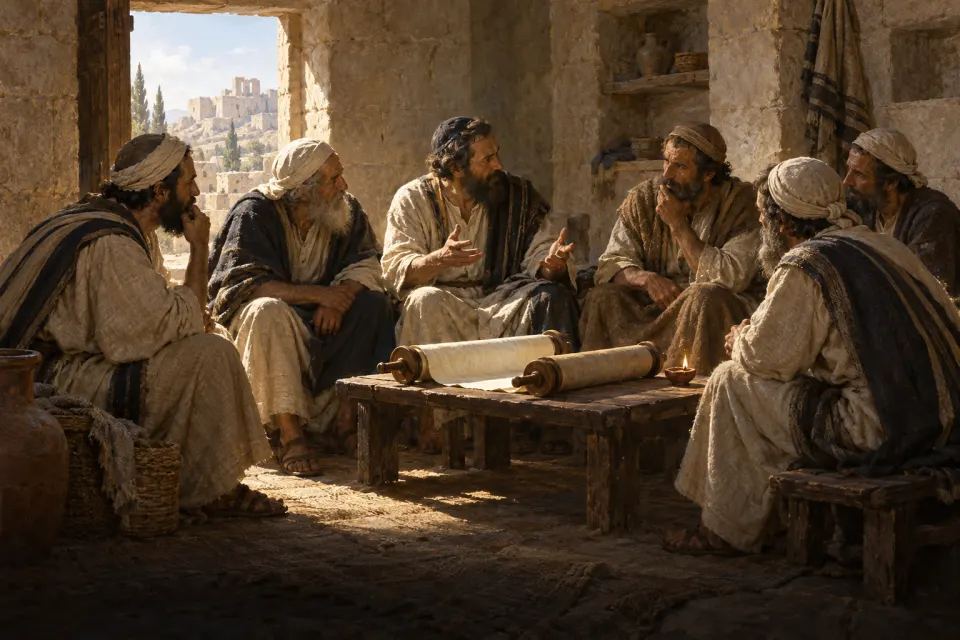
From Temple to Torah study c. 30 BCE – 135 CE
Judaism's earlier story, told elsewhere in the app, centred on sacrifice at the Jerusalem Temple. In its last generations the Pharisees upheld ancestral tradition beside the written Torah, and Hillel's lenient school later became the main line of rabbinic law. Rome crushed the Jewish revolt of 66–70 CE and burned the Temple. By rabbinic tradition, Yohanan ben Zakkai won Roman leave to open an academy at Yavneh, where study and prayer replaced sacrifice. Hadrian refounded Jerusalem as the colony Aelia Capitolina; after Bar Kokhba's revolt was crushed in 135, Jews were barred from the city.[13–17]
Mishnah and Talmuds c. 200 – 600 CE
In Galilee early in the third century, Rabbi Judah ha-Nasi edited the Mishnah, arranging oral teaching into six orders of law. Later sages, the amoraim, debated it in academies in the Land of Israel and in Babylonia. The Galilean schools produced the Jerusalem Talmud around 400; the far larger Babylonian Talmud was edited from about 500, perhaps into the 600s. Rabbis also gathered their readings of scripture into midrash collections. Babylonia, with its academies at Sura and Pumbedita, became the leading centre of learning.[18–22]
Geonim, Sepharad and Ashkenaz c. 600 – 1500
Under Islamic rule the heads of the Babylonian academies, the geonim, answered legal questions from distant communities, spreading the Babylonian Talmud's authority. New centres grew in Muslim Spain and North Africa and, by the eleventh century, in the Rhineland and northern France, cradle of Ashkenazi Jewry. Christian Europe grew harsher: crusaders massacred Rhineland Jews in 1096, England expelled its Jews in 1290, and in 1492 Spain ordered its Jews to accept baptism or leave. The Zohar, the classic of Kabbalah, appeared in Castile in the late thirteenth century.[23–26]
From Safed to Hasidism 1492 – 1800
Exiles from Iberia carried Sephardi traditions across North Africa, Italy and the Ottoman lands. In the Galilean town of Safed, Joseph Karo wrote the Shulchan Arukh, which became standard once Moses Isserles added Ashkenazi custom, and Isaac Luria remade Kabbalah. Poland-Lithuania became home to the largest Jewish population in Christian Europe. A messianic movement around Shabbetai Tzevi collapsed when he converted to Islam in 1666. In the eighteenth century the Baal Shem Tov inspired Hasidism, which met fierce rabbinic opposition before an uneasy truce.[27–32]
Emancipation and new movements 1780 – 1939
As European states granted Jews civic rights, Moses Mendelssohn and the Haskalah, the Jewish Enlightenment, urged Jews to add secular learning to their own. In Germany, reformers from 1810 changed worship and doctrine; Samson Raphael Hirsch answered with a modern Orthodoxy, and Zacharias Frankel's middle path grew into Conservative Judaism. From 1881 to 1924 over two million Jews left eastern Europe, fleeing persecution and poverty, mostly for the United States. Herzl's congress at Basel in 1897 made Zionism a political movement, and in 1920s America Mordecai Kaplan founded Reconstructionism.[33–38]
Catastrophe and renewal 1939 – today
Nazi Germany and its collaborators murdered six million Jews in the Holocaust, which Jews call the Shoah, destroying the heartlands of eastern European Jewry. David Ben-Gurion proclaimed the State of Israel on 14 May 1948; in the war that followed about 700,000 Palestinian Arabs fled or were driven from their homes. By 1967 most of the roughly 800,000 Jews of Arab countries had left, many for Israel and others, especially North Africans, for France. Liberal movements have ordained women rabbis since 1972, though Regina Jonas was privately ordained in Germany in 1935.[39–42]
Key moments
- 70 CEFall of the Second Temple · Jerusalem
- c. 200 CEThe Mishnah · Galilee
- c. 500 CEThe Babylonian Talmud · Sura and Pumbedita, Babylonia
- 1095 CEThe First Crusade · Clermont to Jerusalem
- 1190 CEMaimonides · Córdoba to Cairo
- c. 1280 CEThe Zohar · Spain
- 1348 CEThe Black Death: penance and pogroms · Europe
- 1492 CEThe expulsion from Spain · Spain
- c. 1570 CEIsaac Luria and the kabbalists of Safed · Safed, Ottoman Galilee
- 1666 CEShabbetai Tzevi, the messiah who converted · Smyrna (Izmir) and Edirne (Adrianople), Ottoman Empire
- 1670 CESpinoza's Treatise · Amsterdam
- 1783 CEMoses Mendelssohn and the Haskalah · Berlin
- 1897 CEThe First Zionist Congress · Basel, Switzerland
- 1935 CERegina Jonas, the first woman rabbi · Berlin
- c. 1941 CEThe Shoah · German-occupied Europe
- 1948 CEThe State of Israel · Tel Aviv
Beliefs
One God · שְׁמַע יִשְׂרָאֵל
"Hear, O Israel", the opening words of the Shema
Jews affirm a single, indivisible God who created the world and acts in history. The Shema, from Deuteronomy 6:4, declares that the Lord is one, and observant Jews recite it each morning and evening. Out of reverence, the four-letter divine name is not pronounced; readers say Adonai, "my Lord", in its place.[3]
Written and Oral Torah · תּוֹרָה שֶׁבִּכְתָב וְשֶׁבְּעַל פֶּה
Torah in writing and Torah by mouth
For the rabbis, the five books of Moses came with an authoritative oral interpretation, also given at Sinai, so that the two together form one teaching. The Mishnah, the Talmuds and later rulings carry that oral Torah forward. Reform and Reconstructionist Jews generally see the tradition as developing in history and shaped by human hands.[43–44]
Covenant · בְּרִית
Brit, a binding agreement
Jews understand themselves as bound to God by a covenant, begun with Abraham and sealed at Sinai, in which Israel is chosen to be "a kingdom of priests and a holy nation". Jewish thinkers have generally read this chosenness not as a claim to superiority but as a calling to obligation and service.[45]
Halakha and the commandments · הֲלָכָה
"The way" or "the path"
Halakha is the whole body of Jewish law, built on the Torah's commandments, the mitzvot, which rabbinic tradition counts as 613, and on later rabbinic rulings. It reaches into every part of life. Orthodox Jews hold it binding, Conservative Judaism treats it as binding but able to develop, and Reform Judaism has treated it as guidance rather than obligation.[11, 46]
Repentance · תְּשׁוּבָה
Teshuvah, "return"
Jews teach that anyone who has done wrong can turn back to God. Repentance means regretting the wrong, confessing it, making amends where possible and changing one's ways. Prayer and charity accompany it, and the days from Rosh Hashanah to Yom Kippur are set aside for it above all.[47]
Messiah and the world to come · מָשִׁיחַ, עוֹלָם הַבָּא
Mashiach, "anointed one"; olam ha-ba
Traditional Judaism looks for a messiah, a king of David's line who will gather the exiles and bring an age of peace, and teaches the resurrection of the dead and a world to come. Maimonides placed both among his Thirteen Principles. Early Reform Judaism replaced a personal messiah with hope for a messianic age.[48–49]
Practice

Sabbath · שַׁבָּת
Shabbat runs from sunset on Friday to nightfall on Saturday. It opens with candle-lighting and a blessing over wine, the kiddush, and closes with the havdalah ceremony. Observant Jews refrain from the 39 categories of work the rabbis derived from scripture, though saving a life overrides every Sabbath law.[50]
Prayer and the synagogue · תְּפִלָּה
Traditional Jews pray three times a day from a prayer book, the siddur; the central prayer, the Amidah, is said standing. Some prayers need a quorum of ten adults, a minyan: Orthodox congregations count only men, most liberal ones count women too. The Torah scroll is read aloud on Sabbaths, Mondays and Thursdays.[51–53]
Kosher food · כַּשְׁרוּת
The dietary laws, kashrut, permit mammals that both chew the cud and have split hooves, fish with fins and scales, and certain birds. Meat must come from animals slaughtered in the prescribed way and be salted to remove blood, and meat and dairy foods are kept apart.[54]
Rites of passage
Boys are circumcised on the eighth day, a sign of the covenant with Abraham. At 13 a boy becomes bar mitzvah, responsible for the commandments; many communities mark bat mitzvah at 12. Couples marry under a canopy, the huppah, with a marriage contract, the ketubbah. Mourners sit shiva for seven days and recite the Kaddish.[55–56]
Study of Torah · תַּלְמוּד תּוֹרָה
Study is itself a form of worship in rabbinic Judaism. Jews learn Talmud in pairs, in classes and in yeshivas, academies for advanced study, which once filled eastern Europe and today flourish above all in Israel and the United States.[57]
Holy days
The year ahead
| Date | Holy day | Reckoned |
|---|---|---|
| 5 December 2026 – 12 December 2026 Begins the evening before | Hanukkah חֲנֻכָּה | 25 Kislev, Hebrew calendar |
| 23 January 2027 Begins the evening before | Tu BiShvat ט״ו בשבט | 15 Shevat, Hebrew calendar |
| 23 March 2027 Begins the evening before | Purim פּוּרִים | 14 Adar, Hebrew calendar |
| 22 April 2027 – 29 April 2027 Begins the evening before | Passover פֶּסַח | 15 Nisan, Hebrew calendar |
| 11 June 2027 – 12 June 2027 Begins the evening before | Shavuot שָׁבוּעוֹת | 6 Sivan, Hebrew calendar |
| 12 August 2027 Begins the evening before | Tisha B'Av תִּשְׁעָה בְּאָב | 9 Av, Hebrew calendar |
| 2 October 2027 – 3 October 2027 Begins the evening before | Rosh Hashanah רֹאשׁ הַשָּׁנָה | 1 Tishri, Hebrew calendar |
| 11 October 2027 Begins the evening before | Yom Kippur יוֹם כִּפּוּר | 10 Tishri, Hebrew calendar |
Rosh Hashanah · רֹאשׁ הַשָּׁנָה
1–2 Tishri (September or October)
The Jewish New Year, a day of judgement, when the ram's-horn shofar is sounded in synagogue. Apples dipped in honey express hope for a sweet year. It opens ten days of repentance ending on Yom Kippur.[58]
Yom Kippur · יוֹם כִּפּוּר
10 Tishri (September or October)
The Day of Atonement, the most solemn day of the year. Adults fast from food and drink from sunset to nightfall the next day, and spend much of it in synagogue confessing sins and asking forgiveness. A final blast of the shofar ends it.[59]
Sukkot · סֻכּוֹת
15–21 Tishri (September or October)
The Feast of Booths recalls the Israelites' years in the wilderness. Families eat, and some sleep, in a sukkah, a temporary hut roofed with branches. Simchat Torah, rejoicing over the Torah, follows.[60]
Passover · פֶּסַח
15 Nisan for 7 or 8 days (March or April)
Pesach recalls the Exodus from Egypt. It lasts seven days in Israel and eight elsewhere for many Jews. Households remove leavened food and eat matzah, and families retell the story at a ritual meal, the seder.[61]
Shavuot · שָׁבוּעוֹת
6 Sivan, and 7 Sivan outside Israel (May or June)
The Feast of Weeks falls seven weeks after Passover. It began as a harvest festival, and the rabbis tied it to the giving of the Torah at Sinai; many Jews stay up through the night studying.[62]
Hanukkah · חֲנֻכָּה
25 Kislev for 8 days (November or December)
The festival of lights recalls the rededication of the Temple after the Maccabean revolt of the second century BCE. Each night one more light is kindled on an eight-branched lamp, the hanukkiah.[63]
People
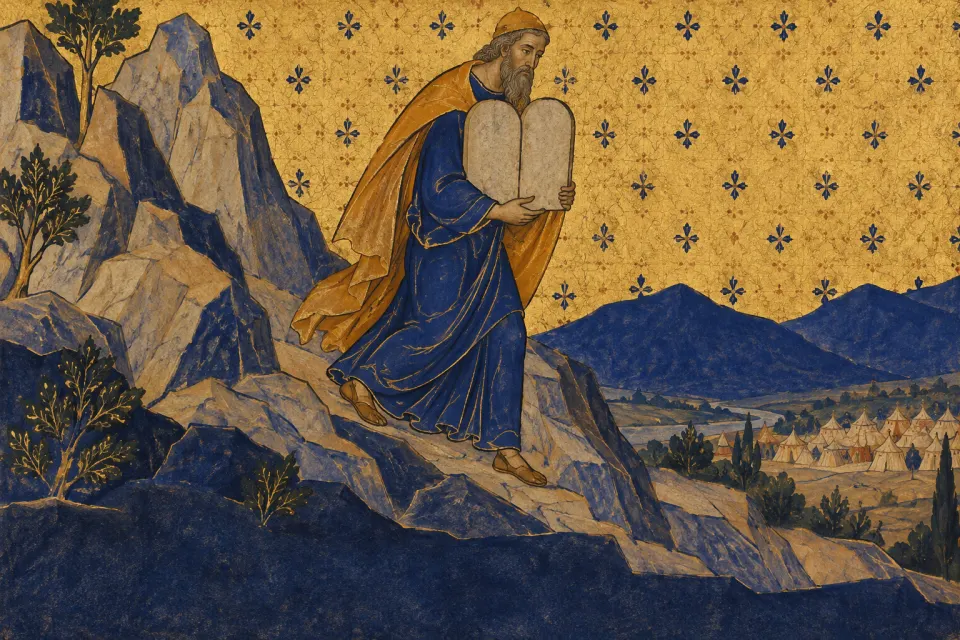
Moses · מֹשֶׁה רַבֵּנוּ
prophet
Jews call him Moshe Rabbenu, "Moses our teacher", and revere him as the greatest of the prophets. By tradition he led Israel out of Egypt and received at Sinai both the written Torah and its oral interpretation.[64]

Hillel the Elder
scholar · 1st century BCE – early 1st century CE
Born in Babylonia, Hillel became the leading sage of his day in Jerusalem. He framed rules for interpreting scripture, and the generally gentler rulings of his school prevailed over those of Shammai's. He is remembered for summing up the Torah as not doing to others what is hateful to you.[65]

Akiva ben Yosef
scholar · c. 50 – c. 135 CE
By tradition an unlettered shepherd who began to study in middle age, Akiva became a towering teacher who organised the oral law and laid groundwork for the Mishnah. He backed Bar Kokhba's revolt, and the Romans executed him for teaching Torah.[66]

Judah ha-Nasi
scholar · c. 135 – c. 220 CE
Patriarch of the Jews of the Land of Israel and head of their high court, he gave the Mishnah its final form. The rabbis call him simply "Rabbi". He lived in Sepphoris and Bet She'arim, where he was buried.[67]
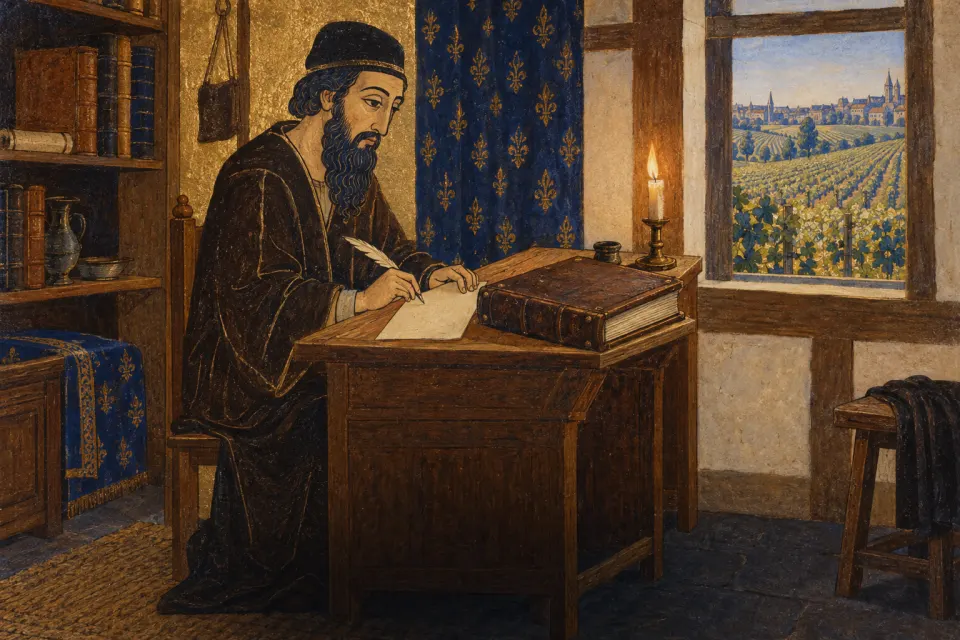
Rashi · רש״י
scholar · 1040 – 1105
Rabbi Shlomo Yitzhaki of Troyes, in Champagne, studied at Worms and Mainz. His concise commentaries on the Bible and the Talmud are the standard way into both, and his notes have been printed beside the Talmud's text since its first printed editions.[68]

Moses Maimonides · רמב״ם
scholar · 1135 or 1138 – 1204
Born in Córdoba, Rambam fled persecution and settled in Egypt, where he served as a court physician. His Mishneh Torah, in 14 books, codified all of Jewish law, and his Arabic Guide for the Perplexed sought a reasoned account of Jewish faith.[69]

Israel ben Eliezer, the Baal Shem Tov
teacher · c. 1700 – 1760
A healer and mystic from Podolia, in today's Ukraine, he settled at Medzhybizh and is honoured as the founder of Hasidism. He taught that God can be served with joy in everyday acts, not only through study or self-denial.[70]
Scripture
Tanakh · תַּנַ״ךְ
The Hebrew Bible, named from the initials of its three parts: Torah (the five books of Moses), Nevi'im (Prophets) and Ketuvim (Writings). Jewish tradition counts 24 books. A handwritten Torah scroll is read through in synagogues over the course of each year.[71]
Mishnah · מִשְׁנָה
early 3rd century CE
The first great work of rabbinic law, in Hebrew, edited under Judah ha-Nasi. Its six orders and 63 tractates cover farming, festivals, marriage, civil law, the Temple and purity, and it often records disagreements alongside rulings.[72]
Jerusalem Talmud · תַּלְמוּד יְרוּשַׁלְמִי
c. 400 CE
Despite its name, it was produced in the academies of Galilee, chiefly Tiberias. Its discussion, mostly in Aramaic, covers only part of the Mishnah and is far shorter and less polished than the Babylonian Talmud.[73]
Babylonian Talmud · תַּלְמוּד בַּבְלִי
c. 500 – 600 CE
The Mishnah with the Gemara, the Babylonian sages' long discussion of it in Aramaic and Hebrew. It became the chief authority in Jewish law and the core of advanced study. Printed pages surround its text with later commentaries, above all Rashi's.[74]
Midrash Rabbah · מִדְרָשׁ רַבָּה
5th century CE onward
The "Great Midrash": rabbinic commentaries on the five books of Moses and the five scrolls, such as Ruth and Esther, compiled over several centuries. It mixes verse-by-verse comment, sermons and stories.[75]
Shulchan Arukh · שֻׁלְחָן עָרוּךְ
1564 – 1565
Joseph Karo's "Set Table" sums up Jewish law for daily life. Moses Isserles' glosses, the Mappah or "Tablecloth", added Ashkenazi practice, and the two together remain the standard reference for Orthodox observance.[28, 76]
Places

Western Wall, Jerusalem
PSE · UNESCO World Heritage, 1981
The surviving stretch of the retaining wall Herod built around the Temple Mount, and the holiest place where Jews pray today. It stands within the Old City of Jerusalem, a World Heritage property since 1981.[77]
Bet She'arim
ISR · UNESCO World Heritage, 2015
The Galilean town where Judah ha-Nasi presided over the high court and was buried. Its rock-cut catacombs, with inscriptions in Hebrew, Aramaic and Greek, became a leading Jewish burial ground. UNESCO inscribed the necropolis in 2015.[78]
Worms synagogue and Holy Sand cemetery
DEU · UNESCO World Heritage, 2021
Worms, with Speyer and Mainz, formed the medieval ShUM communities on the Rhine, where Ashkenazi tradition took shape. The rebuilt synagogue stands on an eleventh-century site. UNESCO inscribed the ShUM sites in 2021.[79]
Auschwitz-Birkenau
POL · UNESCO World Heritage, 1979
The largest Nazi camp, where about one million Jews were murdered, most in Birkenau's gas chambers. It is now a memorial and museum, central to Holocaust remembrance.[80]
Where it spread
| Region | From | How |
|---|---|---|
| Israel | 70 CE | Yavneh, by rabbinic tradition, later the Galilee; Jewish life in the land is far older |
| Italy | 70 CE | Rome's community is older still |
| Greece | 100 CE | Romaniote communities; Sephardim came after 1492; most were murdered in the Holocaust |
| Turkey | 100 CE | Romaniote communities; Sephardic refugees came after 1492 |
| Algeria | 200 CE – 1962 CE | Almost all left at independence in 1962 |
| Iran | 200 CE | Persian Jewry, present since the Babylonian exile |
| Iraq | 200 CE – 1951 CE | Babylonian academies; almost all emigrated in 1950–51 |
| Libya | 200 CE – 1970 CE | Almost all left between 1948 and 1970 |
| Syria | 200 CE – 1994 CE | Damascus and Aleppo; almost all left after emigration was allowed in 1992 |
| Tunisia | 200 CE | Carthage, attested in the 2nd century; Djerba's community continues today |
| Egypt | 300 CE – 1967 CE | The Cairo Geniza; almost all left between 1948 and 1967 |
| Spain | 300 CE – 1492 CE | Expelled in 1492 |
| Yemen | 300 CE – 1950 CE | Most emigrated in 1949–50; a small community remained until 2021 |
| Germany | 321 CE | Cologne, attested in 321 |
| France | 400 CE | Expelled from the kingdom in 1394; communities remained in papal Avignon, Alsace and Lorraine |
| Morocco | 400 CE | Sephardic refugees joined after 1492 |
| Portugal | 400 CE – 1497 CE | Forced conversion of 1497 |
| Georgia | 500 CE | Attested at Mtskheta; by tradition far older |
| Czechia | 1000 CE | Prague |
| India | 1000 CE | Cochin copper plates, traditionally c. 1000; the Bene Israel place their arrival earlier |
| United Kingdom | 1070 CE – 1290 CE | Expelled in 1290 |
| China | 1100 CE – 1850 CE | Kaifeng; a synagogue from 1163; the community had dispersed by the mid-1800s |
| Hungary | 1100 CE | |
| Poland | 1100 CE | |
| Ukraine | 1100 CE | |
| Uzbekistan | 1100 CE | Bukharan Jews; most emigrated after 1990 |
| Austria | 1200 CE | Vienna |
| Belarus | 1388 CE | Brest, in Vytautas's charter of 1388 |
| Lithuania | 1388 CE | Charters of Grand Duke Vytautas, 1388–89; Vilna later became the "Jerusalem of Lithuania" |
| Romania | 1500 CE | Moldavian towns such as Iași |
| Latvia | 1571 CE | Piltene in Courland, later Riga |
| Netherlands | 1593 CE | PRT. Sephardim in Amsterdam |
| Brazil | 1636 CE – 1654 CE | NLD. Kahal Zur Israel, Recife |
| Suriname | 1639 CE | NLD. Jodensavanne |
| Switzerland | 1650 CE | Endingen and Lengnau, long the only villages open to Jews |
| United States | 1654 CE | BRA. New Amsterdam |
| United Kingdom | 1656 CE | NLD. Readmission under Cromwell |
| Jamaica | 1660 CE | Kingston |
| Denmark | 1684 CE | Copenhagen; nearly all Danish Jews were rescued to Sweden in 1943 |
| Moldova | 1700 CE | Bessarabia; Kishinev |
| Azerbaijan | 1742 CE | Mountain Jews of Quba; their presence in the region is older |
| Belgium | 1750 CE | Revived under Austrian rule; Antwerp and Brussels |
| Canada | 1760 CE | Montreal |
| Russia | 1772 CE | Most came with the partitions of Poland; the Mountain Jews of Dagestan are older |
| Sweden | 1775 CE | Aaron Isaac admitted to Stockholm |
| Australia | 1788 CE | Jewish convicts on the First Fleet; the Sydney congregation from 1831 |
| Portugal | 1800 CE | Return in the early 1800s, Lisbon and the Azores |
| Brazil | 1824 CE | Moroccan Jews in Belém and the Amazon |
| Venezuela | 1827 CE | Coro; the community has shrunk since the 2000s |
| South Africa | 1841 CE | Cape Town |
| New Zealand | 1843 CE | Wellington |
| Argentina | 1862 CE | Congregación Israelita, Buenos Aires; farming colonies from 1889 |
| Spain | 1870 CE | Return after religious freedom in 1868–69; the expulsion edict was revoked in 1968 |
| Panama | 1876 CE | Kol Shearith Israel, Panama City |
| Chile | 1906 CE | |
| Mexico | 1908 CE | Mexico City; earlier crypto-Jews under the Inquisition |
| Uruguay | 1909 CE |
Art & objects
Public-domain objects from museum collections. Select one to see it at the museum.
 Hanukkah lamplate 17th century
 Jewish betrothal ring17th or 19th century
 Torah crown (keter)ca. 1740–50
 The Synagogue1648
 Bowl Fragments with Menorah, Shofar, and Torah ArkRoman, 300–350
 Torah binder1615–16
 Baraffael Family Hanukkah Lamp1773–75
 Torah ark curtain1685/86, with other seventeenth-century elements, assembled ca. 1725
 Pair of Torah finials (Rimmonim)1775–90
 Ketubah (Jewish Marriage Certificate)dated 1889
 Esther Scroll and Case18th century
 Hanukkah Lamp1706
Numbers
- Jews worldwide
- c. 14.8–15.7 million[8]
Pew counted 14.8 million in 2020; demographer Sergio DellaPergola estimated 15.7 million for 1 January 2024. Broader definitions, counting people with a Jewish parent, give about 18.8 million.
- Living in Israel
- c. 45% (7.15 million, 2024)[8]
Israel has the largest Jewish population, followed by the United States.
- Jews in the United States
- c. 6.3–7.5 million[81]
6.3 million on DellaPergola's core definition (2024); Pew's 2020 survey estimated 7.5 million, including children.
National censuses
| Country | Year | Count | Share |
|---|---|---|---|
| Canada Jewish | 2021 | 335,295 | 0.9% |
| United Kingdom (England and Wales) Jewish | 2021 | 271,327 | 0.5% |
| Australia Judaism | 2021 | 99,956 | 0.4% |
| New Zealand all Judaism responses | 2018 | 5,274 | 0.1% |
| India Jews / Judaism | 2011 | 4,429 | 0.0% |
Source: Australian Bureau of Statistics, Census of Population and Housing 2021, 'Religious affiliation in Australia' (Table 4), CC BY 4.0. Source: Office of the Registrar General & Census Commissioner, India, Census of India 2011, Table C-01 Population by religious community and its appendix, under the Government Open Data License – India. Source: Office for National Statistics licensed under the Open Government Licence v.3.0 Adapted from Statistics Canada, Table 98-10-0342-01 Religion by visible minority and generation status: Canada, provinces and territories, census metropolitan areas and census agglomerations with parts, released 2022-10-26. This does not constitute an endorsement by Statistics Canada of this product. Source: Stats NZ, 2018 Census, licensed by Stats NZ for re-use under the Creative Commons Attribution 4.0 International licence.
How we know
How we know about the early rabbis
Almost everything known about the first rabbis comes from their own texts, edited generations later. Stories such as Yohanan ben Zakkai's escape from Jerusalem in a coffin blend memory and legend. Many historians now think the rabbis were a small, peripheral group for centuries after 70, and that their Judaism became the norm for most Jews only gradually, as the Talmud spread under the geonim.[82–83]
Common misconceptions
Myth Judaism is simply the religion of the Old Testament.
Fact Jews share their scripture with Christians, but rabbinic Judaism reads the Hebrew Bible through the oral Torah: the Mishnah, the Talmuds, midrash and later law codes. Many practices, from the order of synagogue prayer to the details of the Sabbath, come from that rabbinic tradition rather than from the plain text of the Bible.[84]
Myth Kosher food is food that a rabbi has blessed.
Fact Kosher means fit or proper. Food is kosher when it comes from permitted animals, is slaughtered and prepared in the required way, and keeps meat and milk apart. Rabbis or agencies may supervise production and certify that the rules were followed, but no blessing makes food kosher.[85]
Myth Hanukkah is the most important Jewish holiday.
Fact In Jewish tradition Hanukkah is a minor festival, whose story comes from the books of Maccabees rather than the Hebrew Bible. Its prominence, especially in North America, owes much to its nearness to Christmas, and gift-giving is a borrowed custom. Yom Kippur, Rosh Hashanah, Passover and the weekly Sabbath matter far more in the tradition.[86]
Glossary
- Gemara · גְּמָרָא
- The rabbis' discussion of the Mishnah, mostly in Aramaic. Mishnah and Gemara together make up the Talmud.[74]
- Tannaim and amoraim
- The sages of the Mishnah (tannaim, c. 1st–early 3rd century) and the later sages whose debates on it fill the Talmuds (amoraim, c. 3rd–5th century).[19]
- Gaon · גָּאוֹן
- Title of the heads of the Babylonian academies of Sura and Pumbedita, the highest authorities in Jewish law from about the late sixth to the eleventh century.[23]
- Minyan · מִנְיָן
- The quorum of ten adults (in Orthodox practice, ten men) needed for public prayer.[52]
- Rebbe
- A Hasidic spiritual leader, regarded as a tzaddik, a righteous man; many leadership roles passed down family dynasties.[87]
- Haredi · חֲרֵדִי
- "One who trembles" before God: the strictly traditional, ultra-Orthodox stream, including most Hasidim, which keeps apart from secular society.[88]
- Ashkenazi, Sephardi, Mizrahi
- Jews whose traditions come from medieval Germany and eastern Europe; from Spain and Portugal; and from the Middle East and North Africa. They differ in custom, liturgy and Hebrew pronunciation.[10, 89]
- Shoah · שׁוֹאָה
- "Catastrophe": the Hebrew name for the Holocaust, the Nazi murder of six million Jews.[39]
Sources
Each statement above was checked against published sources; the verdict says whether it stood as written, was corrected or was hedged.
- VerifiedBritannica, Rabbinic Judaism; Britannica, Johanan ben Zakkai; Encyclopedia.com, Pharisees.
- VerifiedBritannica, Moses; Britannica, Bavli; Encyclopedia.com, Oral Law.
- VerifiedBritannica, Shema; Britannica, Yahweh; Encyclopedia.com, Shema, Reading of.
- VerifiedBritannica, Synagogue; Britannica, Sabbath; Encyclopedia.com, Synagogue.
- VerifiedBritannica, Cohen; Encyclopedia.com, Rabbi, Rabbinate.
- VerifiedBritannica, Aramaic language / Bavli; Encyclopedia.com, Talmud.
- VerifiedBritannica, Jewish religious year; Encyclopedia.com, Calendar.
- HedgedPew Research Center, How the Global Religious Landscape Changed From 2010 to 2020; DellaPergola, World Jewish Population, 2024, American Jewish Year Book 2024.
- VerifiedPew Research Center, Jewish Americans in 2020; Britannica, Zacharias Frankel / Reconstructionism / Samson Raphael Hirsch; Encyclopedia.com, Conservative Judaism.
- VerifiedBritannica, Mizraḥi / Sephardi; Pew Research Center, Israel's Religiously Divided Society; Encyclopedia.com, Ashkenaz.
- VerifiedBritannica, Halakhah; Encyclopedia.com, Mitzvah; Encyclopedia.com, Halakhah.
- VerifiedPew Research Center, Israel's Religiously Divided Society; Britannica, Israel: People; Pew, Jewish Americans in 2020.
- VerifiedBritannica, Pharisee / Sadducee; Encyclopedia.com, Pharisees.
- VerifiedBritannica, Pharisee; Britannica, Hillel / Bet Shammai; Encyclopedia.com, Pharisees.
- VerifiedBritannica, Johanan ben Zakkai; Encyclopedia.com, Johanan ben Zakkai; Encyclopedia.com, Pharisees.
- HedgedBritannica, Johanan ben Zakkai; Encyclopedia.com, Johanan ben Zakkai; Encyclopedia.com, Yavneh.
- CorrectedBritannica, Bar Kokhba Revolt / Aelia Capitolina; Encyclopedia.com, Bar Kokhba; Encyclopedia.com, Aelia Capitolina.
- VerifiedBritannica, Judah ha-Nasi / Bavli; Encyclopedia.com, Mishnah.
- VerifiedBritannica, Jerusalem Talmud / Talmud: Early compilations; Encyclopedia.com, Amoraim.
- HedgedBritannica, Jerusalem Talmud / Bavli; Encyclopedia.com, Talmud.
- VerifiedBritannica, Midrash rabba / Midrash; Encyclopedia.com, Midrash.
- VerifiedBritannica, Judaism: Babylonia 200–650 / Gaon; Encyclopedia.com, Gaon.
- VerifiedBritannica, Gaon; Encyclopedia.com, Gaon.
- VerifiedBritannica, Judaism: Medieval European Judaism 950–1750 and Rashi; Encyclopedia.com, Ashkenaz; UNESCO, ShUM Sites.
- VerifiedBritannica, Antisemitism in medieval Europe / Judaism: Marginalization and expulsion; Encyclopedia.com, Jewish People Caught in the Crusades; Encyclopedia.com, England; UK National Archives, Jews in England in 1290; Encyclopedia.com, Jews, Expulsion of.
- HedgedBritannica, Moses de León / Sefer ha-zohar; Encyclopedia.com, Kabbalah.
- VerifiedBritannica, Antisemitism in medieval Europe; Britannica, Ladino language; Encyclopedia.com, Jews, Expulsion of; Encyclopedia.com, Sephardim.
- VerifiedBritannica, Shulḥan ʿarukh / Mappa; Encyclopedia.com, Shulhan Arukh.
- VerifiedBritannica, Safed; Encyclopedia.com, Safed.
- VerifiedBritannica, Poland: History; YIVO Encyclopedia, Poland before 1795; POLIN Museum, Paradisus Iudaeorum 1569–1648.
- VerifiedBritannica, Shabbetai Tzevi; Encyclopedia.com, Shabbetai Zevi.
- VerifiedBritannica, Baal Shem Tov / Hasidism; Encyclopedia.com, Hasidism.
- VerifiedBritannica, Haskala / Moses Mendelssohn; Encyclopedia.com, Haskalah; Encyclopedia.com, Emancipation.
- VerifiedBritannica, Israel Jacobson; Encyclopedia.com, Reform Judaism.
- VerifiedBritannica, Samson Raphael Hirsch / Zacharias Frankel; Encyclopedia.com, Conservative Judaism; Encyclopedia.com, Orthodox Judaism.
- VerifiedLibrary of Congress, From Haven to Home; Encyclopedia.com, Jewish Immigration.
- VerifiedBritannica, Zionist Congress / Basel Program; Encyclopedia.com, Zionism.
- VerifiedBritannica, Reconstructionism / Mordecai Kaplan; Encyclopedia.com, Reconstructionism.
- VerifiedUSHMM Holocaust Encyclopedia, Documenting Numbers of Victims; Britannica, Holocaust; Encyclopedia.com, Holocaust.
- HedgedBritannica, Law of Return / History of Israel; Britannica, Israel: Armistice and refugees; US State Department, Office of the Historian, Creation of Israel; Cambridge University Press, Morris, The Birth of the Palestinian Refugee Problem Revisited.
- CorrectedEncyclopedia.com, Jews in the Middle East; Britannica, Law of Return / Israel.
- CorrectedBritannica, Sally J. Priesand; Encyclopedia.com, Priesand, Sally Jane; Yad Vashem, The Story of Rabbiner Regina Jonas.
- VerifiedEncyclopedia.com, Oral Law; Britannica, Moses / Halakhah.
- VerifiedBritannica, Reconstructionism; Britannica, Judaism: Religious reform movements; Encyclopedia.com, Reform Judaism.
- VerifiedBritannica, Chosen people; Encyclopedia.com, Chosen People.
- VerifiedPew Research Center, Jewish Americans in 2020; Britannica, Zacharias Frankel; Encyclopedia.com, Conservative Judaism and Reform Judaism.
- CorrectedBritannica, Teshuva; Britannica, Judaism: Ten Days of Penitence; Encyclopedia.com, Repentance.
- VerifiedBritannica, Messiah / ʿolam ha-ba / Thirteen Articles of Faith; Encyclopedia.com, Messiah; Encyclopedia.com, Olam ha-Ba.
- VerifiedBritannica, Israel Jacobson; Encyclopedia.com, Reform Judaism.
- VerifiedBritannica, Sabbath; Encyclopedia.com, Sabbath.
- VerifiedBritannica, Shaharith / Minhah / Siddur; Encyclopedia.com, ʿAmidah.
- VerifiedBritannica, Minyan; Encyclopedia.com, Minyan; Encyclopedia.com, Prayer.
- VerifiedBritannica, Simchat Torah / Judaism: Basic practices; Encyclopedia.com, Torah, Reading of.
- VerifiedBritannica, Kashruth / Kosher; Encyclopedia.com, Dietary Laws.
- VerifiedBritannica, Judaism: Basic practices / Bar and bat mitzvah; Encyclopedia.com, Circumcision; Encyclopedia.com, Bar Mitzvah, Bat Mitzvah.
- VerifiedBritannica, Ḥuppa / Ketubba / Shivah / Kaddish; Encyclopedia.com, Mourning; Encyclopedia.com, Kaddish.
- VerifiedEncyclopedia.com, Yeshivot; Britannica, Shaharith; Britannica, Ultra-Orthodox Judaism.
- VerifiedBritannica, Jewish religious year: High Holy Days; Encyclopedia.com, Rosh Ha-Shanah.
- CorrectedBritannica, Yom Kippur; Encyclopedia.com, Yom Kippur.
- VerifiedBritannica, Jewish festivals / Simchat Torah; Encyclopedia.com, Sukkot.
- VerifiedBritannica, Passover; Encyclopedia.com, Passover.
- VerifiedBritannica, Shavuot; Encyclopedia.com, Shavuot.
- VerifiedBritannica, Hanukkah; Encyclopedia.com, Hanukkah.
- VerifiedBritannica, Moses; Encyclopedia.com, Moses.
- VerifiedBritannica, Hillel; Encyclopedia.com, Hillel.
- HedgedBritannica, Akiva ben Yosef; Encyclopedia.com, Akiva; Encyclopedia.com, Bar Kokhba.
- CorrectedBritannica, Judah ha-Nasi / Bet Sheʿarim; Encyclopedia.com, Judah ha-Nasi.
- VerifiedBritannica, Rashi; Encyclopedia.com, Rashi.
- HedgedBritannica, Mishne Torah / Guide for the Perplexed / Maimonides; Encyclopedia.com, Maimonides, Moses.
- VerifiedBritannica, Baal Shem Tov; Encyclopedia.com, Israel ben Eliezer Ba'al Shem Tov.
- VerifiedBritannica, Tanakh; Encyclopedia.com, Tanakh and Bible.
- VerifiedBritannica, Zeraʿim / Nashim / Qodashim / Ṭohorot; Encyclopedia.com, Mishnah.
- VerifiedBritannica, Jerusalem Talmud; Encyclopedia.com, Talmud.
- VerifiedBritannica, Bavli; Encyclopedia.com, Talmud; Encyclopedia.com, Rashi.
- VerifiedBritannica, Midrash rabba; Encyclopedia.com, Midrash.
- VerifiedBritannica, Shulḥan ʿarukh; Encyclopedia.com, Shulhan Arukh.
- VerifiedBritannica, What is the significance of the Western Wall?; Encyclopedia.com, Western Wall; UNESCO, Old City of Jerusalem and its Walls, state of conservation.
- VerifiedBritannica, Bet Sheʿarim; Encyclopedia.com, Bet She'arim; UNESCO World Heritage Centre, 2015 inscriptions.
- VerifiedUNESCO World Heritage Centre, ShUM Sites; Britannica, Worms.
- VerifiedUSHMM, Auschwitz; UNESCO, Auschwitz Birkenau.
- HedgedDellaPergola, AJYB 2024; Pew Research Center, Jewish Americans in 2020.
- VerifiedEncyclopedia.com, Johanan ben Zakkai; Britannica, Johanan ben Zakkai; Encyclopedia.com, Talmud.
- HedgedCambridge University Press, The Cambridge History of Judaism, vol. 4, The Late Roman-Rabbinic Period, ed. S. T. Katz; Jewish Theological Seminary, David C. Kraemer; Bryn Mawr Classical Review, review of Seth Schwartz, Imperialism and Jewish Society, 200 B.C.E. to 640 C.E. (supporting).
- VerifiedBritannica, Rabbinic Judaism; Encyclopedia.com, Oral Law; Encyclopedia.com, Prayer.
- VerifiedBritannica, Kosher; Encyclopedia.com, Dietary Laws.
- VerifiedBritannica, Hanukkah; Encyclopedia.com, Hanukkah.
- VerifiedBritannica, Rebbe / Hasidism; Encyclopedia.com, Hasidism.
- CorrectedBritannica, Ultra-Orthodox Judaism; Encyclopedia.com, Judaism: Orthodox Judaism.
- VerifiedBritannica, What are the main differences between Ashkenazi and Sephardic Jews?; Encyclopedia.com, Sephardim.
Last fact-checked 3 October 2026.