
Overview
Protestantism is the family of Christian churches that grew out of the Reformation, a movement born in northern Europe in the early 1500s in reaction to medieval Roman Catholic teaching and practice. With Catholicism and Eastern Orthodoxy it is one of Christianity's three great branches. Protestants share convictions summed up in Reformation slogans: the Bible is the supreme authority, salvation is God's gift received by faith alone, and every believer has access to God without a priestly go-between. Beyond that they differ widely. There is no single head; Protestants belong to many self-governing churches, from national churches such as the Church of Sweden to independent congregations. Once centred on Europe, Protestantism now has most of its followers in sub-Saharan Africa, the Americas and Asia.[9–12]
History

Luther's protest 1517–1530
Martin Luther, an Augustinian friar who taught the Bible at Wittenberg, wrote his Ninety-five Theses against the sale of indulgences in 1517. Printed copies spread through the Holy Roman Empire, and the dispute became a confrontation with the papacy. Pope Leo X excommunicated Luther in 1521, and at the Diet of Worms he refused to recant and was outlawed. His prince hid him at the Wartburg castle, where he translated the New Testament into German. From 1525 German cities and princes adopted the reform; their formal protest at the Diet of Speyer in 1529 gave the movement its name, and in 1530 they presented the Augsburg Confession as their statement of faith.[13–17]
Reformations multiply 1520s–1560s
Reform took other shapes elsewhere. In Zürich the priest Huldrych Zwingli removed images and replaced the Mass with a simple communion service, and fell out with Luther over Christ's presence in the Lord's Supper. Some of his followers began baptising adults near Zürich in January 1525; these Anabaptists were hunted by Catholic and Protestant authorities alike. In Geneva from 1541 the French exile John Calvin built a disciplined church whose teaching shaped Reformed churches in France, the Netherlands and Scotland, where John Knox founded Presbyterianism. In England Henry VIII broke with Rome in 1534 for dynastic reasons, and Thomas Cranmer's Book of Common Prayer (1549) gave the Church of England its worship. By mid-century Lutheranism dominated northern Europe.[18–22]
Persecution, war and toleration 1525–1689
Every side persecuted. About 2,000 Anabaptists died for their faith at the hands of Catholic and Protestant governments; Calvin backed Geneva's burning of the anti-Trinitarian Michael Servetus in 1553; and under the Catholic queen Mary I, Cranmer was burned in 1556. In Paris in August 1572 Catholics massacred Huguenots, as French Protestants were called, on St Bartholomew's Day. The Peace of Augsburg (1555) let each German prince choose Catholicism or Lutheranism for his lands but excluded Calvinists. The Thirty Years' War (1618–48), which began in a religious dispute and grew into a contest of dynasties, ended with the Peace of Westphalia. England's Toleration Act of 1689 freed dissenting Protestants to worship but excluded Catholics and Unitarians.[23–27]
Revival, mission and slavery 1670–1900
From the late 17th century Pietism, begun by the Lutheran pastor Philipp Jakob Spener, urged heartfelt faith and Bible study. Moravian refugees settled at Herrnhut in Saxony from 1722 and from 1732 sent missionaries to enslaved Africans in the West Indies. Both fed the 18th-century evangelical revival: John Wesley's Methodism in Britain and the Great Awakening in America. Evangelicals led by William Wilberforce campaigned until Britain abolished its slave trade in 1807 and later colonial slavery, yet many Protestants defended slavery: Southern Baptists formed their own convention in 1845 after a split over it. From William Carey's Baptist Missionary Society (1792), Protestant missions spread across Asia, Africa and the Pacific as European power grew.[28–33]
Conflict and witness 1900–1990
After American denominations split over modernism and fundamentalism in the 1920s, conservatives who chose to engage with society took the name evangelicals; the Baptist preacher Billy Graham became their best-known voice. Pentecostalism, born in American revivals of the early 1900s, grew into a movement of its own. In Nazi Germany the Barmen Declaration of 1934 shaped the Confessing Church against the pro-Nazi 'German Christians', though most of its leaders avoided political opposition and it said little about the persecution of Jews. The World Council of Churches, founded in 1948, drew in most Protestant and Orthodox churches. Martin Luther King Jr., a Baptist minister, led the American civil rights movement, while in South Africa the Dutch Reformed Church backed apartheid until the mid-1980s and the Anglican archbishop Desmond Tutu opposed it.[34–39]
A faith of the global South 1950–today
Protestantism's centre of gravity has moved south. Pew Research Center counted about 801 million Protestants, broadly defined, in 2010, of whom only 13% lived in Europe, against 37% in sub-Saharan Africa and 33% in the Americas. Much of the growth has come through independent and Pentecostal churches in Africa, Latin America and Asia, and Africa now has thousands of denominations of its own. In north-western Europe, by contrast, the old established churches have steadily lost ground to secularisation.[40–42]
Key moments
- 1517 CEThe Reformation · Wittenberg, Germany
- 1541 CECalvin's Geneva · Geneva
- 1555 CEThe Peace of Augsburg · Augsburg
- 1611 CEThe King James Bible · England
- 1648 CEPeace of Westphalia · Münster and Osnabrück
- 1863 CEEllen White and the Seventh-day Adventists · Battle Creek, Michigan
Beliefs
Scripture alone · Sola scriptura
By Scripture alone
Protestants hold the Bible to be the supreme authority for faith and life, above church tradition and the teaching of popes and councils; creeds and confessions are guides subordinate to it. Their Bibles have 39 Old Testament books, setting apart as Apocrypha several books that Catholic and Orthodox Bibles include.[43]
Faith alone · Sola fide
By faith alone
Following Luther's reading of Paul's letter to the Romans, Protestants teach that God justifies sinners, declaring them righteous, through trust in Christ, not through their good works. Good deeds matter as the fruit of faith, not as a way to earn salvation; Catholic teaching joined faith and works.[44]
Grace alone, Christ alone · Sola gratia, solus Christus
Salvation, Protestants believe, is wholly God's free gift, unearned, and comes only through Christ, the sole mediator between God and humanity. On the same grounds they reject the doctrine of purgatory.[45]
Priesthood of all believers
Every Christian, Protestants hold, has direct access to God through Christ and needs no priestly mediator. Ministers preach and administer the sacraments on behalf of the whole congregation, not as a separate sacred order, and they may marry.[46]
Predestination and free grace
Calvin and the Reformed churches stressed God's sovereign choice of those to be saved, set out sharply in the Westminster Confession of 1646. John Wesley and the Methodists rejected the belief that God also chooses some for damnation, teaching that his love is offered to all.[47]
The Lord's Supper
Protestants reject the Catholic doctrine of transubstantiation but disagree among themselves: Lutherans affirm Christ's real presence in the bread and wine, Zwingli a spiritual presence received in faith, and Calvin a spiritual partaking of Christ's body and blood.[48]
Conversion and witness
Since the 18th-century revivals, evangelical Protestants have stressed a personal experience of conversion, the Bible as the sole basis of faith and active evangelism, from open-air preaching to radio and television.[49]
Practice

Worship centred on the Word
A Protestant service usually centres on reading and preaching the Bible, with prayers, hymns and an offering. Styles range from the set liturgies of Anglicans and Lutherans to the spontaneous prayer of many Baptist congregations, and not every church holds the Lord's Supper each Sunday.[50]
Baptism and confirmation
Lutheran and Reformed churches, among others, baptise infants, who later confirm the faith for themselves. Baptists and Mennonites baptise only believers old enough to profess faith, Baptists by full immersion; Anabaptist churches call baptism and the Lord's Supper ordinances rather than sacraments.[51]
Church order
Protestant churches are governed in three main ways: by bishops, as among Anglicans; by elected elders and ministers meeting in presbyteries and synods, as in Presbyterian and Reformed churches; or by the self-governing local congregation, as among Baptists.[52]
Faith in society
Protestant churches founded many schools and universities and worked to relieve poverty; the American Social Gospel movement of about 1870–1920 made social reform a Christian duty. Mennonites and other Anabaptists keep a tradition of pacifism.[53]
Holy days
The year ahead
| Date | Holy day | Reckoned |
|---|---|---|
| 31 October 2026 | Reformation Day | 31 October |
| 25 December 2026 | Christmas | 25 December |
| 26 March 2027 | Good Friday | 2 days before Easter Sunday (Gregorian reckoning) |
| 28 March 2027 | Easter | Easter Sunday (Gregorian reckoning) |
Christmas
25 December, after the four weeks of Advent
Most Protestant churches keep the main festivals of the church year, beginning with Advent and Christmas, the celebration of Jesus' birth. The early Reformed churches rejected such festivals, but most now keep them.[54]
Good Friday and Easter
A Friday and Sunday in March or April
Easter, celebrating Christ's resurrection, is the chief Christian festival. Good Friday, marking his crucifixion and called Karfreitag ('Sorrowful Friday') in German, is kept with special services in many Protestant churches.[55]
People
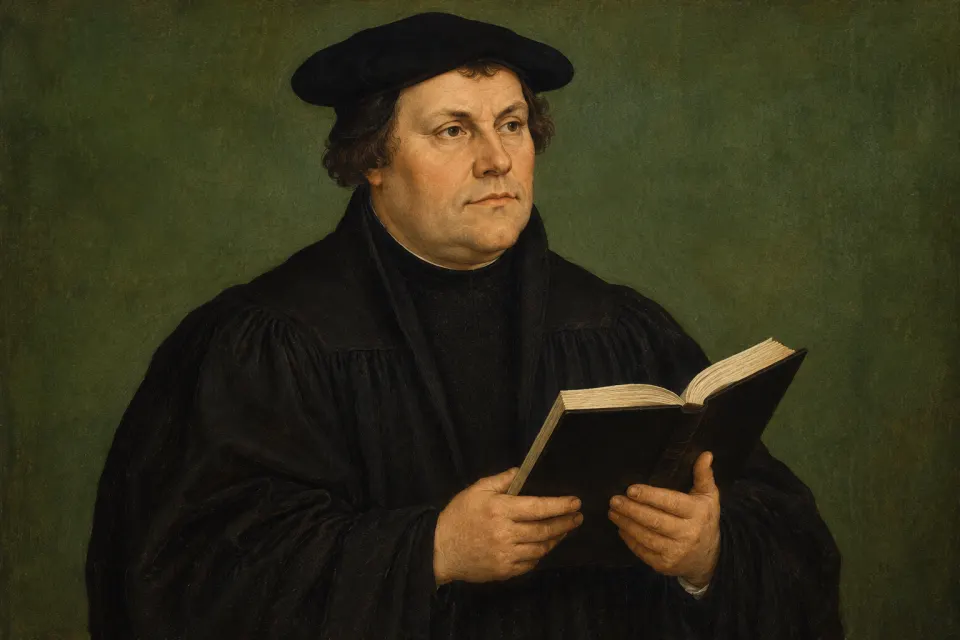
Martin Luther
founder · 1483–1546
German friar and professor whose 1517 protest set off the Reformation. He taught justification by faith, translated the Bible into German and wrote hymns and catechisms. In his last years he wrote savage attacks on Jews, notably On the Jews and Their Lies (1543).[56–57]
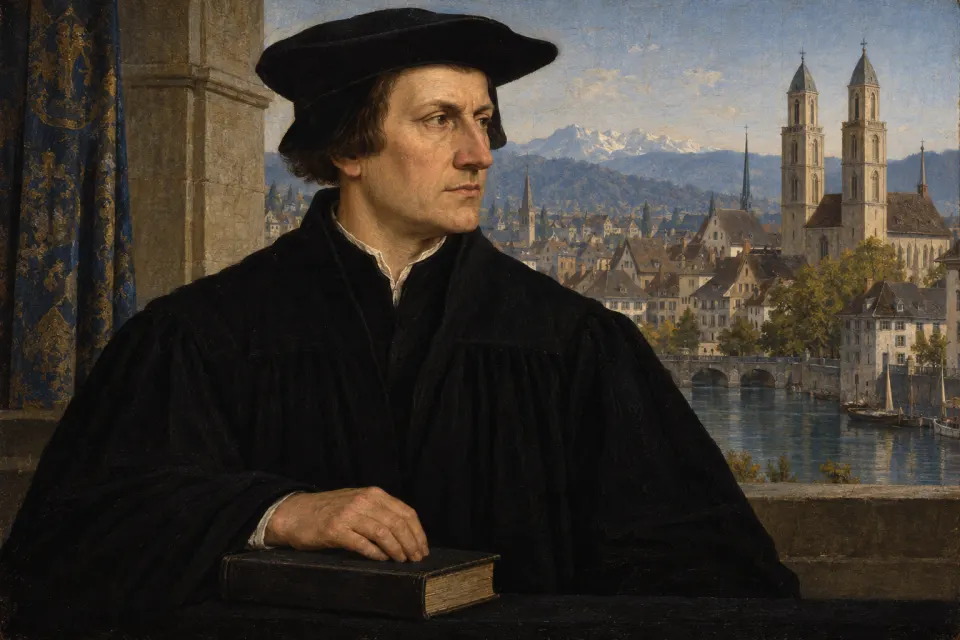
Huldrych Zwingli
founder · 1484–1531
Swiss priest who led Zürich's Reformation and founded the Swiss Reformed Church, applying the authority of Scripture more rigorously than Luther. He died at Kappel in 1531, serving as chaplain with the Protestant army against Catholic forces.[58]

John Calvin
teacher · 1509–1564
French theologian whose Institutes of the Christian Religion became the classic statement of Reformed faith. In Geneva from 1541 he built a church governed by pastors and elders, and in 1559 he founded an academy to train ministers.[59]

Menno Simons
teacher · 1496–1561
Dutch Catholic priest who left the church in 1536 to lead the peaceful wing of Anabaptism. Hunted as a heretic for the rest of his life, he organised scattered congregations; his followers became the Mennonites.[60]

Thomas Cranmer
other · 1489–1556
First Protestant archbishop of Canterbury, who put the English Bible in parish churches and compiled the Book of Common Prayer. Condemned for heresy under Mary I, he recanted, then withdrew his recantations and was burned at Oxford.[61]
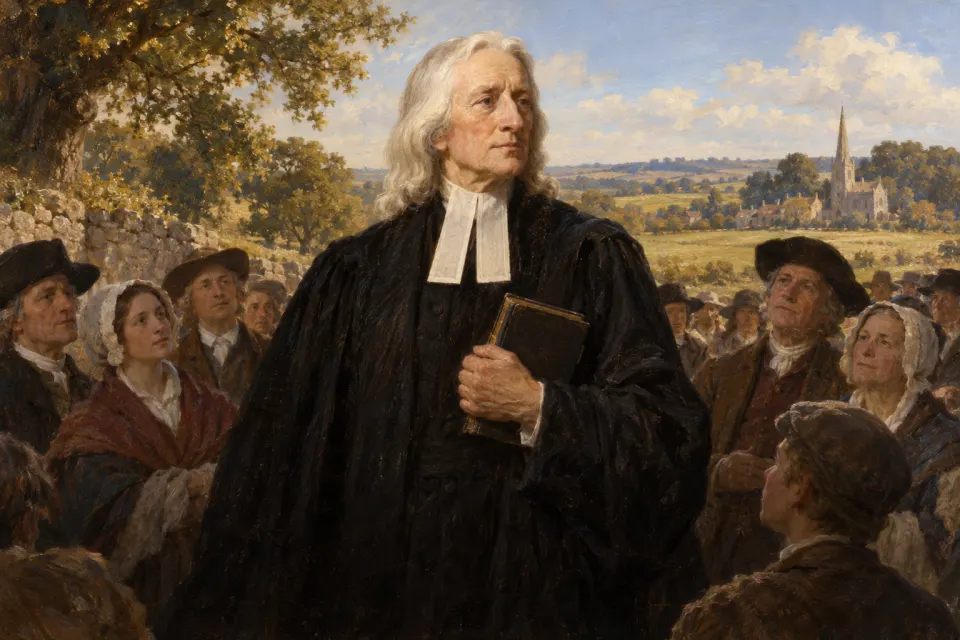
John Wesley
founder · 1703–1791
Anglican priest who felt his heart 'strangely warmed' at a meeting in Aldersgate Street, London, in 1738, then preached in the open air across Britain. His Methodist societies became a separate church after his death.[62]
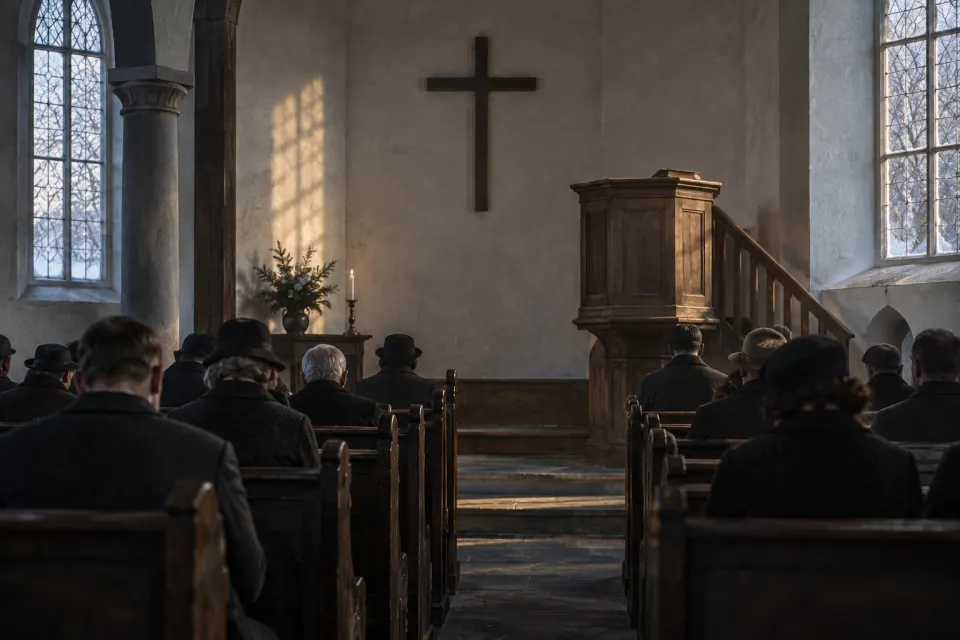
Dietrich Bonhoeffer
teacher · 1906–1945
German Protestant theologian, an early critic of the Nazi regime and a leading voice of the Confessing Church. Arrested in 1943 for his links to the plot against Hitler, he was executed at Flossenbürg concentration camp in April 1945.[63]
Scripture
The Bible
The Protestant Bible has 66 books. Translating it into everyday languages was central to the Reformation: Luther's German New Testament appeared in 1522 and his full Bible in 1534, and the King James Version (1611) was the standard English Bible into the 20th century.[64]
The Small Catechism
1529
Luther's short question-and-answer guide to the Ten Commandments, the Creed, the Lord's Prayer, baptism and the Lord's Supper; his Large Catechism served the clergy. It is often judged the most influential book of the Reformation.[65]
The Augsburg Confession
1530
Twenty-eight articles drafted by Philipp Melanchthon and presented to Emperor Charles V at the Diet of Augsburg. It remains the basic confession of Lutheran churches and influenced the Anglican Thirty-nine Articles.[66]
Institutes of the Christian Religion
1536; final edition 1559
Calvin's summary of biblical theology, first published in Basel and enlarged until the Latin edition of 1559, more than four times the original length. It became the standard statement of Reformed belief.[67]
The Book of Common Prayer
1549; revised 1552 and 1662
Cranmer's English liturgy, first authorised in 1549 and revised in 1552 and later. The 1662 version remains the standard of many Anglican churches, and the book is the hallmark of Anglican identity.[68]
Places

Castle Church, Wittenberg
DEU · UNESCO World Heritage, 1996
The church on whose door, by tradition, Luther posted his Ninety-five Theses on 31 October 1517. It belongs to the Luther Memorials in Eisleben and Wittenberg, a UNESCO World Heritage site since 1996.[69]
Wartburg Castle, Eisenach
DEU · UNESCO World Heritage, 1999
Hilltop castle where the elector of Saxony sheltered Luther from May 1521 to March 1522 and where he translated the New Testament into German. It became a UNESCO World Heritage site in 1999.[70]
Canterbury Cathedral
GBR · UNESCO World Heritage, 1988
Seat of the archbishop of Canterbury and mother church of the Anglican Communion, founded after Augustine's mission of 597. It is part of a UNESCO World Heritage site inscribed in 1988.[71]
Herrnhut, Saxony
DEU · UNESCO World Heritage, 2015
Settlement founded in 1722 by Moravian refugees on Count Zinzendorf's estate, mother community of the Moravian Church and a starting point of Protestant world mission. It is now part of the UNESCO site Moravian Church Settlements.[72]
Art & objects
Public-domain objects from museum collections. Select one to see it at the museum.
 Ceremonial Vessels from Martin Luther (German Bible), plate 29 from Woodcuts from Books of the XVI CenturyGermany, 1541, assembled into portfolio 1937
 Martin LutherGermany, c. 1525
 Martin LutherGermany, 1523
 Divine of Reformation TimeFlanders, n.d.
 Medal: Commemorating 3c Jubilé de la Reformation Genève 23 Aôut 1835 (obverse)France ? or Switzerland ?, 19th century, 1835
 Medal: Commemorating 3c Jubilé de la Reformation Genève 23 Aôut 1835 (reverse)France ? or Switzerland ?, 19th century, 1835
 Lutheran Church, Sharpsburgh, Maryland, September 18621862
 Martin Luther as an Augustinian Monk1520
 Martin Luther (1483–1546)probably 1532
 Luther as 'Junker Jorg'1522
 Philipp Melanchthon 1497-1560, Reformation leader and humanist1543
Numbers
- Protestants worldwide
- c. 0.8–1 billion (broad definitions)[8]
Pew: 801 million in 2010, counting Anglicans and independents. World Christian Database, 2025: 629 million Protestants plus 409 million independents. Britannica's narrower count: nearly 350 million.
- Where Protestants live
- Africa 37%, Americas 33%, Asia 17%, Europe 13% (2010)[40]
Pew Research Center estimate; Africa means sub-Saharan Africa, Asia the Asia-Pacific region.
- Largest families
- Anglican 11%, Lutheran 10%, Baptist 9%, Reformed 7%[73]
Approximate shares of all Protestants in 2010 (Pew analysis of World Christian Database data). Britannica counts over 80 million Lutherans.
Common misconceptions
Myth Luther nailed his Ninety-five Theses to the church door as an act of public defiance.
Fact Luther certainly sent the theses to Archbishop Albert of Mainz and shared them with friends, but whether he also posted them is debated. The first report of a posting comes from Melanchthon in 1546, Luther never mentioned one, and posting theses on church doors was the university's ordinary way of announcing a debate.[74]
Myth Luther set out to found a new church.
Fact Luther meant his theses as points for academic debate and wanted to reform the Catholic Church, not leave it; the break came when Rome excommunicated him. His followers called themselves evangelical, and the name Lutheran was coined by his opponents.[75]
Myth Protestantism is essentially a European and North American faith.
Fact It began in Europe, but by 2010 only 13% of Protestants lived there, and only two of the ten countries with the most Protestants were European. Its fastest growth is now in Africa, Latin America and Asia.[76]
Glossary
- Reformation
- The 16th-century religious revolution in the Western church, led above all by Luther and Calvin, that divided Western Christianity and gave rise to Protestantism.[77]
- Indulgence
- In Catholic teaching, a remission of part of the temporal penalty for sins already forgiven. The sale of one to rebuild St Peter's in Rome provoked Luther's theses.[78]
- Anabaptists
- From the Greek ana, 'again'. Radical reformers who baptised only professing adults, sought to separate church and state and were mostly pacifist; forebears of the Mennonites and Hutterites.[79]
- Reformed
- The Protestant tradition shaped by Zwingli and Calvin, including the Presbyterian churches; the name recalls the aim of reforming the church according to Scripture.[80]
- Evangelical
- From the Greek for 'good news'. First the name of Luther's followers, still used by many Lutheran churches; now mostly used for Protestants who stress conversion, the Bible and evangelism.[81]
- Huguenots
- French Protestants of the 16th and 17th centuries, many of whom suffered severe persecution and later fled abroad.[82]
- Presbyterian
- Church government by elders and ministers in local sessions, regional presbyteries, synods and a general assembly; also the name of churches in the Scottish Reformed tradition.[83]
- Confessing Church
- The movement within German Protestantism, from 1934, that resisted Nazi control of the churches and the pro-Nazi 'German Christians'.[84]
Sources
Each statement above was checked against published sources; the verdict says whether it stood as written, was corrected or was hedged.
- VerifiedBritannica, Reformation; Worldmark, Christianity: Protestantism; UNESCO WHC, Luther Memorials in Eisleben and Wittenberg.
- VerifiedBritannica, Protestantism; Worldmark, Christianity: Protestantism; Britannica, Lutheranism.
- VerifiedBritannica, Reformation; Encyclopedia.com, Christianity protestantism; Pew Research Center, Global Christianity: Christian Traditions.
- VerifiedBritannica, Reformation; Encyclopedia.com, Christianity protestantism; Pew 2011, Christian Traditions.
- VerifiedEncyclopedia.com, Christianity protestantism; Britannica, Lutheranism; Britannica, Eucharist.
- VerifiedPew Research Center, Global Christianity: Christian Movements and Denominations; Encyclopedia.com, Christianity protestantism; Britannica, Lutheranism.
- VerifiedEncyclopedia.com, Christianity protestantism; Britannica, Lutheranism; Britannica, Baptist.
- VerifiedPew 2011, Christian Traditions; Gordon-Conwell CSGC, Status of Global Christianity 2025; Britannica, summary of The Protestant Heritage.
- VerifiedBritannica, Protestantism; Encyclopedia.com, Christianity protestantism; Britannica, Reformation.
- VerifiedBritannica, summary of The Protestant Heritage; Pew 2011, Christian Traditions; Encyclopedia.com, Christianity protestantism.
- VerifiedBritannica, Lutheranism; Encyclopedia.com, Christianity protestantism; Pew 2011, Movements and Denominations.
- VerifiedPew 2011, Christian Traditions; Zurlo, Johnson & Crossing, World Christianity 2025, IBMR 49(1); Britannica, Protestantism.
- VerifiedBritannica, summary of Martin Luther; Encyclopedia.com.
- VerifiedEncyclopedia.com; Britannica, Reformation; Britannica, Ninety-five Theses.
- VerifiedBritannica, summary of Martin Luther; Encyclopedia.com; Britannica, Reformation.
- VerifiedBritannica, Wartburg; UNESCO WHC, Wartburg Castle; Encyclopedia.com.
- VerifiedEncyclopedia.com; Britannica, Lutheranism; Britannica, Augsburg Confession.
- VerifiedBritannica, Huldrych Zwingli; Encyclopedia.com; Britannica, Reformation.
- VerifiedBritannica, Anabaptist; Encyclopedia.com.
- VerifiedBritannica, summary of John Calvin; Encyclopedia.com; Encyclopedia.com; Britannica, summary of John Knox.
- VerifiedBritannica, Reformation; Encyclopedia.com; Encyclopedia.com.
- VerifiedBritannica, Reformation; Britannica, Lutheranism; Encyclopedia.com.
- VerifiedEncyclopedia.com; Britannica, summary of John Calvin; Encyclopedia.com; Britannica, Thomas Cranmer.
- VerifiedBritannica, Massacre of St. Bartholomew's Day; Encyclopedia.com.
- VerifiedBritannica, Peace of Augsburg; Encyclopedia.com.
- VerifiedBritannica, Thirty Years' War; Encyclopedia.com.
- VerifiedBritannica, Toleration Act; Encyclopedia.com.
- VerifiedBritannica, summary of Pietism; Encyclopedia.com.
- VerifiedBritannica, Moravian church; UNESCO WHC, Moravian Church Settlements.
- VerifiedBritannica, Evangelical church; Britannica, summary of Pietism; Encyclopedia.com; Encyclopedia.com.
- VerifiedBritannica, William Wilberforce; Britannica, Clapham Sect; Encyclopedia.com; Encyclopedia.com.
- VerifiedBritannica, Southern Baptist Convention; New Georgia Encyclopedia.
- VerifiedBritannica, William Carey; Encyclopedia.com; Britannica, Protestantism: The spread of missions; Encyclopedia.com.
- VerifiedBritannica, Evangelical church; Britannica, Billy Graham; Encyclopedia.com.
- VerifiedBritannica, Pentecostalism; Pew 2011, Movements and Denominations; Encyclopedia.com.
- VerifiedBritannica, Confessing Church; USHMM, The German Churches and the Nazi State; USHMM, Dietrich Bonhoeffer.
- VerifiedBritannica, World Council of Churches; Encyclopedia.com.
- VerifiedBritannica, Martin Luther King, Jr.; Encyclopedia.com, Christianity protestantism.
- VerifiedBritannica, Dutch Reformed Church; J. M. van der Merwe, The Dutch Reformed Church from Human Relations… to Church and Society, Studia Historiae Ecclesiasticae 39(1), 2013; Britannica, Desmond Tutu; Encyclopedia.com, Christianity protestantism.
- VerifiedPew 2011, Christian Traditions; Zurlo et al., IBMR 2025.
- VerifiedZurlo et al., IBMR 2025; Encyclopedia.com; Pew 2011, Christian Traditions.
- VerifiedEncyclopedia.com; Zurlo et al., IBMR 2025.
- VerifiedEncyclopedia.com, Christianity protestantism; Britannica, Bible; Britannica, Lutheranism.
- VerifiedEncyclopedia.com, Christianity protestantism; Britannica, justification; Britannica, Reformation.
- VerifiedEncyclopedia.com, Christianity protestantism; Britannica, Lutheranism; Britannica, priesthood of all believers.
- VerifiedBritannica, priesthood of all believers; Encyclopedia.com, Christianity protestantism; Pew 2011, Christian Traditions.
- VerifiedBritannica, Westminster Confession; Britannica, Methodism; Encyclopedia.com; Encyclopedia.com, Christianity protestantism.
- VerifiedBritannica, Reformation; Encyclopedia.com, Christianity protestantism.
- VerifiedBritannica, Evangelical church; Encyclopedia.com, Christianity protestantism; Encyclopedia.com.
- VerifiedEncyclopedia.com, Christianity protestantism; Britannica, summary of Baptist; Britannica, Anglicanism.
- VerifiedEncyclopedia.com, Christianity protestantism; Britannica, Baptist; Britannica, Mennonite.
- VerifiedEncyclopedia.com, Christianity protestantism; Britannica, presbyterian; Britannica, summary of Baptist; Encyclopedia.com.
- VerifiedEncyclopedia.com, Christianity protestantism; Britannica, Social Gospel; Britannica, Anabaptist; Encyclopedia.com.
- VerifiedEncyclopedia.com, Christianity protestantism; Britannica, Christmas.
- VerifiedBritannica, Easter; Encyclopedia.com, Christianity protestantism.
- VerifiedBritannica, summary of Martin Luther; Encyclopedia.com.
- VerifiedEncyclopedia.com; USHMM, Gerard Sloyan, Christian Persecution of Jews over the Centuries; Encyclopedia.com.
- VerifiedBritannica, Huldrych Zwingli; Britannica, summary of Zwingli; Encyclopedia.com.
- VerifiedBritannica, John Calvin; Encyclopedia.com.
- VerifiedBritannica, summary of Menno Simons; Encyclopedia.com.
- VerifiedBritannica, Thomas Cranmer; Encyclopedia.com.
- VerifiedBritannica, Methodism; Encyclopedia.com; Britannica, summary of John Wesley.
- VerifiedBritannica, Dietrich Bonhoeffer; USHMM, Dietrich Bonhoeffer.
- VerifiedEncyclopedia.com, Christianity protestantism; Encyclopedia.com; Britannica, King James Version.
- VerifiedBritannica, catechism; Encyclopedia.com.
- VerifiedBritannica, Augsburg Confession; Encyclopedia.com.
- VerifiedBritannica, Institutes of the Christian Religion; Encyclopedia.com.
- VerifiedBritannica, Book of Common Prayer; Britannica, Anglicanism; Encyclopedia.com.
- VerifiedUNESCO WHC 783; Britannica, Ninety-five Theses.
- VerifiedBritannica, Wartburg; UNESCO WHC 897.
- VerifiedBritannica, Canterbury Cathedral; UNESCO WHC 496.
- VerifiedBritannica, Moravian church; UNESCO WHC 1468; Britannica, Zinzendorf.
- VerifiedPew 2011, Movements and Denominations; Britannica, Lutheranism; Britannica, Methodism.
- VerifiedBritannica, Ninety-five Theses, Researcher's Note; Britannica, summary of Martin Luther; Encyclopedia.com.
- VerifiedBritannica, Reformation; Britannica, Lutheranism; Encyclopedia.com, Christianity protestantism.
- VerifiedPew 2011, Christian Traditions; Zurlo et al., IBMR 2025.
- VerifiedBritannica, Reformation; Encyclopedia.com.
- VerifiedBritannica, Ninety-five Theses; Encyclopedia.com, Christianity protestantism.
- VerifiedBritannica, Anabaptist; Britannica, Reformation; Encyclopedia.com.
- VerifiedBritannica, Reformed church; Encyclopedia.com, Christianity protestantism.
- VerifiedBritannica, Evangelical church; Encyclopedia.com, Christianity protestantism.
- VerifiedBritannica, Huguenot; Encyclopedia.com.
- VerifiedBritannica, presbyterian; Encyclopedia.com, Christianity protestantism; Britannica, summary of John Knox.
- VerifiedBritannica, Confessing Church; USHMM, The German Churches and the Nazi State.
Last fact-checked 3 October 2026.