
Overview
Confucianism is the Western name for what Chinese call Rujia, the tradition of the ru, or scholars, looking back to the teacher Kong Qiu, known in the West as Confucius (551–479 BCE). Its aim is to become fully humane through study, ritual and devotion to family, and to govern by moral example rather than force. For some two thousand years its classics were the core of Chinese schooling and of the official examinations, and its rites shaped life in Korea, Japan and Vietnam as well as China. Whether it is a religion, a philosophy or a civic code is still argued: it has no clergy and no members, yet it speaks of Heaven and honours the dead. Attacked as backward in twentieth-century China, it has been revived since the 1980s.[2, 9–14]
History

Confucius and the classical masters c. 551 – c. 230 BCE
Confucius grew up poor in the small state of Lu as the Zhou kings' power faded. He is said to have held modest posts and briefly risen to high office, then spent some fourteen years travelling in search of a ruler who would govern by virtue, before returning home to teach. His sayings, gathered by disciples and their students, became the Analects. Two later thinkers debated human nature: Mencius (c. 372–289 BCE) held that people are born with the beginnings of goodness; Xunzi (c. 310–after 238 BCE) held that goodness must be built through ritual and learning.[15–17]
An imperial orthodoxy 206 BCE – 907 CE
Under Emperor Wu of the Han, the classics became the basis of state learning: chairs for the Five Classics were created in 136 BCE and an imperial academy in 124 BCE. Other schools still thrived at court, and the Han scholar Dong Zhongshu set Confucian ethics within a cosmology of yin, yang and the five phases. Sacrifices to Confucius became a state rite in schools empire-wide. After the Han fell, Buddhism and Daoism led elite religious life for centuries, but Confucian ethics stayed rooted in family and government, and the Sui and Tang built examinations on the classics.[18–22]
The Neo-Confucian revival 960 – 1644
Song scholars answered Buddhism and Daoism with a renewed Confucianism, often called Neo-Confucianism or the Learning of the Way, which explained the world through principle (li) and vital force (qi). Zhu Xi (1130–1200) drew it into one system and published the Four Books with his commentaries in 1190. From 1313, under the Mongol Yuan dynasty, his readings became the set texts of the civil service examinations, and remained so until 1905. In the Ming, Wang Yangming (1472–1529) challenged Zhu, teaching that moral knowledge lies within the mind and is fulfilled only in action.[23–25]
Across East Asia 1392 – 1910
Korea's Joseon dynasty (1392–1910) became perhaps the most thoroughly Confucian state of all. Its scholars, led by Yi Hwang (T'oegye) and Yi I (Yulgok), debated Zhu Xi's teachings, and private academies (seowon) spread learning through the provinces. In Tokugawa Japan, followers of Zhu Xi, of Wang Yangming and of an 'Ancient Learning' movement competed, and educated Japanese read the Four Books. In Vietnam, Lê Thánh Tông set up triennial examinations on the Chinese model in the fifteenth century, and Hanoi steles list graduates of royal examinations held from 1442 to 1779.[26–28]
Collapse and attack 1840s – 1976
Defeats by Western powers shook confidence in the old learning; the Qing abolished the examinations in 1905, and the empire fell in 1911–12. From 1919 the May Fourth and New Culture reformers blamed Confucian hierarchy for China's weakness, and in the 1920s Nationalist campaigns against 'superstition' tore down many temples. After 1949 the Party went further, demolishing or converting ancestral halls and temples; in the Cultural Revolution (1966–76) Red Guards smashed ancestral tablets. In 1973–74 a campaign to 'criticise Lin Biao and Confucius' served as a coded attack on Premier Zhou Enlai. Many families still kept up ancestor rites in private.[29–32]
Revival and New Confucianism 1920s – today
Some modern thinkers argued that Confucianism could embrace science and democracy. Xiong Shili and his followers Mou Zongsan, Tang Junyi and Xu Fuguan, the last three working mainly in Hong Kong and Taiwan after 1949, built what became known as New Confucianism. Since mainland China opened in the 1980s, Confucian studies have flourished, and the state restores temples of Confucius and erects his statues. In Indonesia, Confucianism is an officially recognised religion; it lost that standing under Suharto and regained it in 2000 under President Abdurrahman Wahid.[33–35]
Key moments
- c. 520 BCEConfucius teaches · State of Lu, China
- 195 BCEEmperors honour Confucius · Qufu, Shandong, China
- c. 1190 CEZhu Xi and the Four Books · Fujian, China
- 1945 CEPancasila: Indonesia's five principles · Jakarta, Indonesia
Beliefs
Heaven · 天 tiān
Heaven, the sky; a moral power above humanity
The Zhou kings taught that Heaven granted the right to rule, the Mandate of Heaven (tianming), and withdrew it from rulers who lost their virtue. Confucius saw Heaven as the source of his mission, yet once cried that it had forsaken him. Mencius linked knowing Heaven to knowing one's own nature; Xunzi gave Heaven a smaller moral role.[36–37]
Humaneness · 仁 rén
Humaneness, benevolence, goodness
Ren, the highest Confucian virtue, means caring for others as they would wish. The Analects links it to mastering oneself and returning to ritual, and to a negative golden rule: do not impose on others what you would not want yourself. Confucians hold that every person can attain it.[38]
Ritual propriety · 禮 lǐ
Rites, etiquette, fitting conduct
Li covers everything from sacrifices and mourning to greetings and dress. Confucius sought to preserve the rites of the early Zhou but stressed the attitude behind them: ritual without reverence, or mourning without grief, was empty. Performed sincerely, ritual trains the emotions and restrains desire.[39–40]
Filial piety · 孝 xiào
Devotion to parents and ancestors
Care and respect for parents and elders is called the root of humaneness, and the Analects warns that feeding parents is not enough without reverence. Filial piety continues after death in mourning and ancestor rites, and Confucians extend the family model, picturing the ruler as a parent to the people.[41–42]
Exemplary person · 君子 jūnzǐ
The gentleman; the morally exemplary person
The junzi is the Confucian ideal, open to anyone who cultivates virtue, not only the well-born. Such a person thinks of what is right when offered gain, keeps the rites, studies tirelessly and leads by example. Confucius claimed only to love learning, not to be a sage.[43]
Human nature · 性 xìng
Inborn nature
Whether people are born good was a central Confucian debate. Mencius argued that everyone has inborn 'sprouts' of virtue, such as compassion, that need nurturing; Xunzi answered that human nature is bad and goodness a cultivated achievement. Later Neo-Confucians sided with Mencius.[44]
Practice

Rites for ancestors · 祭祖 jìzǔ
Honouring the dead is the most widely shared Confucian practice. Families offer food, drink and incense before ancestral tablets or photographs at home, in lineage halls and at graves, treating the ancestors as if present. In China, Taiwan, South Korea and Japan large majorities still take part in some form of these rites, whether or not they profess a religion.[45]
Sacrifices to Confucius
In imperial times every administrative seat had a temple of Confucius, where officials and degree-holders made offerings, chiefly in spring and autumn, before spirit tablets of the sage, his disciples and later scholars rather than images. Such ceremonies, with ritual music and dance, are still performed, for example in Taiwan.[46–47]
Learning and self-cultivation
Study is itself a discipline. Zhu Xi's programme joined reading the classics with reverent attention, quiet sitting, ritual and practical arts. Academies such as the White Deer Grotto in China and the seowon of Korea combined teaching with the veneration of past masters.[48]
Family and mourning rites
Confucian ritual marks life's turning points with four family rites: coming of age, marriage, mourning and offerings to ancestors. Mourning was graded by closeness of kinship, and Confucius held that the mourners' grief mattered more than the formalities. Respect for the dead still shapes funeral and burial customs.[49]
Holy days
The year ahead
| Date | Holy day | Reckoned |
|---|---|---|
| 6 February 2027 | Lunar New Year 春節 · 설날 | 1st day of the first lunar month, Chinese lunar calendar |
| 5 April 2027 | Qingming (Tomb-Sweeping Day) 清明 | the Sun at 15° (solar term) |
| 15 September 2027 | Chuseok 추석 | 15th day of the undefined lunar month, Korean lunar calendar |
| 28 September 2027 | Birthday of Confucius 孔子誕辰 | 28 September |
Birthday of Confucius
28 September (autumn); Teachers' Day in Taiwan
Temples of Confucius mark his birthday with offerings, music and dance; in Taipei the rite begins at dawn. Under the empire, every degree-holder was obliged to take part in the yearly birthday worship.[50]
Qingming (Tomb-Sweeping Day) · 清明 Qīngmíng
15th day after the spring equinox (early April)
Families clean their ancestors' graves and make offerings. In China it is one of three customary times, with the New Year and the anniversary of a death, for paying respects at family graves.[51]
New Year and harvest rites
Lunar New Year (Jan–Feb); Chuseok, 15th day of 8th lunar month (Sept–Oct)
At the Lunar New Year families pay their respects to ancestors. In Korea, New Year and Chuseok bring families home, and Chuseok opens with an offering of food and wine to the ancestors.[52]
Death anniversaries · Korean chesa (jesa)
Anniversary of each ancestor's death (any time of year)
On the anniversary of a death, descendants honour the departed with offerings. In Korea the eldest son traditionally led the rite, a custom now debated as attitudes to gender change.[53]
People
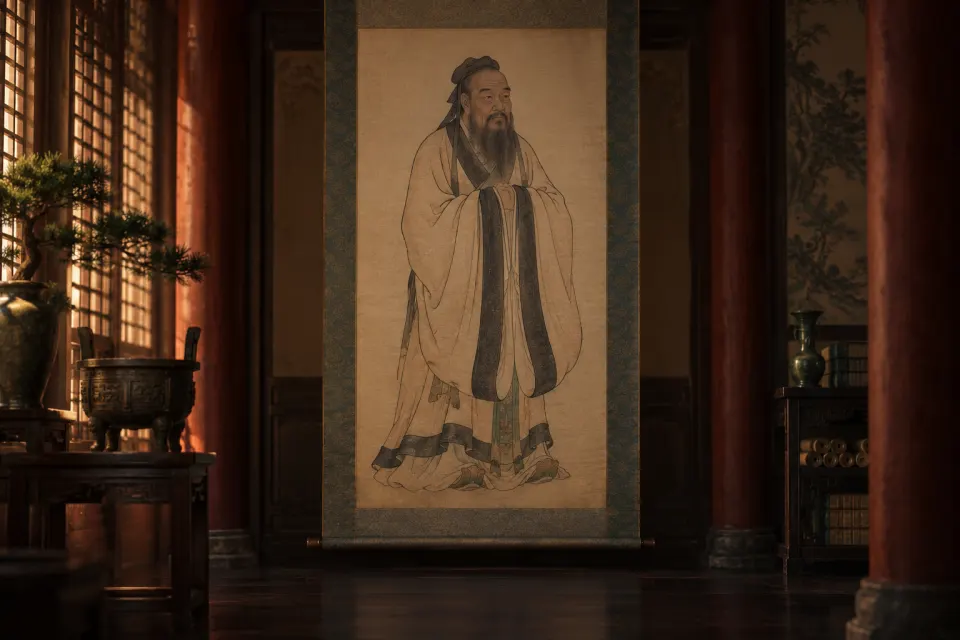
Confucius · 孔子 Kǒngzǐ
teacher · 551–479 BCE
Born Kong Qiu in the state of Lu, he is said to have served briefly as a minor official and as a minister, wandered for years, then taught disciples until his death. He presented himself as a transmitter of ancient ways. Later emperors gave him titles such as Ultimate Sage and First Teacher.[54]

Mencius · 孟子 Mèngzǐ
teacher · c. 372–289 BCE
Meng Ke, from the small state of Zou, is called the 'second sage'. He argued that human nature is good, urged kings to govern humanely and see that the people were fed, and held that a ruler who abuses his people may rightly be removed.[55]
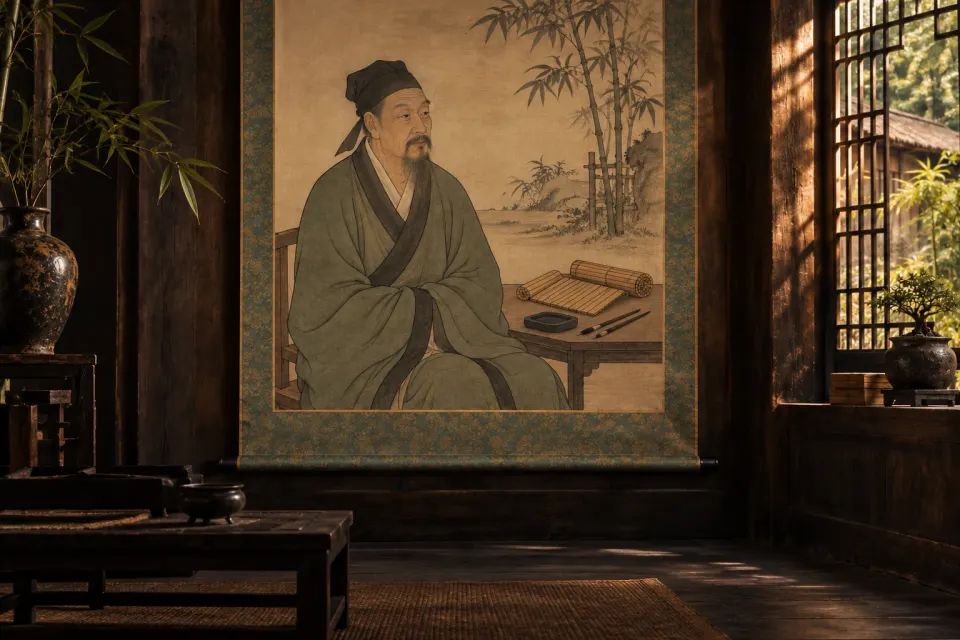
Xunzi · 荀子 Xúnzǐ
scholar · c. 310 – after 238 BCE
Xun Kuang, revered as the leading teacher of his day, taught that human nature is bad and that ritual, teachers and education reshape it. Two of his students, Han Fei and Li Si, became Legalists, which long counted against him among later Confucians.[56]
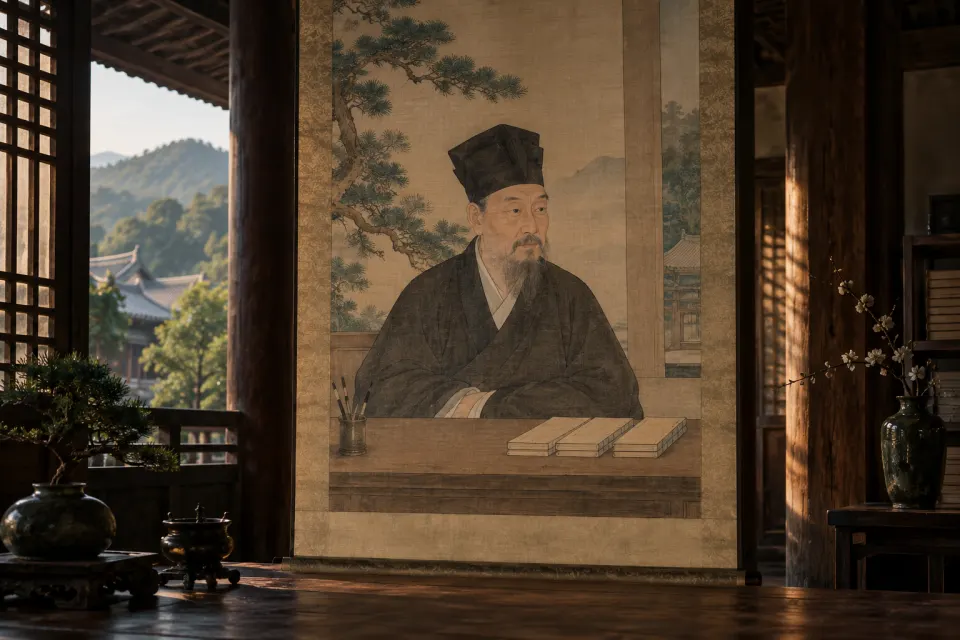
Zhu Xi · 朱熹 Zhū Xī
scholar · 1130–1200
The great synthesiser of Neo-Confucianism, born in Fujian. He grouped the Four Books, wrote the commentaries examinations followed for some six centuries, and revived the White Deer Grotto Academy. He died in political disgrace, yet his school became orthodoxy in China, Korea and Japan.[57]

Wang Yangming · 王陽明
scholar · 1472–1529
A Ming official and general who, after exile to Guizhou, taught that knowing and acting are one and that every person has innate knowledge of the good (liangzhi). His 'learning of the mind' inspired thinkers in China and Japan.[58]

Yi Hwang (T'oegye) · 이황 李滉
scholar · 1501–1570
Korea's most celebrated Confucian and an interpreter of Zhu Xi. His Ten Diagrams on Sage Learning (1568), made to instruct the king, and his 'Four-Seven' debate on moral feelings with Ki Taesŭng shaped Korean philosophy and impressed scholars in Japan.[59]
Scripture
The Analects · 論語 Lúnyǔ
compiled 5th–2nd century BCE
Twenty books of sayings and conversations of Confucius and his disciples, assembled by later generations. Long held the most reliable record of his teaching, it was usually the first classic a pupil studied, though excavated manuscripts show other collections of his sayings once circulated.[60]
Mencius · 孟子 Mèngzǐ
4th–3rd century BCE
The dialogues and sayings of Mencius, probably compiled by his followers and edited in the 2nd century CE into seven books. The longest of the Four Books, it argues for the goodness of human nature and for government that serves the people.[61]
The Great Learning · 大學 Dàxué
A short chapter of the Record of Rites that Zhu Xi set first among the Four Books. It traces a chain of self-cultivation: investigating things leads to sincere intention and a rectified mind, then to an ordered family, a well-governed state and peace in the world.[62]
The Doctrine of the Mean · 中庸 Zhōngyōng
Another chapter of the Record of Rites, credited by tradition to Confucius's grandson Zisi. Its teaching of balance and sincerity, and its words on the Way of Heaven and spiritual beings, gave it a metaphysical depth that drew Buddhist readers as well as Neo-Confucians.[63]
The Five Classics · 五經 Wǔjīng
mostly before Confucius
The Classics of Changes, Documents and Poetry, the Record of Rites and the Spring and Autumn Annals. Most predate Confucius, though tradition linked him to their editing. The Han made them the state curriculum; later students read them after the Four Books.[64]
Places

Temple and Cemetery of Confucius, Qufu
CHN · UNESCO World Heritage, 1994
UNESCO dates the first temple at Confucius's home to 478 BCE. Rebuilt many times with imperial support, it has over 100 buildings and became the model for Confucian temples across East Asia. North of the town, the Kong clan cemetery holds his grave among those of over 100,000 descendants. World Heritage since 1994.[65–66]
Temple of Literature (Văn Miếu), Hanoi
VNM
A temple dedicated to Confucius in 1070, now the Văn Miếu–Quốc Tử Giám historic site. Eighty-two stone steles on tortoise bases record the names of graduates of royal examinations held from 1442 to 1779.[67]
Dosan Seowon, Andong
KOR · UNESCO World Heritage, 2019
One of nine Joseon-era Neo-Confucian academies inscribed together as World Heritage in 2019, in Andong, long a centre of Confucian learning. Seowon joined study, the veneration of revered scholars and gatherings of local literati.[68]
Art & objects
Public-domain objects from museum collections. Select one to see it at the museum.
 The Ten Great Disciples of Confucius (Komon jittetsu), from the series "A Set of Ten Famous Numbers for the Katsushika Circle (Katsushikaren meisu juban)"Japan, c. 1828
 Poem on PlumKorea, Joseon dynasty (1392–1910), 1700s–1800s
 Mirror with Confucian MaximChina, Ming dynasty (1368–1644), 1400s
 Spirit HouseKorea, Joseon dynasty (1392–1910), late 1800s
 Folding Table (Che-Sang) for Memorial ServiceKorea, Joseon dynasty (1392–1910), 1900s
 Ancestor Group PortraitChina, Qing dynasty (1644-1911), Jiaqing period (1796-1820), 1796–1820
 Ten Wise Men Among the Disciples of ConfuciousJapan, Edo period (1615–1868), 19th century
 Netsuke of The Three Wine Tasters (Confucious, Buddha, Laozi)Japan, Edo (1615–1868) or Meiji period (1868–1912), 19th century
 Life of ConfuciusChina, probably late Qing dynasty (1644–1911)
 Stele for the Confucius TempleChina, Stele: Song dynasty (960–1279), 960–68; rubbing: 20th century
 “The scholars of the past studied for their own improvement. Today’s scholars study to impress others” (From The Analects of Confucius)Japan, Meiji period (1868–1912), late 19th–early 20th century
 Portrait of ConfuciusJapan, Edo period (1615–1868), ca. 1658
Numbers
National censuses
| Country | Year | Count | Share |
|---|---|---|---|
| Canada Confucian | 2021 | 995 | 0.0% |
| Australia Confucianism | 2021 | 330 | 0.0% |
| New Zealand Confucianism | 2018 | 99 | 0.0% |
| United Kingdom (England and Wales) Other religion: Confucianist | 2021 | 76 | 0.0% |
Source: Australian Bureau of Statistics, Census of Population and Housing 2021, 'Religious affiliation in Australia' (Table 4), CC BY 4.0. Source: Office for National Statistics licensed under the Open Government Licence v.3.0 Adapted from Statistics Canada, Table 98-10-0342-01 Religion by visible minority and generation status: Canada, provinces and territories, census metropolitan areas and census agglomerations with parts, released 2022-10-26. This does not constitute an endorsement by Statistics Canada of this product. Source: Stats NZ, 2018 Census, licensed by Stats NZ for re-use under the Creative Commons Attribution 4.0 International licence.
How we know
Religion, philosophy or way of life?
The question has no settled answer. Those who call Confucianism a religion point to Heaven, to sacrifices offered to Confucius and to ancestor rites that assume the dead can be reached. Others note it has no clergy, creed or membership, and that the Chinese word for religion, zongjiao, came into use only around 1900 to render a Western concept. In the Chinese Rites Controversy, Jesuits argued converts could keep the rites for Confucius and ancestors; Rome banned them in 1704 and 1715. China's government does not class Confucianism as a religion; Indonesia's does.[35, 69–71]
Why followers are not counted
No defensible headcount exists, so this profile gives none. Confucianism never demanded exclusive allegiance: a committed imperial-era Confucian also joined Buddhist, Daoist and local rites. People across East Asia almost never name Confucianism as their religion, and Pew Research Center makes no estimate of Confucians in China. Practice is another matter: ancestor veneration, including visiting family graves, remains widespread across China today.[72–73]
How we know Confucius
Every source on Confucius was written after his lifetime, decades or centuries later. The Analects was long taken as the oldest layer, but scholars have shown that writers took close interest in it only in the late 2nd and 1st centuries BCE. Excavated manuscripts, including Analects copies buried around 59 and 55 BCE, show that a wider body of Confucius material once circulated.[74–75]
Common misconceptions
Myth Confucius founded a new religion called Confucianism.
Fact Confucius saw himself as handing on the ways of the early Zhou, not as an innovator, and Chinese called the tradition the school of the scholars (ru). 'Confucius' is a Latin form coined by Jesuit missionaries, 'Confucianism' is a Western label, and the idea of one unbroken lineage took shape after his death.[76]
Myth Confucianism demands blind obedience to parents and rulers.
Fact The tradition is hierarchical, but not unconditionally so. The Analects tells children to dissuade parents gently from wrongdoing, and defines filial piety by reverence rather than compliance. Mencius taught that ministers may depose a ruler who ignores repeated warnings, and that Heaven sees through the people's eyes.[77]
Glossary
- Ru, Rujia · 儒 · 儒家
- The scholars, or 'school of the scholars', the usual Chinese name for the tradition the West calls Confucianism. The early meaning of ru is disputed.[78]
- De · 德 dé
- Virtue or moral force: the power of a good person, above all a ruler, to transform others by example rather than by coercion.[79]
- Yi · 義 yì
- Righteousness: doing what is right, especially in public duties, and refusing gain won by wrong means. Often paired with ren.[80]
- Li and qi · 理 lǐ · 氣 qì
- In Neo-Confucianism, principle (the ordering pattern in every thing and in human nature) and vital force (the energy-stuff of which things are made). Not the same li as ritual.[81]
- Daoxue · 道學 dàoxué
- 'Learning of the Way', the Song-era Neo-Confucian movement associated with the Cheng brothers and Zhu Xi.[82]
- Jinshi · 進士 jìnshì
- The highest degree of the imperial examinations; only its holders were eligible for high office.[83]
- Wenmiao · 文廟 wénmiào
- 'Temple of culture', a state temple of Confucius; in imperial times every administrative seat had one.[84]
- Seowon · 서원 書院
- Neo-Confucian academies of Joseon Korea, founded by local scholars and aristocratic families for study and for honouring revered teachers.[85]
- Xin · 心 xīn
- The heart-mind, seat of both thought and feeling in Chinese thought; for Mencius, where the sprouts of virtue grow.[86]
Sources
Each statement above was checked against published sources; the verdict says whether it stood as written, was corrected or was hedged.
- VerifiedBritannica, Confucius; IEP, Confucius; Britannica, Confucianism.
- VerifiedBritannica, Confucianism; Columbia Asia for Educators, Confucius and the Confucian Tradition; IEP, Confucius.
- VerifiedBritannica, Confucianism: The Analects as the embodiment of Confucian ideas; Hamilton College; Pew Research Center, Confucianism, Taoism and Chinese folk religions.
- VerifiedPew, Confucianism, Taoism and Chinese folk religions; Columbia AFE, Temples of the State Cult; IEP, Confucius.
- VerifiedPew, Confucianism, Taoism and Chinese folk religions; Columbia AFE, 20th Century: Communism & Internal Challenges; Pew, 5 facts about Confucianism.
- VerifiedBritannica, Confucianism; Columbia AFE, Temples of the State Cult; SEP, Korean Confucianism.
- VerifiedSEP, Song–Ming Confucianism; Britannica, Confucianism: The Confucian revival; SEP, Modern Confucianism.
- VerifiedPew, Confucianism, Taoism and Chinese folk religions; Britannica, Confucianism.
- VerifiedBritannica, Confucianism; Columbia AFE, Confucius and the Confucian Tradition; Hamilton College, Key terms.
- VerifiedBritannica, Confucianism: The Analects…; SEP, Confucius; Columbia AFE, Confucius and the Confucian Tradition.
- VerifiedBritannica, Wujing; Columbia AFE, The Confucian Classics & the Civil Service Examinations; Britannica, Chinese civil service.
- VerifiedBritannica, Confucianism; UNESCO, Temple and Cemetery of Confucius and the Kong Family Mansion in Qufu; IEP, Neo-Confucianism.
- VerifiedBritannica, Confucianism; Pew, 5 facts about Confucianism; Columbia AFE, Temples of the State Cult.
- VerifiedSEP, Confucius; SEP, Modern Confucianism; Columbia AFE, 21st Century; IEP, Confucius.
- HedgedBritannica, Confucius; SEP, Confucius; IEP, Confucius.
- VerifiedBritannica, Confucianism: The Analects…; SEP, Confucius; IEP, Confucius.
- VerifiedSEP, Confucius; SEP, Xunzi; IEP, Xunzi; Britannica, Confucianism: Mencius….
- VerifiedBritannica, Confucianism: Mencius…; Columbia AFE, Confucius and the Confucian Tradition; IEP, Confucius.
- VerifiedBritannica, Confucianism: The Five Classics; Hamilton College.
- VerifiedBritannica, Confucianism: The Five Classics; Columbia AFE, Confucius and the Confucian Tradition.
- VerifiedBritannica, Confucianism: Mencius…; Columbia AFE, Confucius and the Confucian Tradition; Hamilton College, Chronology of Enshrinement.
- VerifiedBritannica, Confucianism: The Five Classics; IEP, Confucius; Columbia AFE, Classics & Examinations.
- VerifiedBritannica, Confucianism: The Confucian revival; SEP, Song–Ming Confucianism; Britannica, Sishu.
- VerifiedBritannica, Sishu; SEP, Zhu Xi; Hamilton College, State Temples; IEP, Neo-Confucianism.
- VerifiedBritannica, Confucianism: Confucian learning in Jin, Yuan, and Ming; SEP, Wang Yangming.
- VerifiedBritannica, Confucianism: Jin, Yuan, and Ming; SEP, Korean Confucianism; UNESCO, Seowon, Korean Neo-Confucian Academies.
- VerifiedSEP, Japanese Confucian Philosophy; Britannica, Confucianism: Jin, Yuan, and Ming.
- VerifiedBritannica, Later Le dynasty; UNESCO Memory of the World, Stone Stele Records of Royal Examinations of the Le and Mac Dynasties.
- VerifiedBritannica, Confucianism: Transformation since the 19th century; Britannica, Chinese civil service; IEP, Neo-Confucianism; Columbia AFE, 20th Century.
- VerifiedBritannica, Transformation since the 19th century; Pew, Confucianism, Taoism and Chinese folk religions; Columbia AFE, 20th Century.
- VerifiedColumbia AFE, 20th Century; Columbia AFE, 21st Century; Pew, Confucianism, Taoism and Chinese folk religions.
- VerifiedBritannica, China: Struggle for the premiership; Dong Guoqiang & Andrew G. Walder, Nanjing's 'Second Cultural Revolution' of 1974, The China Quarterly 212; IEP, Confucius.
- VerifiedSEP, Modern Confucianism; Britannica, Transformation since the 19th century; IEP, Neo-Confucianism.
- VerifiedSEP, Modern Confucianism; IEP, Confucius.
- VerifiedLeo Suryadinata; Ach. Fatayillah Mursyidi & Evi Lina Sutrisno, The struggle for state recognition of Confucian believers in Indonesia, CRCS, Universitas Gadj.
- VerifiedSEP, Confucius; IEP, Confucius; Britannica, Confucianism: Mencius…; IEP, Xunzi.
- VerifiedBritannica, Confucianism; SEP, Confucius; IEP, Confucius.
- VerifiedSEP, Confucius; Britannica, Confucianism: The Analects…; Britannica, ren.
- VerifiedSEP, Confucius; Columbia AFE, Confucius and the Confucian Tradition.
- VerifiedSEP, Confucius; Columbia AFE, Temples of the State Cult.
- VerifiedBritannica, xiao; SEP, Confucius; IEP, Confucius.
- VerifiedPew, Confucianism, Taoism and Chinese folk religions; Britannica, Confucianism: The Analects….
- VerifiedSEP, Confucius; Britannica, Confucianism: The Analects….
- VerifiedSEP, Mencius; IEP, Xunzi; SEP, Wang Yangming.
- VerifiedPew, 5 facts about Confucianism; Pew, Confucianism, Taoism and Chinese folk religions; Columbia AFE, 20th Century.
- VerifiedColumbia AFE, Temples of the State Cult; Hamilton College.
- VerifiedHamilton College, Autumnal Sacrifice; Pew, 5 facts about Confucianism; Taipei City Government, Confucian Day Ceremony to Take Place September 28.
- VerifiedBritannica, Confucianism: The Confucian revival; UNESCO, Seowon.
- VerifiedSEP, Korean Confucianism; SEP, Confucius; Columbia AFE, Confucius and the Confucian Tradition; Pew, Confucianism, Taoism and Chinese folk religions.
- VerifiedPew, 5 facts about Confucianism; Taipei City Government; Columbia AFE, Temples of the State Cult.
- VerifiedBritannica, Qingming Festival; Pew, Confucianism, Taoism and Chinese folk religions.
- VerifiedBritannica, Chuseok; Pew, Confucianism, Taoism and Chinese folk religions.
- VerifiedPew, Confucianism, Taoism and Chinese folk religions; SEP, Korean Confucianism.
- HedgedBritannica, Confucius; SEP, Confucius; Hamilton College, Canonization of Confucius; UNESCO 704.
- VerifiedBritannica, Mencius; SEP, Mencius; IEP, Mencius.
- VerifiedSEP, Xunzi; Britannica, Confucianism: Mencius…; Britannica, Confucius.
- VerifiedBritannica, Zhu Xi; SEP, Zhu Xi; IEP, Zhu Xi.
- VerifiedBritannica, Wang Yangming; Britannica, Jin, Yuan, and Ming; SEP, Wang Yangming; SEP, Japanese Confucian Philosophy.
- VerifiedSEP, Korean Confucianism; Britannica, Jin, Yuan, and Ming; IEP, Neo-Confucianism.
- VerifiedSEP, Confucius; Britannica, Lunyu.
- VerifiedSEP, Mencius; Britannica, Sishu.
- VerifiedBritannica, Daxue; Hamilton College, Five Classics & Four Books.
- VerifiedBritannica, Zhongyong; Hamilton College, Chronology of Enshrinement.
- VerifiedBritannica, Wujing; Columbia AFE, Confucius and the Confucian Tradition; Hamilton College, Five Classics & Four Books.
- VerifiedUNESCO 704; Britannica, Qufu.
- VerifiedUNESCO 704; Britannica, Qufu.
- VerifiedBritannica, Hanoi; UNESCO Memory of the World, Stone Stele Records.
- VerifiedUNESCO 1498; Britannica, Andong.
- VerifiedPew, 5 facts about Confucianism; Pew, Confucianism, Taoism and Chinese folk religions; Britannica, Confucianism; Columbia AFE, Temples of the State Cult.
- VerifiedColumbia AFE, Understanding Religion in Context; Pew, Confucianism, Taoism and Chinese folk religions.
- VerifiedBritannica, Chinese Rites Controversy; SEP, Confucius.
- VerifiedColumbia AFE, Understanding Religion in Context; Britannica, Confucianism.
- CorrectedPew, 5 facts about Confucianism; Columbia AFE, 20th Century.
- VerifiedIEP, Confucius; SEP, Confucius.
- VerifiedSEP, Confucius; Paul van Els, Confucius's Sayings Entombed: On Two Han Dynasty Bamboo Lunyu Manuscripts, in M. Hunter & M. Kern; Britannica, Confucius.
- VerifiedBritannica, Confucianism; Columbia AFE, Confucius and the Confucian Tradition; Hamilton College, Who was Confucius?.
- VerifiedIEP, Confucius; Britannica, xiao; Britannica, Confucianism: Mencius….
- VerifiedColumbia AFE, Confucius and the Confucian Tradition; Hamilton College, Key terms; Britannica, Confucianism.
- VerifiedIEP, Confucius; SEP, Confucius; Britannica, Confucianism.
- VerifiedSEP, Confucius; Britannica, Confucianism: Mencius….
- VerifiedBritannica, Confucianism: The Confucian revival; SEP, Confucius; Hamilton College, Key terms.
- VerifiedSEP, Song–Ming Confucianism; Britannica, Confucianism: The Confucian revival.
- VerifiedBritannica, Chinese civil service; Columbia AFE, Classics & Examinations.
- VerifiedColumbia AFE, Temples of the State Cult; Hamilton College, State Temples; Pew, Confucianism, Taoism and Chinese folk religions.
- VerifiedUNESCO 1498; Britannica, Jin, Yuan, and Ming.
- VerifiedBritannica, ren; IEP, Mencius.
Last fact-checked 3 October 2026.