
Overview
Sunni Islam is the tradition of most of the world's Muslims, somewhere between 85 and 90 percent of them, and the majority in nearly every Muslim country. Its name is short for ahl al-sunna wa-l-jamāʿa, 'the people of the Sunna and the community': Sunnis put weight on the Prophet's example and on the consensus of the wider body of believers. They hold that Muhammad named no successor, and they honour the first four caliphs as 'rightly guided'. Beside the Qur'an they draw on large collections of hadith, reports of the Prophet's words and deeds, follow one of four recognised schools of law, and express belief through a few closely related creeds. Religious authority rests with learned scholars, the ʿulamāʾ. Sufi orders have long been woven into Sunni devotion, although some modern reform movements reject them.[1–2, 4–7, 9–10]
History
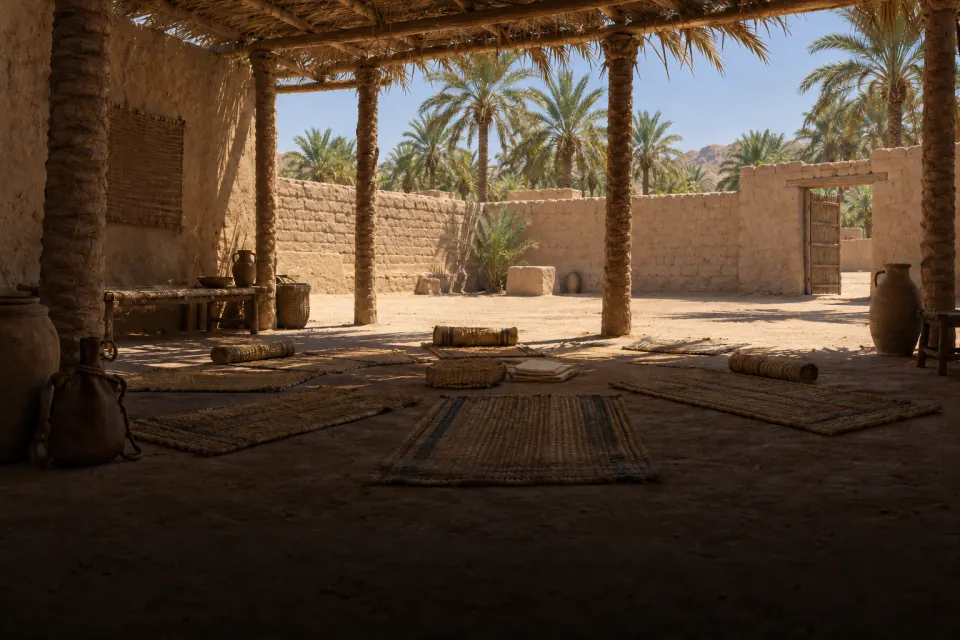
The succession and the Rightly Guided caliphs 632–661 CE
When Muhammad died in 632, the Muslims of Medina accepted his companion Abū Bakr as caliph, or deputy. In the Sunni view the Prophet had designated no heir, so the community chose its leader; Shia Muslims hold instead that he had named his cousin and son-in-law ʿAlī. Sunnis revere Abū Bakr, ʿUmar, ʿUthmān and ʿAlī as the four 'Rightly Guided' caliphs, whose rule ended in a civil war in 661. The Umayyad and then the Abbasid dynasties took the title. Pew and others note that the quarrel over leadership later widened into differences of theology and practice.[9, 11–13]
Hadith, law and creed c. 750–950
Under the Abbasids, scholars built the pillars of Sunni learning. The schools of law took the names of four jurists: Abū Ḥanīfa (d. 767), Mālik ibn Anas (d. 795), al-Shāfiʿī (d. 820) and Aḥmad ibn Ḥanbal (d. 855). When the caliph al-Maʾmūn began an inquisition in 833 to make scholars affirm that the Qur'an was created, Ibn Ḥanbal refused and was jailed and flogged. In the ninth and early tenth centuries al-Bukhārī, Muslim and four others compiled the hadith collections later called the six books. In the tenth, al-Ashʿarī and al-Māturīdī gave Sunni belief its classic theological form.[14–17]
Revival, madrasas and empires 1050–1700
The Seljuk vizier Niẓām al-Mulk founded the Niẓāmiyya college in Baghdad in 1067, backing Shāfiʿī law and Ashʿarī theology; al-Ghazālī, who taught there, drew Sufi piety into the mainstream. In Egypt, Saladin ended the Ismaʿili Fatimid caliphate in 1171 and restored Sunni rule. Mongol armies destroyed the Abbasid caliphate at Baghdad in 1258, and after 1517 the Ottoman sultans, whose courts followed Ḥanafī law, claimed the title of caliph. From 1501 the Safavids made Twelver Shiʿism the state religion of Iran, hardening the line between Sunni and Shia lands.[18–23]
Reformers and new movements 1744–1924
In central Arabia, Muḥammad ibn ʿAbd al-Wahhāb allied in 1744 with the house of Saud, preaching a strict return to the Qur'an and hadith. In Egypt, Muḥammad ʿAbduh (1849–1905) argued that Islam and modern reason agree; with Jamāl al-Dīn al-Afghānī and Rashīd Riḍā he shaped the modernist Salafiyya. In British India, the seminary at Deoband (1867) trained scholars in Ḥanafī law and hadith, while the followers of Aḥmad Riḍā Khān, called Barelvis, defended devotion to the Prophet and the saints. On 3 March 1924 Turkey's Grand National Assembly abolished the caliphate.[24–29]
Sunni Islam today 1924–present
With no caliph, authority is spread among muftis, national religious bodies and great colleges such as al-Azhar in Cairo, whose shaykh is widely seen as a leading Sunni voice. Twentieth-century movements added new voices: the Muslim Brotherhood, founded in Egypt in 1928, sought to renew society through Islamic principles. Salafism, which looks to the earliest generations as a model, has spread widely; most Salafis keep out of politics, while a violent minority has drawn world attention. Sufi orders, the legal schools and local traditions remain the everyday frame of Sunni life for many.[10, 30–32]
Key moments
- 632 CEMuhammad's death and the first caliph · Medina
- c. 850 CEHadith collections and the law schools · Bukhara, Baghdad and Medina
- 1111 CEAl-Ghazālī · Baghdad and Ṭūs, Iran
- 1236 CEMuʿīn al-Dīn Chishtī of Ajmer · Ajmer, Rajasthan, India
- 1453 CEConstantinople falls · Constantinople (Istanbul)
- 1744 CEIbn ʿAbd al-Wahhāb and the Saudi pact · al-Dirʿiyya, Najd (Saudi Arabia)
- 1924 CEThe caliphate abolished · Ankara, Turkey
- 2019 CEDocument on Human Fraternity · Abu Dhabi
Beliefs
Sunna · سنة
Established practice; the Prophet's example
Sunnis hold that Muhammad's words, deeds and silent approval form a model for all believers. That example is known through hadith, reports that each pair a chain of named transmitters (isnād) with a text (matn). Scholars graded reports by the reliability of their chains, and Sunnis rank the best collections second only to the Qur'an.[16, 33]
Ijmāʿ · إجماع
Consensus
The agreement of the community, voiced in practice by its scholars, carries great weight in Sunni thought. A hadith widely cited by Sunnis says the community will never agree on error. Al-Shāfiʿī ranked the sources of law as the Qur'an, the Sunna, consensus and analogy (qiyās), a scheme most Sunni jurists came to accept.[34–35]
Khilāfa · خلافة
The caliphate
For Sunnis the caliph was the community's chosen leader, charged with upholding the sacred law and guarding the community, but not with defining doctrine, which belonged to scholars. Classical jurists required a caliph of the Prophet's tribe, Quraysh, yet accepted rulers of other origins who kept order and allowed religion to be practised.[36]
The Companions · الصحابة
Those who knew the Prophet
Sunnis take religious guidance from the Prophet's Companions as a body and give Abū Bakr and ʿUmar an honoured place. Shia Muslims look instead to the Prophet's family and its imams, and their hadith collections differ accordingly.[37]
ʿAqīda · عقيدة
Creed
Ashʿarīs defend belief with rational argument, hold the Qur'an to be God's uncreated speech, and teach that God creates human acts while people 'acquire' them. Māturīdīs, strongest among Ḥanafīs and Turkic peoples, give more room to human agency and to reason. Traditionalists, often Ḥanbalī, distrust speculative theology and keep to the wording of scripture.[38–39]
Ijtihād and taqlīd · اجتهاد / تقليد
Independent reasoning; following a school
Once the schools of law had settled, most Sunni jurists worked within one school's method and precedents, and lay Muslims followed a school's rulings. Some later scholars spoke of the 'gate of ijtihād' as closed. Reformers since the eighteenth century, and Salafis today, call for fresh reasoning directly from the Qur'an and Sunna.[40]
Practice
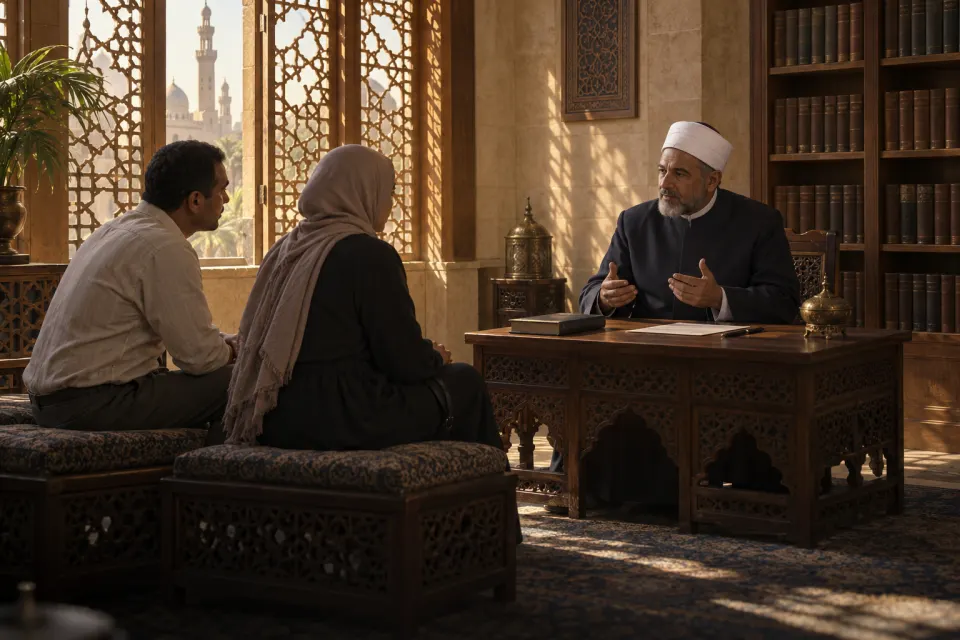
Living by a school of law · مذهب
A Sunni's prayer, fasting, marriage and inheritance follow the rulings of a school, usually the one dominant in their region. Muslims bring questions to a mufti, whose answer, a fatwa, is advisory: a questioner who is not convinced may ask another. Modern states often combine rulings from several schools in their family codes.[41]
Tarāwīḥ prayers in Ramadan · تراويح
On Ramadan nights Sunni Muslims gather, preferably in the mosque, for extra prayers called tarāwīḥ, often reciting the whole Qur'an over the month. They are recommended rather than required. Shia Muslims generally do not perform them.[42]
Sufi orders · طريقة
From the twelfth century Sufi orders (ṭarīqas) formed around masters who traced a chain of teachers back to the Prophet. Disciples take initiation, recite remembrance of God (dhikr) together and visit the tombs of saints. Orders such as the Qādiriyya and Naqshbandiyya spread across much of the Muslim world.[43]
Holy days
The year ahead
| Date | Holy day | Reckoned |
|---|---|---|
| 6 March 2027 Begins the evening before | Laylat al-Qadr ليلة القدر | 27 Ramaḍān, Islamic calendar |
| 9 March 2027 – 11 March 2027 Begins the evening before | Eid al-Fitr عيد الفطر | 1 Shawwāl, Islamic calendar |
| 16 May 2027 – 19 May 2027 Begins the evening before | Eid al-Adha عيد الأضحى | 10 Dhū al-Ḥijja, Islamic calendar |
| 15 June 2027 Begins the evening before | ʿĀshūrāʾ عاشوراء | 10 Muḥarram, Islamic calendar |
| 14 August 2027 Begins the evening before | Mawlid al-Nabī المولد النبوي | 12 Rabīʿ al-Awwal, Islamic calendar |
ʿĀshūrāʾ · عاشوراء
10 Muharram (moves through the Gregorian year)
For Sunnis a day of blessing and a recommended, voluntary fast. Hadith say the Prophet fasted on it, and later tradition links it with God's rescue of Moses at the sea. For Shia Muslims the same day mourns the killing of al-Ḥusayn in 680.[44]
Mawlid al-Nabī · المولد النبوي
12 Rabīʿ al-Awwal (moves through the Gregorian year)
The Prophet's birthday. Sunnis date the first great public mawlid to 1207, and the festival spread with Sufism. It is a state occasion in most Muslim countries but not in Saudi Arabia, and some conservative scholars reject it.[45]
Laylat al-Qadr · ليلة القدر
A night in the last ten of Ramadan; for most Sunnis the 27th
The Night of Power, when Muslims believe the Qur'an was first revealed. The exact night is uncertain; Sunnis most often keep the 27th of Ramadan and Shia Muslims the 23rd, with prayer, Qur'an recitation and remembrance of God.[46]
People
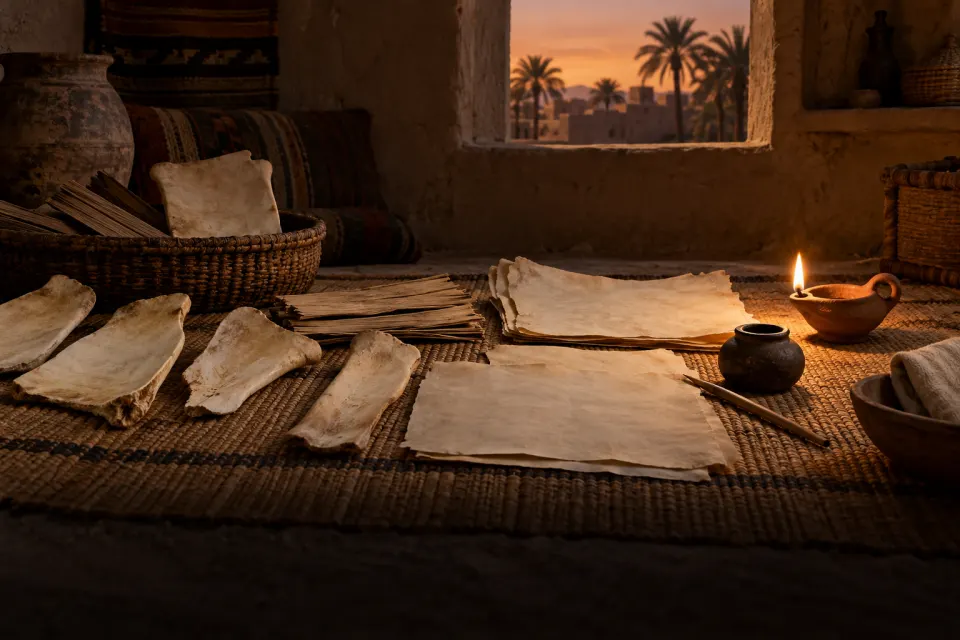
Abū Bakr · أبو بكر
ruler · 573–634; caliph 632–634
Muhammad's close companion and father of his wife ʿĀʾisha, he became the first caliph. In two years he subdued the Arabian tribes who broke away after the Prophet's death, and tradition places the first written gathering of the Qur'an in his reign. He was buried beside the Prophet in Medina.[47]

Abū Ḥanīfa · أبو حنيفة
scholar · 699–767
A jurist of Kufa in Iraq whose teaching, spread by his students, became the Ḥanafī school, known for reasoned opinion where precedent was lacking. Adopted by the Abbasid courts and made official by the Ottomans, it prevails today in Turkey, the Balkans, Central Asia and South Asia.[48]
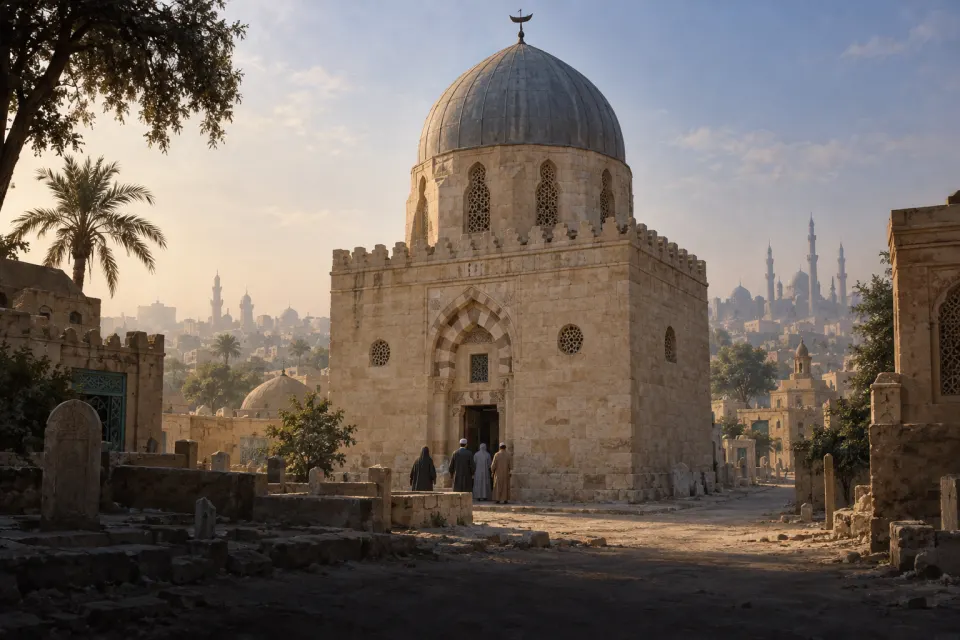
al-Shāfiʿī · الشافعي
scholar · 767–820
A jurist of the Prophet's tribe who studied with Mālik in Medina and died in Egypt. His Risāla set out how law is drawn from its sources and earned him the title of father of Islamic jurisprudence. His school prevails in East Africa, Yemen, Indonesia and Malaysia, and among Kurds.[35, 49]

Aḥmad ibn Ḥanbal · أحمد بن حنبل
scholar · 780–855
A Baghdad traditionalist who compiled the Musnad, a vast hadith collection, and gave his name to the Ḥanbalī school, the smallest of the four. His refusal to yield during the inquisition made him a hero of Sunni steadfastness. His school predominates in Saudi Arabia.[15, 50]

al-Bukhārī · البخاري
scholar · 810–870
Born in Bukhara, in today's Uzbekistan, he travelled widely to gather hadith and sifted them with exacting rules. Sunnis hold his Ṣaḥīḥ to be second only to the Qur'an as a guide to law and faith.[51]

al-Ghazālī · الغزالي
scholar · 1058–1111
A jurist and theologian from Ṭūs in Iran who left a chair at Baghdad's Niẓāmiyya after a spiritual crisis and lived for years as a Sufi. His Revival of the Religious Sciences joined law, creed and inner devotion, and is widely credited with making Sufism respectable within Sunni orthodoxy.[19]

Ibn Taymiyya · ابن تيمية
scholar · 1263–1328
A Ḥanbalī scholar who fled the Mongols to Damascus as a child. He urged a return to the Qur'an and Sunna, valued consensus only when rooted in them, and attacked many theologians, philosophers and Sufi practices. Often jailed, he died in prison; Wahhabis and later reformers drew heavily on him.[52]
Scripture
Ṣaḥīḥ al-Bukhārī · صحيح البخاري
9th century
Al-Bukhārī's collection of the reports he judged most reliable, arranged by topic. It holds over 7,000 hadith counting repetitions, far fewer without them. For Sunnis it is the most authoritative book after the Qur'an.[51, 53]
Ṣaḥīḥ Muslim and the six books · الكتب الستة
9th–10th centuries
Muslim ibn al-Ḥajjāj (d. 875) of Nishapur compiled the second great Ṣaḥīḥ. With al-Bukhārī's work and the Sunan of Abū Dāwūd, al-Tirmidhī, al-Nasāʾī and Ibn Māja, it forms the six books, which Sunnis regard as their most reliable hadith collections.[16, 54]
Al-Muwaṭṭaʾ · الموطأ
8th century
Mālik ibn Anas's handbook, the oldest surviving compendium of Islamic law. It sets hadith and the opinions of early Muslims alongside the established practice of Medina, which Mālik treated as a guide to the law.[55]
The Forty Hadith of al-Nawawī · الأربعون النووية
13th century
A short selection by the Shāfiʿī scholar al-Nawawī (d. 1277), meant to sum up the foundations of the faith. With his larger Riyāḍ al-ṣāliḥīn, it is widely used in Sunni teaching and preaching.[56]
Places

The Prophet's Mosque, Medina
SAU
Built on the site of Muhammad's house, it holds his tomb and is among the three holiest places in Islam. Abū Bakr, the first caliph, was buried beside him at his own request. The caliph al-Walīd I rebuilt it in 706, and later rulers greatly enlarged it.[47, 57]
Al-Azhar Mosque, Cairo
EGY · UNESCO World Heritage, 1979
Founded c. 970–972 by the Ismaʿili Fatimids as Cairo's main mosque, it fell idle for about a century after Saladin's conquest and then grew into the foremost college of Sunni learning. It lies inside the Historic Cairo World Heritage Site.[58]
Great Mosque of Kairouan
TUN · UNESCO World Heritage, 1988
Founded with the city by ʿUqba ibn Nāfiʿ around 670 and largely rebuilt by the Aghlabids in the ninth century. Kairouan, where the Mālikī school took root in North Africa, is a World Heritage Site.[59]
Dār al-ʿUlūm, Deoband
IND
The seminary founded in 1867 in this Uttar Pradesh town teaches Ḥanafī law, hadith and Qur'an commentary. Hundreds of Deobandi schools across South Asia and in the West follow its model, and the Tablighi Jamaat grew from its circle.[27, 60]
Art & objects
Public-domain objects from museum collections. Select one to see it at the museum.
 Saber (Kiliç) with ScabbardTurkey, late 19th century
Blade inscribed 1099 Hejira [A.D. 1687]
Saber (Kiliç) with ScabbardTurkey, late 19th century
Blade inscribed 1099 Hejira [A.D. 1687] ShishakTurkey, late 16th–early 17th century
 Cross-Shaped Tile with Qur'anic InscriptionsVaramin, Ilkhanid dynasty (1256–1353), Mid-13th century
 Leaf from a Qur'an (recto)Egypt, Cairo, Mamluk Sultanate (1250–1517), 1300s
 Leaf from a Qur'an (verso)Egypt, Cairo, Mamluk Sultanate (1250–1517), 1300s
 Fragmentary Cenotaph Cover with Qur'anic Calligraphy17th–18th century
 Prayer Ruglate 16th century
 Qur'anic Compilation Pageca. 1370
Numbers
- Sunni Muslims worldwide
- c. 1.75 billion (2020 estimate)[8]
Derived: Pew counts about 2.0 billion Muslims in 2020; Pew (2009) puts Sunnis at 87–90% of Muslims and Britannica at over 85%. Sect is rarely asked in censuses, so treat this as a range.
- Share of all Muslims
- c. 85–90%[2]
Pew's 2009 estimate (87–90%); Britannica and the Oxford Dictionary of Islam say at least 85%.
National censuses
| Country | Year | Count | Share |
|---|---|---|---|
| New Zealand Sunni | 2018 | 2,961 | 0.1% |
Source: Stats NZ, 2018 Census, licensed by Stats NZ for re-use under the Creative Commons Attribution 4.0 International licence.
How we know
When did 'Sunni' begin?
Sunnis trace their way to the Prophet and his Companions, and their memory dates the divide to 632. Historians add that the labels came later: what became the Sunni and Shia positions on leadership were still being argued in the ninth century, and a distinct Sunni identity took shape gradually, with its creed fixed in the tenth century in reaction to the Muʿtazila and other rival schools.[3, 61]
How reliable are the hadith?
Muslim scholars developed a detailed science for testing transmitters and grading reports, and freely admitted that many reports were forged. Modern Western scholarship, from Ignaz Goldziher and Joseph Schacht onward, has been more doubtful, dating much hadith to generations after the Prophet. Views range from radical scepticism to acceptance of the broad outline with report-by-report testing, and the debate continues among Muslims too.[62]
Common misconceptions
Myth Sunnis and Shia have different Qur'ans and different basic duties.
Fact Both read the same Qur'an and keep prayer, fasting, almsgiving and pilgrimage. They part ways chiefly over who should have led the community after Muhammad, and from that over which hadith and authorities to trust, details of law and ritual, and how to remember early history.[63]
Myth Sufism is a separate sect, outside Sunni Islam.
Fact Sufism is a mystical path within Islam, not a sect, and Sufi orders have long been part of mainstream Sunni life. Great Sunni scholars such as al-Ghazālī were Sufis, Barelvis belong mostly to the Qādirī order, and even critics of popular Sufism, like the Deobandis, keep Sufi lineages of their own.[64]
Myth Salafism or Wahhabism is simply what Sunni Islam is.
Fact Salafism is one current within Sunni Islam. It rejects strict adherence to the legal schools and many customs that most Sunnis have long practised, such as saints' festivals, and Ashʿarī, Sufi and Barelvi Sunnis contest its claims.[65]
Glossary
- Sunna · سنة
- The Prophet's normative example, known through hadith: reports of what he said, did and approved, each with a chain of transmitters (isnād).[33]
- Madhhab · مذهب
- A school of law: a body of doctrine taught by a founding scholar and developed by followers. Sunni Islam recognises four.[5, 66]
- Qiyās · قياس
- Reasoning by analogy from a case covered by the Qur'an or Sunna to a new one; the fourth source of law in al-Shāfiʿī's scheme.[35]
- Ijtihād · اجتهاد
- Independent legal reasoning by a qualified jurist; its opposite, taqlīd, is following a school's established rulings.[40]
- Fatwa · فتوى
- A formal, usually advisory, opinion on a point of law given by a qualified scholar, the mufti.[41]
- ʿUlamāʾ · علماء
- The learned: scholars trained in the religious sciences, from whom come jurists, muftis, judges and teachers.[7]
- Rāshidūn · الراشدون
- The 'Rightly Guided': Sunni name for the first four caliphs, Abū Bakr, ʿUmar, ʿUthmān and ʿAlī (632–661).[11]
- Kalām · كلام
- Speculative theology: the defence and explanation of belief by rational argument, practised by the Ashʿarī and Māturīdī schools.[67]
- Ṭarīqa · طريقة
- 'Path': a Sufi order, with its master, chain of teachers and disciplines of prayer and remembrance.[43]
Sources
Each statement above was checked against published sources; the verdict says whether it stood as written, was corrected or was hedged.
- VerifiedBritannica, Islam: Sunnism; Encyclopedia.com, Sunnah; Bowker, Sunna.
- VerifiedPew, Mapping the Global Muslim Population; Britannica, Hadith; ODI, Sunni Islam; NDHI, Islam: Sunni.
- HedgedPew 2009; Britannica, Islam: Sunnism; OEIP, Caliphate, Theories of the.
- VerifiedBritannica, Sunni; Oxford History of Islam, ch. 2.
- VerifiedBritannica, Sunni; EoR, Madhhab; Pew 2009.
- CorrectedBritannica, Islam: Sunnism; EoR, Māturīdī, al; OEPST, Theology.
- VerifiedBritannica, ʿulamāʾ; ODI, Ulama: Sunni; Bowker, ʿUlamā.
- HedgedPew, Islam was the world's fastest-growing religion from 2010 to 2020; Pew 2009; Britannica, Hadith.
- VerifiedBritannica, caliph; OEIW, Rightly Guided Caliphs; NDHI, Islam: Sunni.
- VerifiedOEIW, Kufr; Britannica, al-Ghazālī.
- VerifiedBritannica, Rashidun; ODI, Rightly Guided Caliphs; NDHI, Islam: Sunni.
- VerifiedBritannica, caliph; Oxford Reference overview, art and architecture: Abbasid.
- VerifiedPew 2009; Britannica, Hadith.
- VerifiedEoR, Madhhab; Britannica, Abū Ḥanīfah.
- VerifiedOIELH, Ibn Hanbal, Ahmad; Britannica, Aḥmad ibn Ḥanbal.
- VerifiedBritannica, Hadith; Oxford History of Islam, ch. 2; ODI, Sahih Muslim.
- VerifiedBritannica, Abū al-Ḥasan al-Ashʿarī; EoR, Māturīdī, al.
- VerifiedOIELH, Islamic Schools of Sacred Law; EoR, Ashʿarīyah.
- VerifiedBritannica, al-Ghazālī; ODI, Ghazali, Abu Hamid al; app event ghazali-1111 (supporting).
- VerifiedBritannica, Saladin; Oxford Dictionary of the Middle Ages, caliphate, Fatimid.
- VerifiedBritannica, caliph; Oxford Dictionary of Byzantium, ʿAbbāsid Caliphate; NCE, Caliph.
- VerifiedBritannica, Ḥanafī school; EMMENA, Hanafi School of Law.
- VerifiedBritannica, Safavid dynasty; ODI, Shah Ismail.
- VerifiedBritannica, Wahhābī; ODI, Saud, Muhammad ibn al; app event wahhabi-pact-1744 (supporting).
- VerifiedBritannica, Muḥammad ʿAbduh; Encyclopedia.com, Salafiyya.
- VerifiedEncyclopedia.com, Salafiyya; Britannica, Muḥammad ʿAbduh.
- VerifiedBritannica, Deoband school; Oxford Reference; Encyclopedia.com, Deoband.
- VerifiedOEIP, Barelwīs; Encyclopedia.com.
- VerifiedBritannica, caliph; ODI, Abdulmejid, Sultan; NCE, Caliph; app event caliphate-abolished-1924 (supporting).
- VerifiedBritannica, al-Azhar University; OEIW, Ṭanṭāwī, Shaykh al; Britannica, caliph.
- VerifiedBritannica, Muslim Brotherhood; OEIW, Bannā, Ḥasan al.
- VerifiedBritannica, Salafi movement; Encyclopedia.com, Salafiyya.
- VerifiedEncyclopedia.com, Sunnah; Britannica, Hadith.
- VerifiedBritannica, Sunni; ODI, Sunni Islam; IWPP, Sunni Islam.
- VerifiedEncyclopedia.com, Sunnah; Britannica, al-Shāfiʿī; OIELH, Shafiʿi, Muhammad ibn Idris al.
- VerifiedBritannica, caliph; NCE, Caliph.
- VerifiedOEIW, Shīʿī Islam; Britannica, Hadith.
- VerifiedBritannica, Ashʿariyyah; EoR, Māturīdī, al; Oxford Reference.
- VerifiedBritannica, Aḥmad ibn Ḥanbal; OEPST, Theology; OIELH, Islamic Schools of Sacred Law.
- VerifiedBritannica, ijtihād; OEIW, Ijtihād; Encyclopedia.com, Salafiyya.
- VerifiedBritannica, fatwa; EoR, Madhhab.
- VerifiedBritannica, Ramadan; ODI, Salat al-Tarawih.
- VerifiedBritannica, tariqa; Oxford Encyclopedia of Islam in North America, Sufism in the Modern World; OEIW, Relics.
- VerifiedBritannica, Ashura; Bowker, ʿAshūrāʾ.
- VerifiedBritannica, mawlid; ODI, Mawlid al-Nabi.
- VerifiedBritannica, Laylat al-Qadr; OEIW, Ṣawm.
- VerifiedBritannica, Abū Bakr; IWPP, Ali ibn Abi Talib.
- VerifiedBritannica, Abū Ḥanīfah; EMMENA, Hanafi School of Law.
- VerifiedBritannica, al-Shāfiʿī; EoR, Madhhab.
- VerifiedBritannica, Aḥmad ibn Ḥanbal; OEIP, Schools of Jurisprudence; EoR, Madhhab.
- VerifiedBritannica, al-Bukhārī; Bowker, al-Bukhārī; Encyclopedia.com.
- VerifiedBritannica, Ibn Taymiyyah; OIELH, Ibn Taymiyya, Taqi al-Din Ahmad.
- VerifiedBowker, al-Bukhārī; Encyclopedia.com; Britannica, Hadith; app event hadith-and-law-schools-850 (supporting).
- VerifiedBritannica, Muslim ibn al-Ḥajjāj; ODI, Sahih Muslim.
- VerifiedBritannica, Mālik ibn Anas; ODI, Muwatta, al.
- VerifiedOxford Reference; Britannica, Hadith.
- VerifiedBritannica, Prophet's Mosque; OEIW, Medina.
- VerifiedBritannica, al-Azhar University; IWPP, Azhar, al; UNESCO, Historic Cairo.
- VerifiedBritannica, Kairouan; Oxford Dictionary of the Middle Ages, Kairouan, Great Mosque of.
- VerifiedBritannica, Deoband school; Encyclopedia.com, Deoband; OEPST, Madrasas.
- HedgedOEIP, Caliphate, Theories of the; Britannica, Islam: Sunnism; NDHI, Islam: Sunni; app event succession-632 (supporting).
- VerifiedBritannica, Hadith; OEIW, Law.
- VerifiedOEIW, Ithnā ʿAsharīyah; Pew 2009; Britannica, Hadith.
- VerifiedBritannica, al-Ghazālī; Encyclopedia.com; Oxford Encyclopedia of Islam in North America, Sufism in the Modern World; OEIW, Relics.
- VerifiedBritannica, Salafi movement; Pew 2009; Encyclopedia.com; ODI, Mawlid al-Nabi.
- VerifiedEoR, Madhhab; Britannica, ijtihād.
- VerifiedBritannica, kalām; OEPST, Theology; EoR, Ashʿarīyah.
Last fact-checked 3 October 2026.