
The story behind the day
Mawlid al-Nabī marks the birthday of the Prophet Muhammad. Most Sunni communities keep it on the twelfth of Rabīʿ al-Awwal, which is the third month of the Hijri year, while Shia communities keep it on the seventeenth. It is a day of recitation, praise and reflection, and its legitimacy is debated: many Muslims treat it as a way of expressing love for the Prophet, while some scholars call it an innovation. The first recorded celebrations date from Fatimid Egypt.[1–6]
Origins
The anniversary of the Prophet's birth is celebrated on the twelfth of Rabīʿ al-Awwal. Egypt's Dar al-Ifta calls that day the noble birth of the Prophet and a time to rejoice, and Turkey's Diyanet calls the night of the twelfth the anniversary of his birth. The earliest recorded celebrations belong to the later Fatimid rulers of Egypt. The Fatimids were a dynasty of Ismaili caliphs, Shia who held the descendants of the Prophet in particular esteem. Most Sunni communities observe the twelfth, the date given in the encyclopedias and by Diyanet. Shia communities place the Prophet's birth on the seventeenth: the rulings of Ayatollahs al-Sistani and Makarem Shirazi list the Prophet's birthday, the seventeenth of Rabīʿ al-Awwal, among recommended days of fasting, and an encyclopedia entry notes that Shia celebrate the birth of the Prophet, which Sunnis also recognise, together with those of the imams.[1, 3–4, 7–8]
What it marks
For those who keep it, the Mawlid is an expression of love and reverence for the Prophet. A message from the Türkiye Diyanet Foundation speaks of carrying love of the Prophet in the heart and contemplating his birth, and Diyanet itself calls on Muslims to treat the Mawlid as a chance to reconsider their lives. Egypt's Dar al-Ifta rules that celebrating religious occasions, including the Prophet's birth, is permissible if nothing forbidden is involved and that it is neither disliked nor an innovation, but a way of honouring the rites of God, and Jordan's Department of Iftaa' likewise calls the celebration permissible.[6, 9]
How it is kept
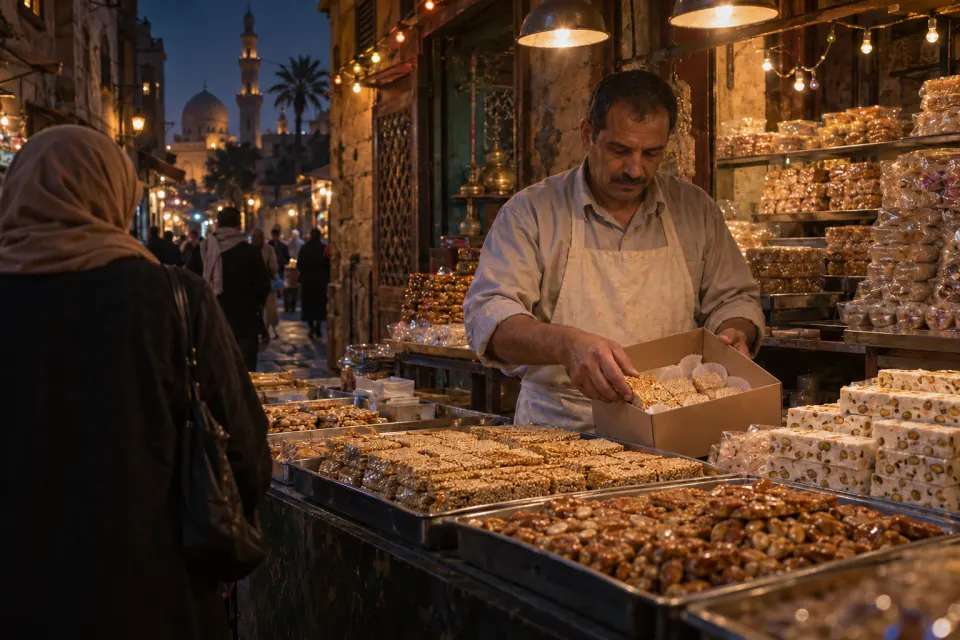
The Mawlid has been debated for centuries. The Congressional Research Service calls its legitimacy a subject of intense debate while noting that most denominations recognise it. Critics such as the medieval scholar Ibn Taymiyya condemned it as a harmful innovation, and some scholars today, such as the Islam Q&A fatwa site, still call it forbidden. The central activity is recitation, of long praise poems and legends about the Prophet, of passages from the Qur'an and of his biography. Because the dates are lunar, the Mawlid moves about eleven days earlier through the Gregorian year each year.[5, 10–11]
Sources
Each statement above was checked against published sources; the verdict says whether it stood as written, was corrected or was hedged.
- CorrectedEncyclopedia.com; dinhizmetleri.diyanet.gov.tr.
- CorrectedCongressional Research Service, Muslim Holidays: Fact Sheet; Dar al-Ifta al-Misriyyah, The Hijra and the Islamic calendar.
- CorrectedOffice of Ayatollah al-Sistani, Islamic Laws, ruling 1716; Office of Ayatollah Makarem Shirazi, Islamic Laws; Encyclopedia.com.
- CorrectedEncyclopedia.com; Islam Q&A, Ruling on celebrating the birthday of the Prophet.
- CorrectedEncyclopedia.com; Congressional Research Service, Muslim Holidays: Fact Sheet.
- VerifiedTürkiye Diyanet Foundation; dinhizmetleri.diyanet.gov.tr.
- VerifiedDar al-Ifta al-Misriyyah, The Islamic calendar: a festive tree bearing fruits of mercy; dinhizmetleri.diyanet.gov.tr.
- VerifiedInstitute of Ismaili Studies, Glossary, Fatimids; Encyclopedia.com.
- CorrectedDar al-Ifta al-Misriyyah, fatwa 4824 Celebrating the various religious occasions; General Iftaa' Department of Jordan, Ruling on Celebrating the Prophet's Birthday.
- CorrectedEncyclopedia.com; General Iftaa' Department of Jordan, Ruling on Celebrating the Prophet's Birthday.
- CorrectedEncyclopedia.com; The Open University.