Beliefs & ideas · 4 min read
Zoroastrianism in Iran: Living Communities, Rituals and Sacred Places
Explore Zoroastrian life in Iran through Yazd, Kerman, pilgrimage, oral histories and ancient sanctuaries, with scholarly and heritage sources.
An Iranian religion with a living history
Zoroastrianism belongs to the religious history of ancient Iran and to the lives of communities today. Its central prophetic figure is Zarathustra, also known as Zoroaster. His precise dates and birthplace remain uncertain: scholars work with Avestan texts and later traditions rather than an agreed contemporary biography. A confident founding year can therefore obscure what the evidence actually allows us to say. [1][6]
Why Yazd and Kerman matter
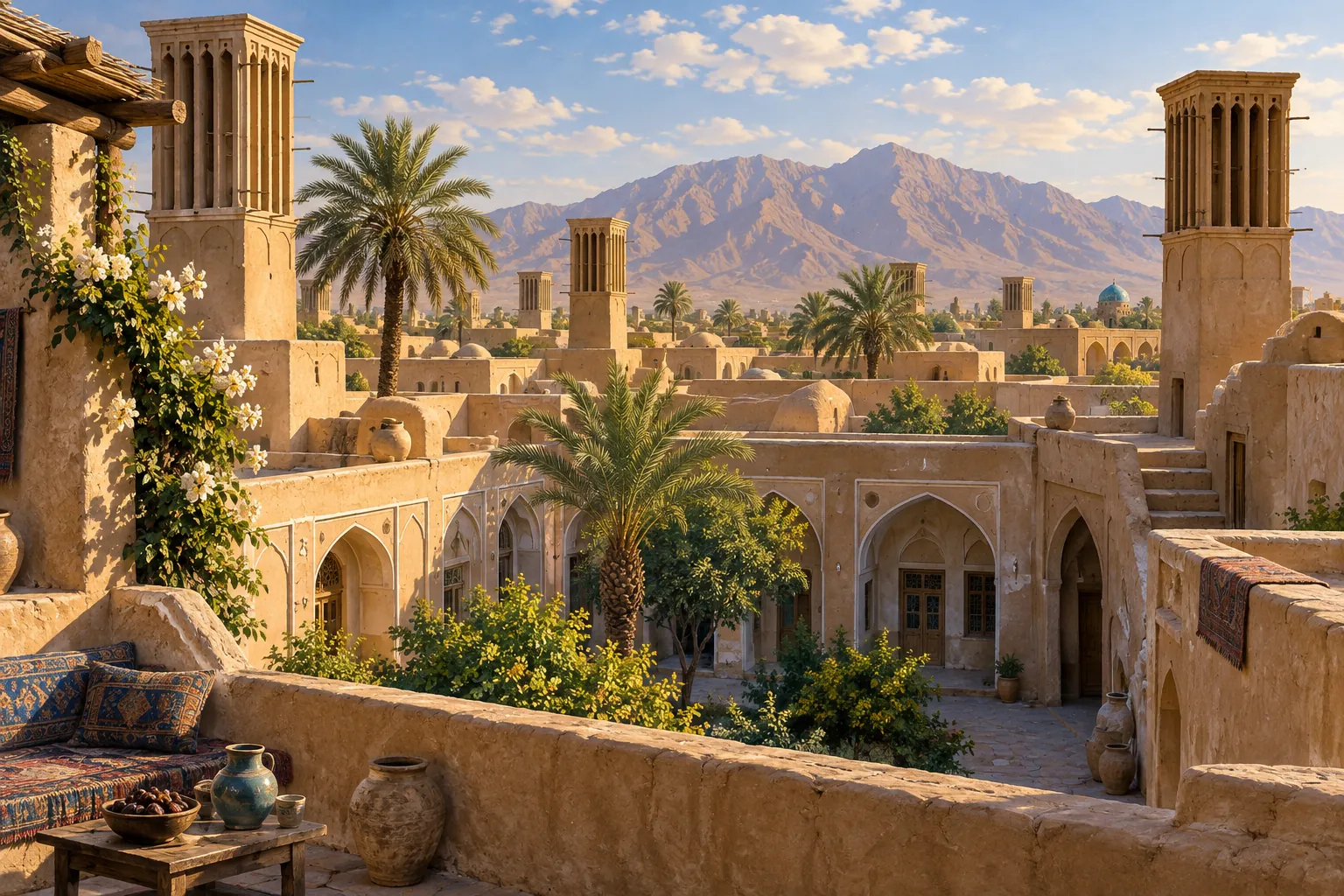
Yazd offers a particularly visible setting for this history. UNESCO describes a living city of earthen buildings, underground water systems called qanats, and religious sites that include Zoroastrian temples, mosques and synagogues. The city entered the World Heritage List in 2017. Its religious buildings sit within an inhabited urban landscape of homes, markets and water infrastructure; they are not simply detached monuments to a vanished past. [2]
Kerman also has a substantial place in Zoroastrian community history. Encyclopaedia Iranica’s study of nineteenth-century Yazd and Kerman describes urban and rural communities, priestly leadership, local institutions and the pressures that shaped their survival. Weddings, memorial observances, pilgrimage and the six seasonal gahambar festivals brought people together. Shared meals and religious occasions helped sustain relationships across households. These historically documented practices provide a fuller picture than an account organized only around rulers and ancient empires. [3]
The same study describes reform and community organization during the nineteenth century. Manekji Limji Hataria arrived in Iran in 1854, and Parsi-backed initiatives supported schooling, religious buildings and efforts to ease restrictions. Iranian Zoroastrians also acted through their own councils and institutions. Changes involved local choices and disagreements; the history should not reduce Iranian communities to passive recipients of help from abroad. [3]
Pilgrimage, initiation and changing customs
Zoroastrian religious places extend beyond fire temples. The shrine of Pir-e Sabz, commonly called Chak Chak, lies east of Ardakan in the Yazd region. Michael Stausberg’s scholarly survey of ritual describes an annual pilgrimage custom in mid-June. Natural settings and water can be significant at such shrines. This is a description of a religious tradition, rather than a promise of current opening arrangements or an upcoming festival schedule. [4]
Initiation is another part of religious life. In Iran, sedre-pushi names the ceremony associated with the sacred shirt and cord; navjote is the familiar term in the Indian setting. Prayer, family celebrations and commemoration connect religious commitments with everyday relationships. Practices have also changed: Stausberg describes burial replacing older exposure customs in modern Iran. Treating every practice as an unchanged survival from antiquity misses this history of adaptation. [4]
An ancient sanctuary is a different kind of evidence
Takht-e Soleyman, in northwestern Iran, preserves the remains of a major Sasanian religious and royal complex. UNESCO identifies its Zoroastrian sanctuary, fire temple, lake and architecture associated with royal authority. Parts of the site were revived or rebuilt in the thirteenth century. It illuminates the relationship between religion and power in an earlier era, but its archaeological remains should not be described as a continuously operating modern fire temple. Its value differs from that of an inhabited neighborhood or a present-day congregation. [5]
Listening to people as well as studying buildings
Oral history adds voices that monumental architecture cannot supply. SOAS researcher Sarah Stewart’s work includes more than 350 interviews in Iran, most conducted in Zoroastrian Dari, and the publication Voices from Zoroastrian Iran. The interviews draw on urban and rural experience. That project’s interview total is a description of an archive, not an estimate of the country’s Zoroastrian population. [6]
A contemporary community example comes from FEZANA’s oral-history program. In a conversation with his son Kasra, Kaivan Hoor reflects on the balance between festival observance, inherited customs and attention to religious teachings across his experience of Iran and the United States. Their account offers a family perspective on continuity and change. It should be read as their experience, not a survey of every Iranian Zoroastrian household. [7]
Sources & further reading
The numbered links connect claims to the sources below. Sources checked October 14, 2026 by a separate AI fact-checking agent. This is not human or specialist review. Read our editorial approach.
- ZOROASTER ii. General Survey ↗Encyclopaedia Iranica; William W. Malandra · Accessed October 14, 2026
- Historic City of Yazd ↗UNESCO World Heritage Centre · Accessed October 14, 2026
- Zoroastrians of 19th-Century Yazd and Kerman ↗Encyclopaedia Iranica; Janet Kestenberg Amighi · Accessed October 14, 2026
- Zoroastrian Rituals ↗Encyclopaedia Iranica; Michael Stausberg · Accessed October 14, 2026
- Takht-e Soleyman ↗UNESCO World Heritage Centre · Accessed October 14, 2026
- Dr Sarah Stewart — Research interests ↗SOAS University of London · Accessed October 14, 2026
- From Motherland to Otherland: ZIOH E-09 ↗Federation of Zoroastrian Associations of North America (FEZANA), Religion Education Committee; Kaivan and Kasra Hoor · Accessed October 14, 2026
Found a problem? Send a correction with the passage and a supporting source.
Continue your reading
All articles ↗
People & places · 3 min read
Religion in Iran: Communities, History and What the Numbers Mean
A sourced guide to religion in Iran, explaining its official faith, diverse communities, demographic estimates, religious heritage and dated rights reporting.
Holy days · 4 min read
Is Nowruz a Religious Holiday? Its Roots and Traditions in Iran
Understand Nowruz in Iran: Zoroastrian roots, its life in Muslim societies, the evolving haft-sin table and a celebration shared across communities.
Beliefs & ideas · 4 min read
Why do Zoroastrians use fire? Prayer, purity and sacred meaning
Understand fire in Zoroastrian worship through community explanations, historical scholarship and the different settings of household and temple practice.