Overview
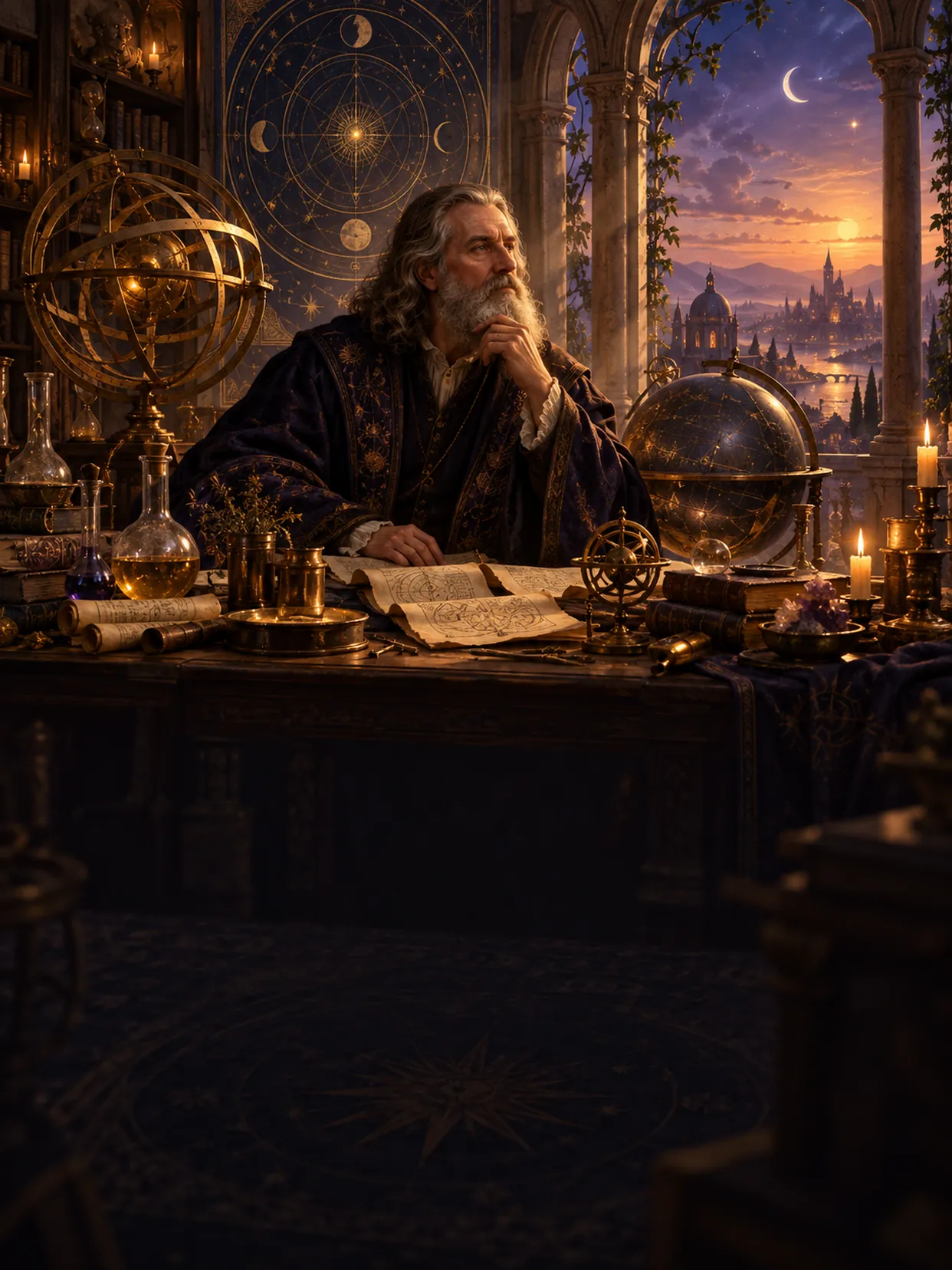
Hermeticism (or Hermetism) names a body of Greek and Latin writings, composed in Roman Egypt between the 1st and 3rd centuries CE, ascribed to the legendary sage Hermes Trismegistus and gathered chiefly as the Corpus Hermeticum and the Asclepius. These dialogues taught that the soul could win spiritual regeneration through revealed knowledge of God, the cosmos and itself. Transmitted partly through Arabic scholarship, the texts resurfaced in Latin translation in Renaissance Florence, where Marsilio Ficino and Giovanni Pico della Mirandola drew on them as part of a renewed "ancient wisdom." In the 19th century this tradition fed a modern Western esoteric revival, most visibly through the Hermetic Order of the Golden Dawn, founded in England in 1887–88.[1–3, 5, 7]
History

The Corpus Hermeticum in Roman Egypt c. 100–300 CE
Greek- and Latin-speaking writers in Roman Egypt, chiefly around Alexandria, produced dialogues ascribed to Hermes Trismegistus, gathered as the Corpus Hermeticum and the companion dialogue Asclepius, which survives complete only in a Latin translation once wrongly credited to Apuleius. The texts taught that contemplating the cosmos and the self could lead the soul through the celestial spheres to spiritual regeneration, an aim close to that of contemporary Gnosticism. Among their most quoted parts is the brief Tabula Smaragdina, or Emerald Tablet, a favourite source for later alchemists, which taught that "that which is above is like to that which is below."[1–2, 8–9]
Rediscovery and the Renaissance 12th–17th centuries
Carried partly through Arabic scholarship into the medieval Latin West, the Hermetic writings became frequently invoked in Renaissance literature; in Medici Florence, Marsilio Ficino and Giovanni Pico della Mirandola drew on the Corpus Hermeticum, especially its famous first treatise, as part of a renewed "ancient wisdom" alongside Plato and the Kabbalah. The English natural philosopher Isaac Newton later immersed himself in this tradition's alchemical literature, and historians trace its concepts of occult "attraction" and "repulsion" into his physics. In 1614 a related tradition, Rosicrucianism, appeared in Germany through anonymous pamphlets describing a legendary adept, Christian Rosenkreuz, and became closely intertwined with Hermetic literature from then on.[3–4, 6–7]
A modern esoteric revival 1887–present
In England in 1887–88, three Freemasons, William Wynn Westcott, William Robert Woodman and Samuel Liddell Mathers, founded the Hermetic Order of the Golden Dawn, blending Hermeticism, Rosicrucianism, Kabbalah and ceremonial magic into an initiatory system. Though the order itself collapsed within two decades, it profoundly shaped later Western esoteric movements, including Aleister Crowley's Thelema and the modern pagan movement Wicca.[5, 10]
Beliefs
regeneration
spiritual rebirth
Hermetic texts taught that the human mind, by contemplating the ordered cosmos as a mirror of the divine, could attain a knowledge-driven rebirth that freed it from entrapment in the material world, an aim closely related to the "gnosis" sought in contemporary Gnosticism.[2]
People
Hermes Trismegistus
deity · legendary
A syncretic sage-figure merging Greek and Egyptian wisdom traditions, Hermes Trismegistus ("Hermes the Thrice-Greatest") is the legendary author to whom the Hermetic dialogues are ascribed.[1]
Isaac Newton
scholar · 1642–1727
Newton immersed himself for years in Hermetic alchemical literature, and historians have traced the occult "attractions" and "repulsions" of that tradition into the mathematical concept of force in his physics.[4]
Scripture
Corpus Hermeticum
c. 100–300 CE
A collection of Greek dialogues ascribed to Hermes Trismegistus, surviving complete in the original Greek, that forms the core theological and philosophical half of the Hermetic writings.[1, 8]
Tabula Smaragdina · Emerald Tablet
earliest version, in Arabic, 10th c. CE
A brief, enigmatic text attributed to Hermes Trismegistus and prized by generations of alchemists, the Emerald Tablet teaches that "that which is above is like to that which is below... to accomplish the miracles of one thing."[9]
Places
Alexandria
EGY
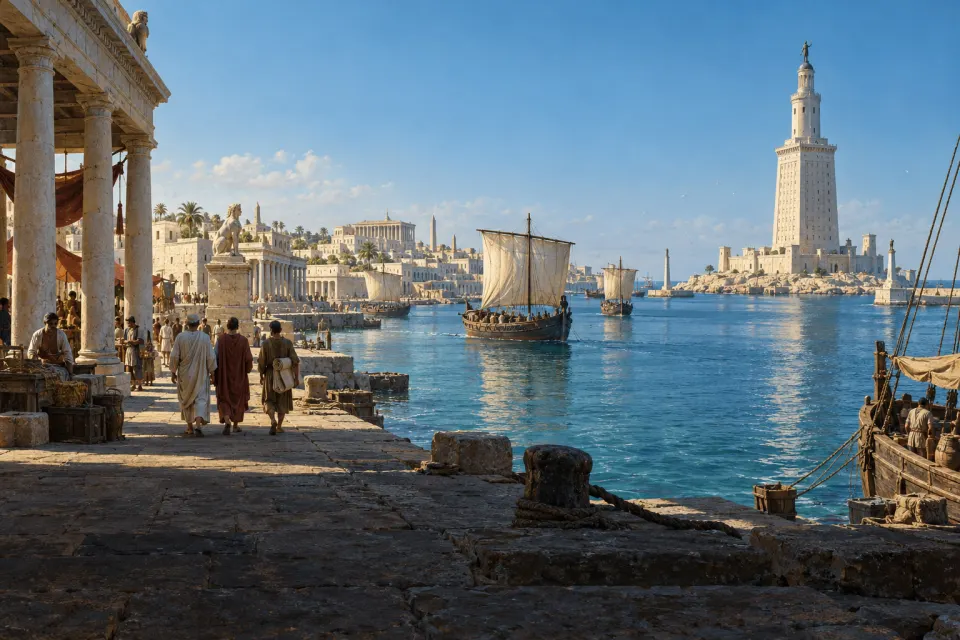
The Hermetic dialogues took shape in the Greco-Egyptian culture of this city and its region under Roman rule.[1]
London
GBR
The Hermetic Order of the Golden Dawn, blending Hermeticism with Rosicrucianism and ceremonial magic, was founded in this city in 1887–88.[5]
Art & objects
Public-domain objects from museum collections. Select one to see it at the museum.


How we know
How the texts survive
Of the two main Hermetic works, only the Corpus Hermeticum survives complete in its original Greek; its companion dialogue, the Asclepius, survives complete only in an ancient Latin translation, the Greek original having been lost.[8]
Common misconceptions
Myth The Hermetic Order of the Golden Dawn preserved an unbroken ancient esoteric tradition.
Fact The Golden Dawn and the related Rosicrucian current presented themselves as continuations of ancient secret wisdom, but both were in fact new syntheses assembled by their own 19th- and 17th-century founders from Hermetic, Kabbalistic, Masonic and other older material, not transmissions of any unbroken ancient organization.[5–6]
Glossary
- Hermes Trismegistus
- "Hermes the Thrice-Greatest," the legendary sage, merging Greek and Egyptian wisdom figures, credited as author of the Hermetic writings.[1]
- Corpus Hermeticum
- The core collection of Greek Hermetic dialogues on theology and philosophy, composed in Roman Egypt.[8]
- Tabula Smaragdina · Emerald Tablet
- A short, widely quoted Hermetic text prized by medieval and early modern alchemists for its maxim that the cosmos is a single interconnected unity.[9]
- Hermetic Order of the Golden Dawn
- A British initiatory society (1887–88) that fused Hermeticism, Rosicrucianism, Kabbalah and ceremonial magic, with lasting influence on later Western esotericism.[5]
- Rosicrucianism
- A parallel esoteric current, first announced in German pamphlets of 1614–1616, claiming secret wisdom handed down from the legendary adept Christian Rosenkreuz.[6]
Sources
Each statement above was checked against published sources; the verdict says whether it stood as written, was corrected or was hedged.
- VerifiedBritannica, Hermetic writings; Encyclopedia.com, Hermetism.
- VerifiedBritannica, Hermetic writings; Encyclopedia.com, Hermetism.
- VerifiedEncyclopedia.com, Hermetism; Internet Encyclopedia of Philosophy, Neo-Platonism, Appendix The Renaissance Platonists.
- VerifiedBritannica, Isaac Newton, Influence of the Hermetic tradition; Encyclopedia.com, Hermetism.
- VerifiedBritannica, Hermetic Order of the Golden Dawn; Encyclopedia.com, Hermetism.
- VerifiedBritannica, Rosicrucian; Encyclopedia.com, Hermetism.
- VerifiedBritannica, Hermetic writings; Encyclopedia.com, Hermetism.
- VerifiedBritannica, Hermetic writings; Encyclopedia.com, Hermetism.
- VerifiedBritannica, Hermetic writings; Encyclopedia.com, Hermetism.
- VerifiedBritannica, Hermetic Order of the Golden Dawn; Encyclopedia.com, Theosophical Society.
Last fact-checked 6 October 2026.