History · 3 min read
Why Is Iran Shi‘a? The Safavids and a Gradual Religious Transformation
Learn how Safavid state policy, earlier Shi‘a communities, scholars and regional change shaped Iran’s religious history beyond the landmark year 1501.
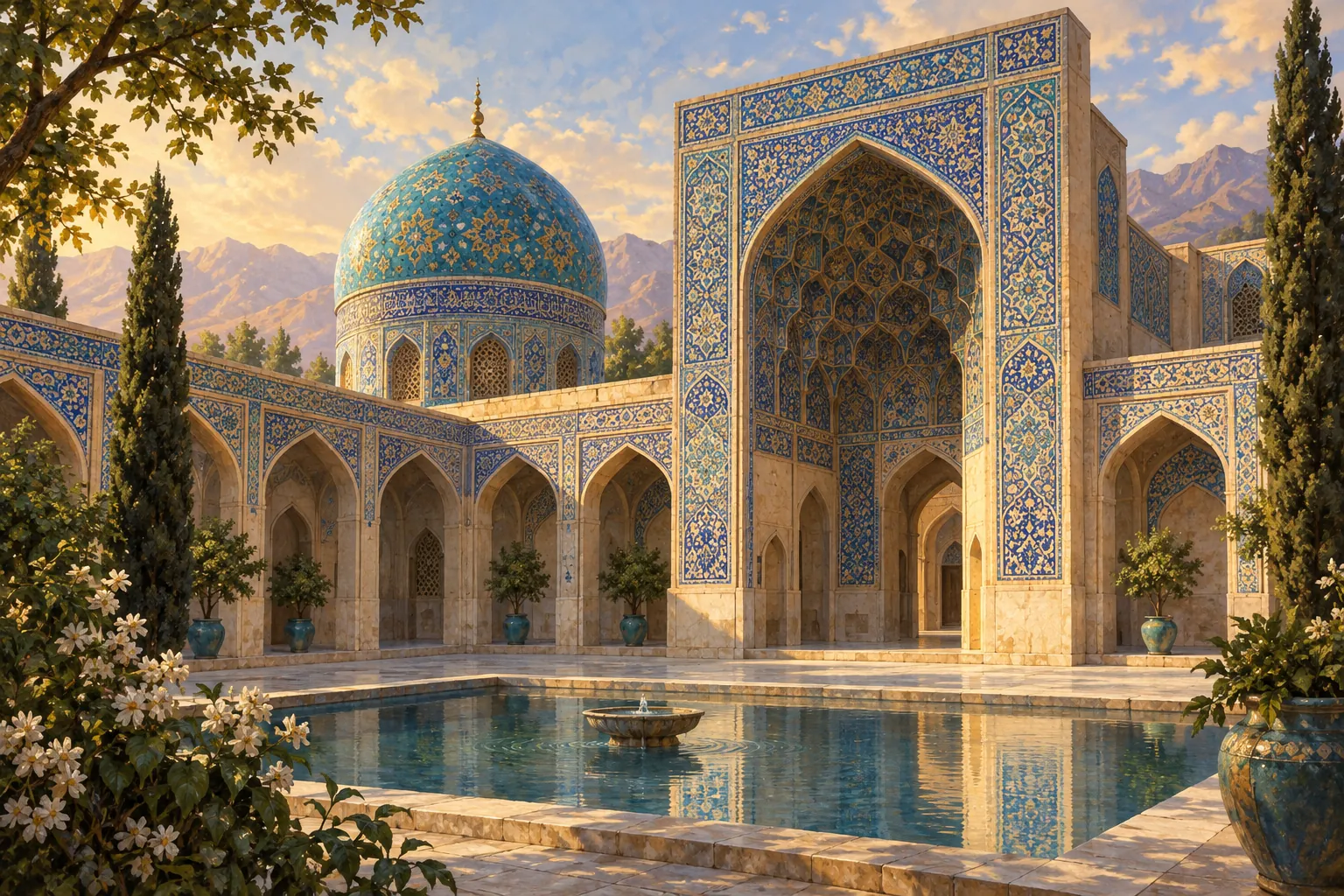
Islamization and the rise of Shi‘ism were different processes
The spread of Islam in Iran began centuries before the Safavid dynasty. The Arab conquest and the subsequent development of Muslim communities belong to an earlier history than the establishment of Twelver Shi‘ism as a state religion. Collapsing those processes into a single conversion story loses a long period of religious and intellectual change. [1]
Pre-Safavid Iran also contained more than one Islamic tradition. Sunni political and scholarly institutions existed alongside Imami, Zaydi and Ismaili communities. Qom was an important Imami center by the late eighth century. Shi‘a history in Iran therefore did not begin with the Safavids, and the population before their rise cannot be described as uniformly Sunni. [1]
What changed in 1501?
In 1501, Ismail was crowned at Tabriz and established Shi‘a Islam as the official religion of his new state. The Metropolitan Museum of Art’s historical overview emphasizes that his territory at that point was limited to Azerbaijan. The date marks a major change in royal policy; it does not mean that everyone throughout the territory of modern Iran changed affiliation in that year. [2]
The Safavid movement had roots among Sufi leaders at Ardabil and gained military support from the Qizilbash. Its later expansion joined religious claims to dynastic power. Patronage of shrines, mosques and the arts helped make religious culture visible in the life of the state. Establishing a court’s official position was one step in a much longer transformation of institutions and communities. [2]
Earlier religious connections complicate a simple divide
S. H. Nasr’s chapter in The Cambridge History of Iran places Safavid religious developments within an earlier intellectual and devotional history. Its public summary describes Sufi orders that remained outwardly Sunni while showing strong devotion to Ali from the thirteenth century. That combination warns against applying later boundaries too neatly to every earlier religious setting. [3]
The same summary notes that modern historians identify Safi al-Din, the order’s founding figure, as Sunni, despite later claims about his Shi‘a affiliation. A dynasty’s eventual religious identity should not be projected backward onto all its predecessors. These connections help explain the setting in which change occurred, without making the Safavid outcome inevitable or treating every Sufi order as Shi‘a. [3]
How state policy became a broader religious change
Coercion formed part of early Safavid religious policy. The historical account in Encyclopaedia Iranica also describes scholarly migration, teaching, patronage and the development of devotional institutions. Scholars moved between Iran and places including Jabal Amil, Iraq, Qatif and Bahrain. These relationships were networks with movement in more than one direction, rather than one uniform migration that explains everything. [4]
Existing shrines received support, and commemorative practices such as Ashura mourning developed further. Over time, rulers, scholars and religious institutions contributed to the spread of Twelver affiliation. The process was gradual, and Sunni communities persisted in some regions. An explanation that mentions only a royal decree, only force or only voluntary persuasion leaves out other mechanisms documented in the historical record. [4]
Gilan shows why regional histories matter
Research on Gilan illustrates the limits of a single national conversion date. Its historical population included Zaydi and Sunni communities as well as Christians and Jews. Safavid efforts there involved bringing Zaydis into Twelver affiliation, so the change was not always from Sunni to Shi‘a Islam. Zaydi and Twelver traditions were themselves distinct. [5]
A study of the Gharib Shah rebellion dates Abbas I’s direct conquest of Gilan to 1592, decades after Ismail’s coronation. Local political authority and religious legitimacy were entangled in the region’s incorporation. Gilan shows that the extension of Safavid rule involved changes to both government and religious authority over generations. [5]
Sources & further reading
The numbered links connect claims to the sources below. Sources checked October 14, 2026 by a separate AI fact-checking agent. This is not human or specialist review. Read our editorial approach.
- IRAN ix. RELIGIONS IN IRAN (2) Islam in Iran (2.1) The Advent of Islam ↗Encyclopaedia Iranica · Accessed October 14, 2026
- The Art of the Safavids before 1600 ↗The Metropolitan Museum of Art · Accessed October 14, 2026
- Spiritual Movements, Philosophy and Theology in the Safavid Period ↗Cambridge University Press · Accessed October 14, 2026
- IRAN ix. RELIGIONS IN IRAN (2) Islam in Iran (2.3) Shiʿism in Iran Since the Safavids ↗Encyclopaedia Iranica · Accessed October 14, 2026
- The Gharib Shah Rebellion of 1629 ↗Cambridge University Press / Iranian Studies · Accessed October 14, 2026
Found a problem? Send a correction with the passage and a supporting source.
Continue your reading
All articles ↗
People & places · 3 min read
Religion in Iran: Communities, History and What the Numbers Mean
A sourced guide to religion in Iran, explaining its official faith, diverse communities, demographic estimates, religious heritage and dated rights reporting.
Comparisons · 3 min read
Sunni vs Shia: origins, shared beliefs and differences
A careful introduction to Sunni and Shia Islam, from succession and religious authority to the diversity within both traditions.
People & places · 4 min read
Armenian Churches in Iran: Monasteries, New Julfa and Vank Cathedral
Discover Iran’s Armenian Christian heritage, from its UNESCO-listed monasteries to New Julfa and Vank Cathedral, with carefully dated historical sources.