
Overview
The Church of the East is the ancient Christian church of Mesopotamia and Persia, which prays in Syriac, a literary form of Aramaic. Growing up outside the Roman Empire, it governed itself from 424 and took no part in the imperial councils; the label "Nestorian" its rivals gave it is now widely judged misleading. In the first millennium its missions followed the trade routes to Central Asia and Tang China, and it sent bishops to south India. From the 14th century plague, war and persecution shrank it to the mountains of Kurdistan, and First World War massacres scattered its people. Its heirs are the Assyrian Church of the East, the Ancient Church of the East and, in communion with Rome, the Chaldean Catholic Church, with members in Iraq, Iran, Syria and far beyond.[2, 7–8, 10–15]
History
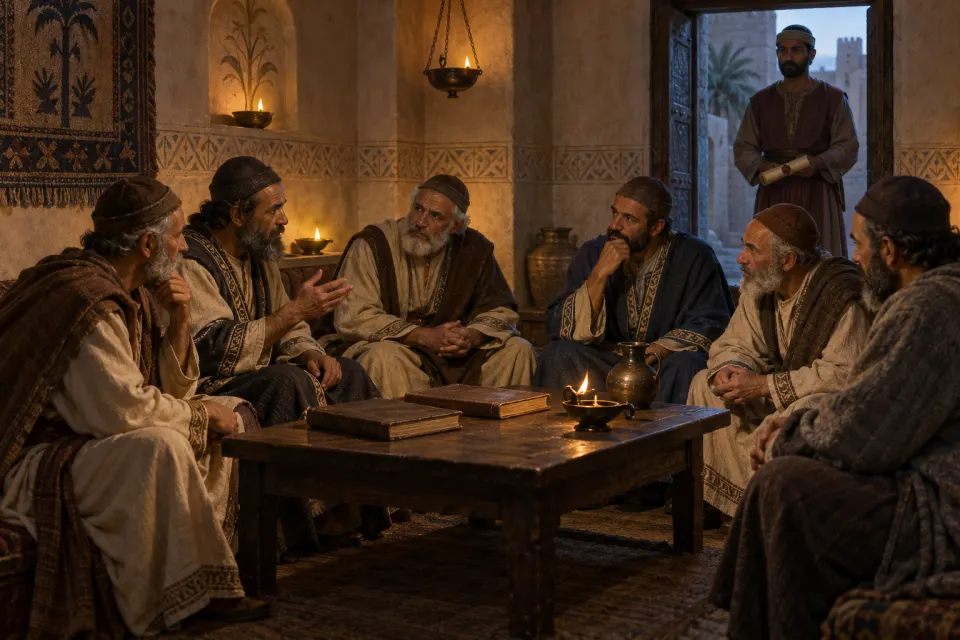
Edessa, Persia and the first synod c. 100–410
By the church's tradition, the apostle Thomas sent Addai to Edessa, where King Abgar was healed and converted, and Addai's disciple Mari preached in Mesopotamia. Historians see later legend here: the story first appears in Eusebius in the early 4th century, the Syriac Teaching of Addai dates from about 420, and no Abgarid king is known to have been Christian. Still, Christians lived east of the Roman frontier by about 200, and an organised church in Persia by the 330s. Once Rome turned Christian, Persia suspected its Christians, and Shapur II persecuted them from 339 for some forty years. In 410 bishops at the royal capital, Seleucia-Ctesiphon, accepted the Nicene Creed with King Yazdegerd I's approval.[16–20]
A church of its own 424–628
A synod of 424 declared that the catholicos answered to no other patriarch, so the Persian bishops had no part in the Council of Ephesus, which deposed Nestorius of Constantinople in 431. Their theologians followed Theodore of Mopsuestia, who kept Christ's divinity and humanity firmly distinct, and a synod in 486 adopted a two-nature statement of faith. When Emperor Zeno closed the Edessa school that trained Persian clergy in 489, teachers such as the poet Narsai moved to Nisibis, whose new school formed the church's leaders. In the early 7th century the monk Babai the Great gave its teaching on Christ a lasting form.[21–24]
Along the Silk Road 5th–10th centuries
Bishops sat at Merv and Herat by 424, and Merv was probably the springboard for missions into Central Asia. After the Arab conquest of Persia in the 630s, the patriarchs moved to the new capital, Baghdad. Timothy I (780–823) consecrated metropolitans for the Turks and Tibet, and the church's scholars translated Greek learning for the caliphs. According to a stele set up in 781, the monk Aluoben reached the Tang capital Chang'an in 635 and won the emperor's favour; the mission withered after Emperor Wuzong outlawed foreign religions in 845. In south India the Thomas Christians took their bishops from Persia and Mesopotamia.[25–30]
Khans, plague and Timur c. 1000–1400
By the 12th century the faith had spread among steppe peoples such as the Keraits and Öngüts, and Mongol rulers married into their Christian families: Kublai and Hülegü were sons of Sorghaghtani Beki, a Kerait Christian. In 1281 Markos, a monk from near Beijing, became catholicos as Yahballaha III, and his teacher Rabban Ṣawma went to Rome and Paris in 1287–88 as an envoy of the Mongol ruler of Persia. After the Ilkhan Ghazan became a Muslim in 1295, Christians faced persecution, including a massacre at Erbil in 1310. Plague, the end of Mongol rule in China in 1368 and Timur's campaigns left the church a fraction of its former size.[31–34]
Mountains and a divided church 1400–1914
Survivors held on in the Hakkari mountains of today's south-east Turkey, around Mosul and on the Urmia plain in Iran. From the mid-15th century the patriarchate passed from uncle to nephew within one family. In 1552 bishops opposed to this chose Yoḥannan Sullaqa, abbot of the Rabban Hormizd monastery, as patriarch; Pope Julius III consecrated him in 1553, starting the line from which the Chaldean Catholic Church descends. In India the Portuguese-backed Synod of Diamper (1599) cut the Thomas Christians off from Mesopotamia and burned Syriac books. In the 19th century Western missionaries arrived, and Anglicans popularised the name "Assyrian" for the church's people.[35–39]
Sayfo, exile and a worldwide church 1914–today
During the First World War Ottoman troops and Kurdish irregulars drove the church's people from Hakkari, and many more died after they fled to Urmia; Assyrians call these massacres Sayfo, "the sword". Survivors reached Iraq, but in 1933 the Iraqi army killed Assyrian civilians at Simele and the patriarch, Mar Eshai Shimun, was expelled, later settling in the United States. Disputes over his adoption of the Gregorian calendar in 1964 and over hereditary succession produced a rival patriarch in Baghdad in 1968: the Ancient Church of the East. In 1994 Pope John Paul II and Mar Dinkha IV jointly affirmed a shared faith in Christ. The Assyrian Church's patriarchate returned to Erbil in 2015, where Mar Awa III was elected in 2021.[40–44]
Key moments
- 431 CECouncil of Ephesus · Ephesus (Selçuk, Türkiye)
- 635 CEThe Church of the East reaches China · Chang'an (Xi'an), China
Beliefs
Two natures, two qnome · ܩܢܘܡܐ
qnoma: "defining characteristic"
The church confesses Christ as one person (parṣopā) in two natures, divine and human, each with its own qnoma. For East Syriac writers qnoma meant a nature's concrete characteristics, not a second "person"; because the word also translated Greek hypostasis, outsiders heard two Christs. Babai the Great's Book of the Union remains its classic statement.[45]
Mother of Christ
Mary is honoured in prayer and hymn, but the church calls her Mother of Christ rather than Mother of God, to keep Christ's divinity and the humanity he took from her distinct in thought. In the 1994 declaration the Catholic Church and the Assyrian Church accepted each other's titles for Mary as expressions of one faith.[46]
The Interpreter
mpaššqānā, the exegete
Theodore of Mopsuestia (d. 428), called simply the Interpreter, is the church's chief guide to scripture and theology; synods made his works required reading. Nestorius is honoured as a defender of two-nature teaching, but his own writings had little influence; he is remembered mainly as the named author of one of the three anaphoras.[47]
The Nicene faith
The church professes the Nicene Creed, which Persian bishops formally received in 410. It accepts the first two ecumenical councils, Nicaea and Constantinople, but not Ephesus or Chalcedon: those were imperial councils of the Roman Empire, and their rulings did not, in its view, bind a church beyond the frontier.[48]
Practice
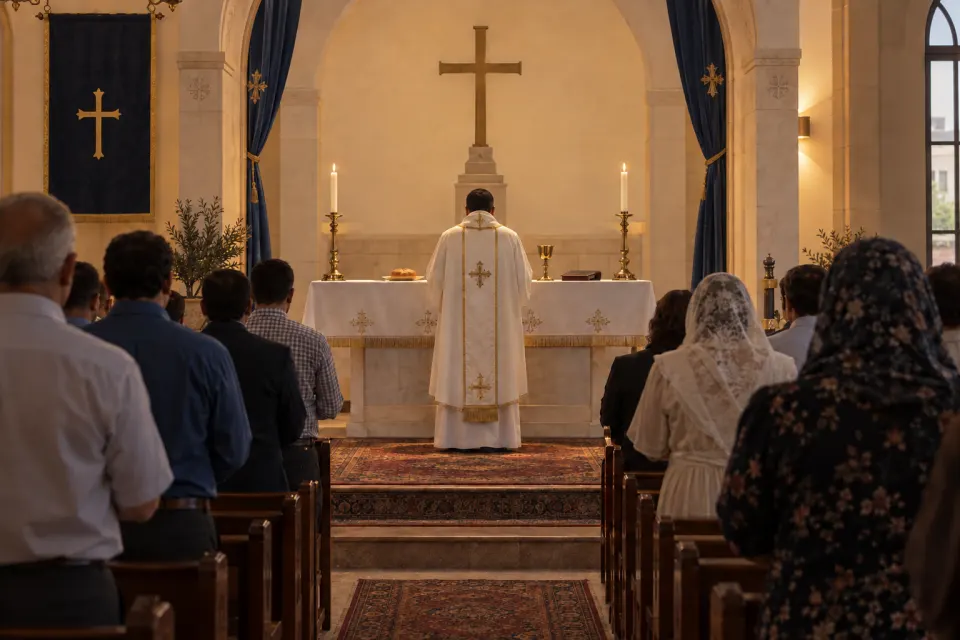
The Qurbana · ܩܘܪܒܢܐ
The Eucharist is celebrated in Syriac with one of three anaphoras, named after the apostles Addai and Mari, Theodore and Nestorius. The Anaphora of Addai and Mari, among the oldest still in use, has no account of the Last Supper's words of institution; in 2001 the Catholic Church nonetheless recognised it as valid. Communion is given in both bread and wine.[49]
The Holy Leaven · ܡܠܟܐ
Every loaf baked for the Eucharist contains a little of the Holy Leaven (Malka), which tradition traces to the bread of the Last Supper. The church counts it among its sacred mysteries. Each year on Holy Thursday a remnant of the old Leaven is mixed into the new, which then serves for the year ahead.[50–51]
The daily office and the year
Clergy and monks keep evening, night and morning prayer from the Qdām w-Bāthar, a weekday book named for its two alternating choirs, while the Ḥudrā gives the texts for Sundays and feasts through the church's year. Much of its poetry dates from the 6th to the 13th centuries.[52]
Married priests, monk bishops
Synods of 486 and 497 allowed clergy to marry even after ordination, and for a time this included bishops and the catholicos. From the 6th century bishops were chosen from celibate monks, a rule that still holds, while priests remain free to marry, even after ordination.[53]
Holy days
The year ahead
| Date | Holy day | Reckoned |
|---|---|---|
| 25 December 2026 | Yaldā (Nativity) ܝܠܕܐ | 25 December |
| 7 January 2027 | Yaldā (Ancient Church of the East) ܝܠܕܐ | 25 December in the Julian calendar |
| 18 January 2027 – 20 January 2027 | Rogation of the Ninevites ܒܥܘܬܐ ܕܢܝܢܘܝܐ | 69 days before Easter Sunday (Gregorian reckoning) |
Yaldā (Nativity) · ܝܠܕܐ
25 December; the Ancient Church keeps the older calendar
Christmas follows the Sundays of Subbārā, the season of the Annunciation, and is kept apart from Denḥā (Epiphany) on 6 January. Since 1964 the Assyrian Church has used the Gregorian calendar, while the Ancient Church kept the older one, so its feasts fall later.[54]
Rogation of the Ninevites · ܒܥܘܬܐ ܕܢܝܢܘܝܐ
Monday–Wednesday, about three weeks before Lent (January–February)
A three-day fast recalling Nineveh's repentance in the Book of Jonah. It became a fixed observance between the late 6th and mid-7th centuries, after a plague ended, and is still kept with great intensity, with a special service for each day.[55]
People
Aphrahat, the Persian Sage
scholar · fl. 336–345
Author of 23 Demonstrations written in the Persian Empire between 336/7 and 345, the first major work of Syriac literature. They describe early ascetic life, argue against Judaising Christians and reflect the start of Shapur II's persecution.[56]
Narsai
teacher · d. c. 500
Poet and biblical teacher who led the school at Edessa until he was expelled, then founded the School of Nisibis with Bishop Barṣawma and headed it until his death. His verse homilies were gathered for liturgical use.[57]
Babai the Great
scholar · c. 551–628
Abbot of the Great Monastery on Mount Izla, who helped run the church while the Persian king blocked the election of a catholicos (609–628). His Book of the Union set out the church's two-nature teaching in a form it still treats as authoritative.[58]
Rabban Ṣawma and Yahballaha III
other · c. 1220–1294; c. 1245–1317
Two monks from the Beijing area who set out for Jerusalem around 1275 but got no further than Persia. Markos became catholicos in 1281; Ṣawma went to Europe as a Mongol envoy, meeting the kings of France and England and the new pope, and his travel account survives in a shortened Syriac version.[59]
Scripture
The Peshitta · ܦܫܝܛܬܐ
OT c. 2nd century; NT c. 400
The Syriac Bible. Its Old Testament was translated from Hebrew, probably at Edessa; its New Testament, revised from older Syriac versions, became standard around 400. That New Testament has 22 books, leaving out 2 Peter, 2–3 John, Jude and Revelation.[60]
The Teaching of Addai
c. 400–420
A Syriac account of letters exchanged between Jesus and King Abgar and of Addai's mission to Edessa. It gave Syriac Christians a link reaching back to Jesus himself; historians read it as legend that grew from an older Edessene story.[61]
The Xi'an Stele
781
A stone monument in Chinese and Syriac, composed by the monk Jingjing (Adam), telling of Aluoben's arrival and of the "luminous teaching" in Tang China, with a long list of clergy in Syriac. Probably buried in the 9th century, it was found in the 1620s.[62]
Places
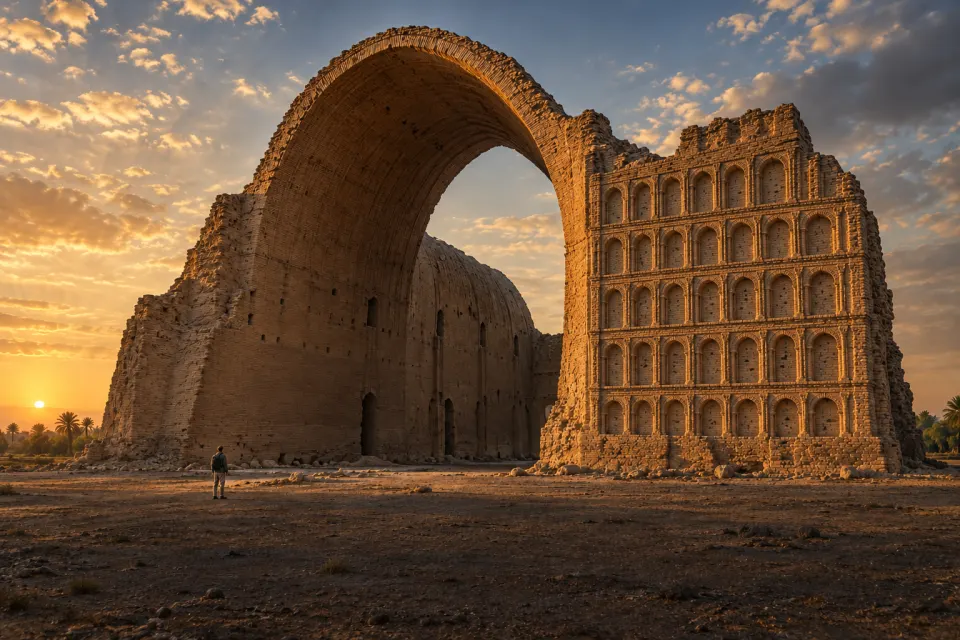
Ctesiphon (Ṭāq Kisrā), al-Madāʾin
IRQ
The Sasanian royal capital on the Tigris, seat of the catholicos and of the synod of 410. The palace's great vaulted hall, Ṭāq Kisrā, still stands; a cathedral stood in the twin city of Kokhe.[63]
Church of Mar Yaʿqub, Nusaybin (Nisibis)
TUR
Nisibis was home to the church's great school from the 480s. The Church of St Jacob, with a baptistery of 359 and the tomb of the city's first known bishop, survives beside the Syrian border; it has been Syriac Orthodox since 1865.[64]
Suyab (Ak-Beshim)
KGZ · UNESCO World Heritage, 2014
Ruins of a Silk Road city in the Chu valley, where archaeologists excavated a church of about the 8th century with Christian burials. The site is a component of the UNESCO-listed Silk Roads: Chang'an-Tianshan Corridor.[65]
Where it spread
| Region | From | How |
|---|---|---|
| Afghanistan | 424 CE – 1300 CE | Bishoprics of Herat and Sistan |
| Iran | 424 CE | The church of the Sasanian empire; Assyrians of Urmia and Tehran today |
| Iraq | 424 CE | Catholicos at Seleucia-Ctesiphon, later Baghdad; the patriarchate returned to Erbil in 2015 |
| Turkmenistan | 424 CE – 1300 CE | Bishopric of Merv, a base for missions into Central Asia |
| Turkey | 424 CE – 1918 CE | The school of Nisibis; later the patriarch's seat in the Hakkari mountains |
| India | 500 CE – 1599 CE | IRQ. St Thomas Christians of Kerala under bishops from Mesopotamia, until the Synod of Diamper |
| China | 635 CE – 845 CE | IRN. Alopen reached Chang'an in 635; the Xi'an stele dates from 781 |
| Uzbekistan | 700 CE – 1400 CE | Metropolitan see of Samarkand |
| China | 1000 CE – 1370 CE | Turfan and Turkic peoples; revived under the Yuan in Khanbaliq and Quanzhou |
| Mongolia | 1000 CE – 1400 CE | Keraites and other steppe peoples; Christians at the Mongol court |
| Kyrgyzstan | 1200 CE – 1350 CE | Syriac gravestones of the Chu valley |
| United States | 1900 CE | Assyrian immigrants in Chicago; the patriarch lived in the US from 1940 to 2015 |
| India | 1908 CE | Chaldean Syrian Church, Thrissur |
| Syria | 1935 CE | IRQ. Khabur valley villages settled by Assyrians from Iraq |
| Sweden | 1967 CE | Assyrian refugees |
| Australia | 1970 CE | Archdiocese of Australia and New Zealand |
Numbers
- Members of the Assyrian Church of the East
- c. 250,000–400,000 (estimates)[9]
Assyrian Church of the East only; the Ancient Church of the East and Chaldean Catholics are not counted. Low: GEDSH (c. 2011); high: CNEWA (2021); self-reported to the WCC: 323,300.
National censuses
| Country | Year | Count | Share |
|---|---|---|---|
| Australia Assyrian Apostolic | 2021 | 19,132 | 0.1% |
Source: Australian Bureau of Statistics, Census of Population and Housing 2021, 'Religious affiliation in Australia' (Table 4), CC BY 4.0.
How we know
A history pieced together
No narrative history of the church's spread across Asia survives. Scholars rebuild it from the signatures of bishops on synod decrees, from often legendary stories in Syriac and Arabic, and from archaeology. Finds include crosses drawn on a building at old Merv, ossuaries marked with crosses near Samarkand, a church with burials at Ak-Beshim in Kyrgyzstan, and more than 500 Syriac and Turkic gravestones from the Chu valley, most from the 13th and 14th centuries.[66–67]
Manuscripts and a stone
A monastery library near Turfan in Xinjiang held fragments mainly in Syriac and Sogdian, with others in Turkic and Persian, mostly of the 9th century or later. Chinese Christian texts came from the Dunhuang caves, though some are now thought to be modern forgeries. The Xi'an Stele was written to celebrate imperial favour: its claim of monasteries in every prefecture is an exaggeration, and its Chinese borrows Buddhist and Daoist terms.[68–69]
Gravestones and the Black Death
Syriac tombstones from two Chu valley cemeteries record a spike in deaths in 1338–39, some put down to "pestilence". In 2022 geneticists recovered plague DNA from people buried there and argued that this strain was ancestral to the Black Death of the following decade.[70]
Common misconceptions
Myth The Church of the East was founded by Nestorius and teaches that Christ is two persons.
Fact The Persian church existed long before Nestorius was condemned in 431 and was self-governing from 424. It confesses one Christ in two natures, and Nestorius's writings had little influence on it. Scholars and the church reject the label, and in 1994 Rome affirmed that the two churches share one faith in Christ.[71]
Myth Christianity first reached China with Jesuit missionaries.
Fact Monks of the Church of the East reached the Tang capital in 635, nearly a thousand years before the Jesuits, and the church returned under the Mongol Yuan dynasty. Jesuits in the 1620s publicised the newly found Xi'an Stele, which recorded that first mission.[72]
Myth Assyrian and Chaldean Christians belong to one church.
Fact They share a history and the East Syriac liturgy, but the Chaldean Catholic Church is in communion with Rome, while the Assyrian Church of the East is independent. Since the 1990s the two have agreed on joint steps, and Rome has allowed their faithful to share the Eucharist in pastoral need.[73]
Glossary
- Catholicos · ܩܬܘܠܝܩܐ
- Title of the church's head, ranked above a metropolitan; first the bishop of Seleucia-Ctesiphon, later resident in Baghdad. Today he is styled Catholicos-Patriarch.[74]
- Syriac · ܣܘܪܝܝܐ
- The Aramaic dialect of Edessa, first written under its kings, which became the literary and liturgical language of the Syriac churches.[75]
- Jingjiao · 景教
- "Luminous teaching", the name Christians in Tang China gave their faith.[76]
- Sayfo · ܣܝܦܐ
- "Sword": the name Syriac Christians use for the massacres and deportations they suffered in the Ottoman Empire during and after the First World War.[77]
- Chaldean
- Name for East Syriac Christians in communion with Rome since the 16th century; in India, confusingly, the Chaldean Syrian Church belongs to the Assyrian Church of the East.[78]
- Bnay qyāmā · ܒܢܝ ܩܝܡܐ
- "Sons of the covenant": celibate men and women devoted to prayer and study in early Syriac Christianity, before formal monasteries.[79]
- Thomas Christians
- The Christians of Kerala, who trace their church to the apostle Thomas and were part of the Church of the East before the Portuguese arrived.[80]
Sources
Each statement above was checked against published sources; the verdict says whether it stood as written, was corrected or was hedged.
- VerifiedS. P. Brock; Encyclopaedia Iranica; New Catholic Encyclopedia.
- VerifiedNew Catholic Encyclopedia; Britannica, Nestorianism; Encyclopaedia Iranica.
- VerifiedHoly See, Common Christological Declaration between the Catholic Church and the Assyrian Church of the East, 11 Nov. 1994; Rudaw, The Assyrian Church of the East elects new patriarch in Erbil, 8 Sept. 2021; Presidency of the Kurdistan Region, Kurdistan Region President receives Patriarch of Assyrian Church of the East, 22 Sept. 2021; R. Roberson, The Eastern Christian Churches (supporting).
- VerifiedBritannica, Assyrian; e-GEDSH, Abgarids of Edessa; R. Roberson, The Eastern Christian Churches (supporting).
- Verifiede-GEDSH, Peshitta; Britannica, Peshitta.
- VerifiedS. P. Brock; e-GEDSH, Ecumenical dialogue; R. Roberson, The Eastern Christian Churches (supporting).
- Verifiede-GEDSH, Church of the East; S. P. Brock; R. Roberson, The Eastern Christian Churches (supporting).
- VerifiedS. P. Brock; e-GEDSH, Thomas Christians; e-GEDSH, Chaldean Catholic Church.
- Hedgede-GEDSH, Diaspora; R. Roberson, The Eastern Christian Churches; World Council of Churches, member page Holy Apostolic Catholic Assyrian Church of the East (supporting).
- VerifiedS. P. Brock; e-GEDSH, Church of the East; Encyclopedia of Religion.
- VerifiedS. P. Brock; e-GEDSH, Nestorianism; New Catholic Encyclopedia.
- Verifiede-GEDSH, Church of the East; Encyclopaedia Iranica; Britannica, Thomas Christians.
- Verifiede-GEDSH, Church of the East; Britannica, Nestorianism; S. P. Brock.
- Verifiede-GEDSH, Sayfo; Britannica, Assyrian; e-GEDSH, Diaspora.
- VerifiedBritannica, Nestorianism; e-GEDSH, Church of the East; Britannica, Assyrian.
- VerifiedEncyclopedia of Religion; S. P. Brock; e-GEDSH, Mari, Acts of.
- Verifiede-GEDSH, Addai, Teaching of; e-GEDSH, Abgarids of Edessa; S. P. Brock.
- VerifiedS. P. Brock; Encyclopaedia Iranica; e-GEDSH, Aphrahaṭ.
- VerifiedEncyclopaedia Iranica; New Catholic Encyclopedia; Encyclopaedia Iranica, Martyrs, Christian.
- VerifiedEncyclopaedia Iranica; New Catholic Encyclopedia; S. P. Brock; e-GEDSH, Seleucia-Ctesiphon.
- VerifiedNew Catholic Encyclopedia; Britannica, Nestorianism; S. P. Brock; e-GEDSH, Ecumenical dialogue.
- VerifiedBritannica, Nestorianism; S. P. Brock; New Catholic Encyclopedia.
- VerifiedBritannica, Nestorianism; e-GEDSH, Nisibis, School of; Encyclopaedia Iranica, Nisibis; S. P. Brock.
- Verifiede-GEDSH, Babai the Great; S. P. Brock; New Catholic Encyclopedia.
- VerifiedEncyclopaedia Iranica; New Catholic Encyclopedia.
- VerifiedEncyclopedia of Religion; New Catholic Encyclopedia; Britannica, Nestorianism; Encyclopaedia Iranica.
- VerifiedEncyclopaedia Iranica; e-GEDSH, Timotheos I; New Catholic Encyclopedia.
- VerifiedEncyclopedia of Religion; New Catholic Encyclopedia; e-GEDSH, Timotheos I; Encyclopaedia Iranica, Nisibis.
- Verifiede-GEDSH, China, Syriac Christianity in; McGill University, School of Religious Studies, Jingiao Stele; New Catholic Encyclopedia; Britannica, Xi'an monument.
- Verifiede-GEDSH, Thomas Christians; Britannica, Thomas Christians.
- Verifiede-GEDSH, China, Syriac Christianity in; New Catholic Encyclopedia; Britannica, Kublai Khan; Britannica, Nestorianism.
- Verifiede-GEDSH, Yahbalaha III; e-GEDSH, Ṣawma, Rabban; Britannica, Rabban bar Sauma; New Catholic Encyclopedia.
- VerifiedEncyclopaedia Iranica, Martyrs, Christian; e-GEDSH, Yahbalaha III; e-GEDSH, Arbela.
- VerifiedS. P. Brock; e-GEDSH, China, Syriac Christianity in; Britannica, Nestorianism; e-GEDSH, Church of the East.
- Verifiede-GEDSH, Church of the East; e-GEDSH, Hakkari; Encyclopedia of Religion; Britannica, Nestorianism.
- HedgedEncyclopedia of Religion; e-GEDSH, Yoḥannan Sullaqa; R. Roberson, The Eastern Christian Churches (supporting).
- Verifiede-GEDSH, Yoḥannan Sullaqa; e-GEDSH, Hormizd, Monastery of Rabban; New Catholic Encyclopedia; R. Roberson, The Eastern Christian Churches (supporting).
- VerifiedBritannica, Thomas Christians; e-GEDSH, Thomas Christians; e-GEDSH, Chaldean Syrian Church.
- VerifiedBritannica, Assyrian; e-GEDSH, Assyrians; Encyclopedia of Religion.
- Verifiede-GEDSH, Sayfo; e-GEDSH, Hakkari; Britannica, Assyrian.
- Verifiede-GEDSH, Church of the East; e-GEDSH, Shemʿon, Eshai; Encyclopedia of Religion; New Catholic Encyclopedia.
- Verifiede-GEDSH, Shemʿon, Eshai; e-GEDSH, Church of the East; S. P. Brock; R. Roberson, The Eastern Christian Churches (supporting).
- VerifiedHoly See, Common Christological Declaration between the Catholic Church and the Assyrian Church of the East, 11 Nov. 1994; New Catholic Encyclopedia; e-GEDSH, Church of the East.
- VerifiedRudaw, The Assyrian Church of the East elects new patriarch in Erbil, 8 Sept. 2021; Presidency of the Kurdistan Region, Kurdistan Region President receives Patriarch of Assyrian Church of the East, 22 Sept. 2021; R. Roberson, The Eastern Christian Churches (supporting).
- VerifiedS. P. Brock; e-GEDSH, Ecumenical dialogue; e-GEDSH, Babai the Great; R. Roberson, The Eastern Christian Churches (supporting).
- VerifiedHoly See, Common Christological Declaration between the Catholic Church and the Assyrian Church of the East, 11 Nov. 1994; e-GEDSH, Ecumenical dialogue; e-GEDSH, Mary.
- VerifiedS. P. Brock; e-GEDSH, Nisibis, School of; Britannica, Nestorianism.
- VerifiedEncyclopedia of Religion; S. P. Brock; e-GEDSH, Ecumenical dialogue; R. Roberson, The Eastern Christian Churches (supporting).
- Verifiede-GEDSH, Liturgy; S. P. Brock; Encyclopedia of Religion; Pontifical Council for Promoting Christian Unity, Guidelines for Admission to the Eucharist between the Chaldean Church and the Assyrian Chu (supporting).
- VerifiedM. Potoczny, Malka – asyryjski sakrament świętego zaczynu, Teologia i Człowiek 33/1; B. D. Spinks, The Mystery of the Holy Leaven (supporting); A. J. Maclean, East Syrian Daily Offices; Joint Commission for Theological Dialogue between the Catholic Church and the Assyrian Church of the East, Common Statement on Sacramental L (supporting).
- VerifiedM. Potoczny, Malka – asyryjski sakrament świętego zaczynu, Teologia i Człowiek 33/1; F. Pittappillil, Eucaristic Consecration in the Anaphora of Addai and Mari, Studia Oecumenica 12; B. D. Spinks, The Mystery of the Holy Leaven (supporting); Joint Commission for Theological Dialogue between the Catholic Church and the Assyrian Church of the East, Common Statement on Sacramental L (supporting); Pontifical Council for Promoting Christian Unity, Guidelines for Admission to the Eucharist between the Chaldean Church and the Assyrian Chu (supporting).
- Verifiede-GEDSH, Liturgy; A. J. Maclean, East Syrian Daily Offices.
- VerifiedNew Catholic Encyclopedia; Encyclopaedia Iranica; R. Roberson, The Eastern Christian Churches (supporting).
- VerifiedA. J. Maclean, East Syrian Daily Offices; e-GEDSH, Mary; e-GEDSH, Shemʿon, Eshai; S. P. Brock.
- Verifiede-GEDSH, Nineveh; A. J. Maclean, East Syrian Daily Offices.
- Verifiede-GEDSH, Aphrahaṭ; Encyclopaedia Iranica; S. P. Brock.
- Verifiede-GEDSH, Narsai; Encyclopaedia Iranica, Nisibis; New Catholic Encyclopedia.
- Verifiede-GEDSH, Babai the Great; New Catholic Encyclopedia.
- Verifiede-GEDSH, Ṣawma, Rabban; e-GEDSH, Yahbalaha III; Britannica, Rabban bar Sauma.
- Verifiede-GEDSH, Peshitta; Britannica, Peshitta.
- Hedgede-GEDSH, Addai, Teaching of; Encyclopedia of Religion; S. P. Brock.
- Verifiede-GEDSH, Xi’an; McGill University, School of Religious Studies, Jingiao Stele; Britannica, Xi'an monument.
- VerifiedEncyclopaedia Iranica, Ctesiphon; e-GEDSH, Seleucia-Ctesiphon.
- Verifiede-GEDSH, Nisibis; Encyclopaedia Iranica, Nisibis.
- VerifiedUNESCO World Heritage Centre, Silk Roads: the Routes Network of Chang'an-Tianshan Corridor; Encyclopaedia Iranica; A. A. Mikheeva.
- VerifiedEncyclopaedia Iranica; e-GEDSH, China, Syriac Christianity in.
- VerifiedEncyclopaedia Iranica; A. A. Mikheeva; M. A. Spyrou et al., The source of the Black Death in fourteenth-century central Eurasia, Nature 606.
- Verifiede-GEDSH, Turfan, Syriac texts from; Encyclopaedia Iranica; e-GEDSH, China, Syriac Christianity in.
- Verifiede-GEDSH, China, Syriac Christianity in; e-GEDSH, Xi’an; McGill University, School of Religious Studies, Jingiao Stele.
- VerifiedM. A. Spyrou et al., The source of the Black Death in fourteenth-century central Eurasia, Nature 606; Encyclopaedia Iranica.
- VerifiedS. P. Brock; e-GEDSH, Nestorianism; New Catholic Encyclopedia; Holy See, Common Christological Declaration between the Catholic Church and the Assyrian Church of the East, 11 Nov. 1994.
- Verifiede-GEDSH, China, Syriac Christianity in; e-GEDSH, Xi’an; McGill University, School of Religious Studies, Jingiao Stele; New Catholic Encyclopedia.
- Verifiede-GEDSH, Chaldean Catholic Church; New Catholic Encyclopedia; Pontifical Council for Promoting Christian Unity, Guidelines for Admission to the Eucharist between the Chaldean Church and the Assyrian Chu; R. Roberson, The Eastern Christian Churches (supporting).
- VerifiedEncyclopedia of Religion; Encyclopaedia Iranica; Holy See, Common Christological Declaration between the Catholic Church and the Assyrian Church of the East, 11 Nov. 1994.
- VerifiedBritannica, Assyrian; e-GEDSH, Abgarids of Edessa.
- VerifiedMcGill University, School of Religious Studies, Jingiao Stele; e-GEDSH, China, Syriac Christianity in.
- Verifiede-GEDSH, Sayfo; Britannica, Assyrian.
- VerifiedS. P. Brock; e-GEDSH, Chaldean Syrian Church; e-GEDSH, Chaldean Catholic Church.
- VerifiedNew Catholic Encyclopedia; e-GEDSH, Aphrahaṭ.
- VerifiedBritannica, Thomas Christians; e-GEDSH, Thomas Christians.
Last fact-checked 3 October 2026.