
The story behind the day
Pentecost, from a Greek word meaning fiftieth, is the Christian feast kept fifty days after Easter, on the seventh Sunday after it. It recalls the coming of the Holy Spirit upon the disciples in Jerusalem, as told in the Acts of the Apostles, and it closes the fifty days of the Easter season. The Orthodox churches keep it by the Julian reckoning of Pascha, and Pentecostal Christians look to the event as the model for a movement that dates only from the early twentieth century.[1–6]
Origins
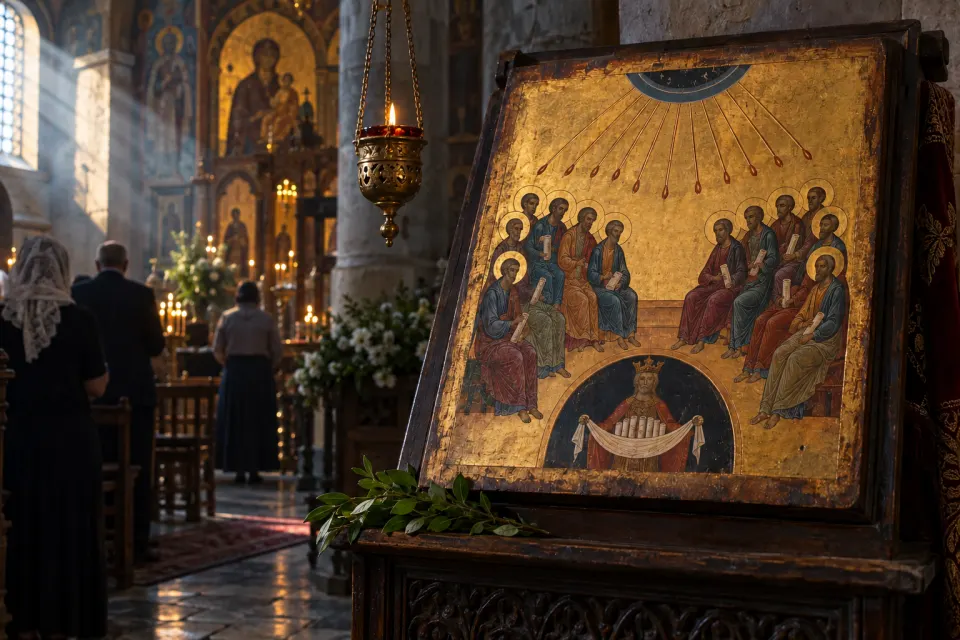
The Acts of the Apostles tells that when the time for Pentecost came, the disciples were all gathered in one place. A sound like a strong rushing wind came from the sky, and tongues as of fire came to rest on each of them. The Spirit filled them, and they began to speak in other languages; devout Jews from every nation heard them, each in their own tongue.[2]
What it marks
The Church of England describes the day as marking fifty days since Easter Day, and the Christian feast marks the coming of the Spirit. It stands on an older Jewish feast. Shavuot falls on the fiftieth day after Passover, was marked by an offering from the new wheat crop, and commemorates the giving of the Torah at Sinai; the Orthodox Church in America recalls that the Old Testament feast of Pentecost came fifty days after Passover. The American Catholic bishops note that both Easter and Pentecost grew out of the Jewish feasts of Passover and Shavuot while taking on a distinct Christian meaning.[1, 8–9]
How it came to be
The Greek word pentēkostē, fiftieth, gives the feast its name, and the number fifty is the key to its place in the year: the Easter season is itself kept for fifty days from the first Sunday to Pentecost, and the New Catholic Encyclopedia notes that those days were kept together as a single great Sunday. In English the feast is also called Whit Sunday or Whitsun, and the Oxford Dictionary of Phrase and Fable gives it as the seventh Sunday after Easter.[1, 3, 7]
How it is kept
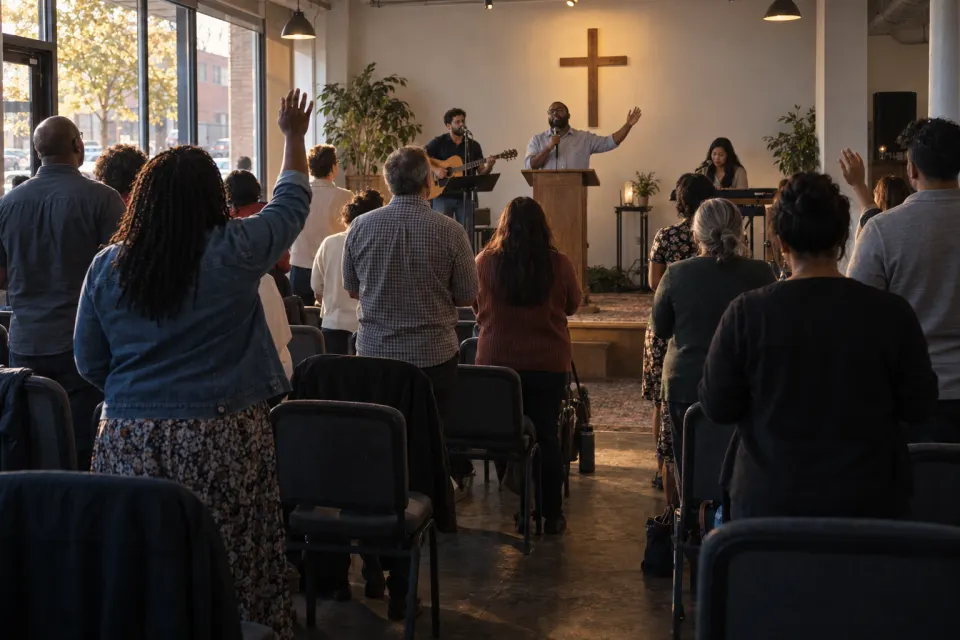
In the Orthodox Church the Great Vespers of Pentecost includes a series of long kneeling prayers, the first time the faithful have knelt in worship since Pascha. The church is dressed with flowers and fresh summer greenery, and the Ukrainian Orthodox Church of the USA describes parishes marking the feast with green vestments and the fragrance of flowers.[10–11]
Across traditions
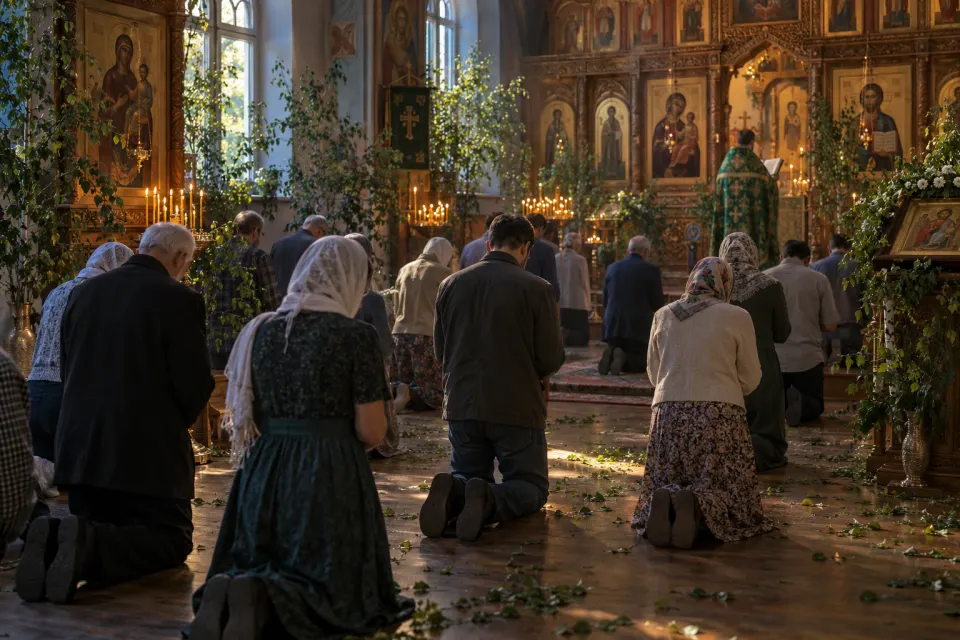
Because the Orthodox churches determine Pascha by the older Julian method, their Pentecost follows that Pascha, and often falls later than the Western feast. Pentecostal Christians look to the event in Acts 2 as their pattern, and teach a baptism in the Holy Spirit marked by speaking in tongues. Historians trace the movement to the teaching of Charles Parham, whom some call its founder, or to the Azusa Street revival in Los Angeles in 1906, led by William J. Seymour, and scholars still dispute which should count as its beginning.[4–6, 12]
Sources
Each statement above was checked against published sources; the verdict says whether it stood as written, was corrected or was hedged.
- VerifiedThe Church of England, Pentecost; Encyclopedia.com.
- VerifiedHoly See, New American Bible, Acts 2; The Church of England.
- VerifiedUnited States Conference of Catholic Bishops, Easter; Encyclopedia.com; The Church of England, The significance of Lent and Easter.
- CorrectedU.S. Naval Observatory, The Date of Easter; American Carpatho-Russian Orthodox Diocese of the USA, Holy Pascha & Other Movable Feasts; NASA Goddard.
- CorrectedCambridge University Press, Joe Creech, Visions of Glory: The Place of the Azusa Street Revival in Pentecostal History, Church History 65(3); Pew Research Center, Moved by the Spirit: Pentecostal Power and Politics after 100 Years, 24 April 2006.
- CorrectedPew Research Center; Cambridge University Press, Creech, Church History 65(3), 1996.
- VerifiedThe Church of England; Encyclopedia.com.
- CorrectedOrthodox Union, The Holiday of Shavuot in the Torah; Chabad.org, What Is Shavuot?; Orthodox Church in America.
- VerifiedUnited States Conference of Catholic Bishops, Bishops' Committee on the Liturgy, God's Mercy Endures Forever; Orthodox Church in America.
- CorrectedOrthodox Church in America; Ukrainian Orthodox Church of the USA.
- VerifiedOrthodox Church in America; Ukrainian Orthodox Church of the USA.
- VerifiedCambridge University Press, Creech; Pew Research Center.