History · 3 min read
The Protestant Reformation: causes, printing and change
Understand the Reformation beyond one event: Luther’s 1517 controversy, religious authority, printing, political settings and multiple reform movements.
A movement, not a single afternoon
The Protestant Reformation was a set of religious changes and conflicts in sixteenth-century Europe. Luther's 1517 controversy over indulgences is a conventional landmark, but the movement developed through multiple reformers, political settings and disagreements about Christian teaching and authority. No single scene explains the whole process. [1][3]
Use 1517 as an entry point into a wider history. Then ask what changed in teaching, institutions and public life, and where those changes occurred. This produces a more useful explanation than treating every later Protestant church as a direct copy of one early reformer's program.
Why indulgences became controversial
The controversy concerned the teaching and practices surrounding indulgences. Catholic doctrine defines an indulgence as remission of temporal punishment for sin whose guilt has already been forgiven. That is more precise than saying the doctrine simply allowed a person to purchase forgiveness or buy entry into heaven. [4][1]
Luther's critique expanded beyond indulgences to questions of salvation, scripture and church authority. He emphasized faith in salvation and the Bible as the decisive source for Christian teaching. By 1520, his writings also directly challenged the Church's handling of the sacraments and its role as an intermediary. [1][2]
Printing helped arguments travel
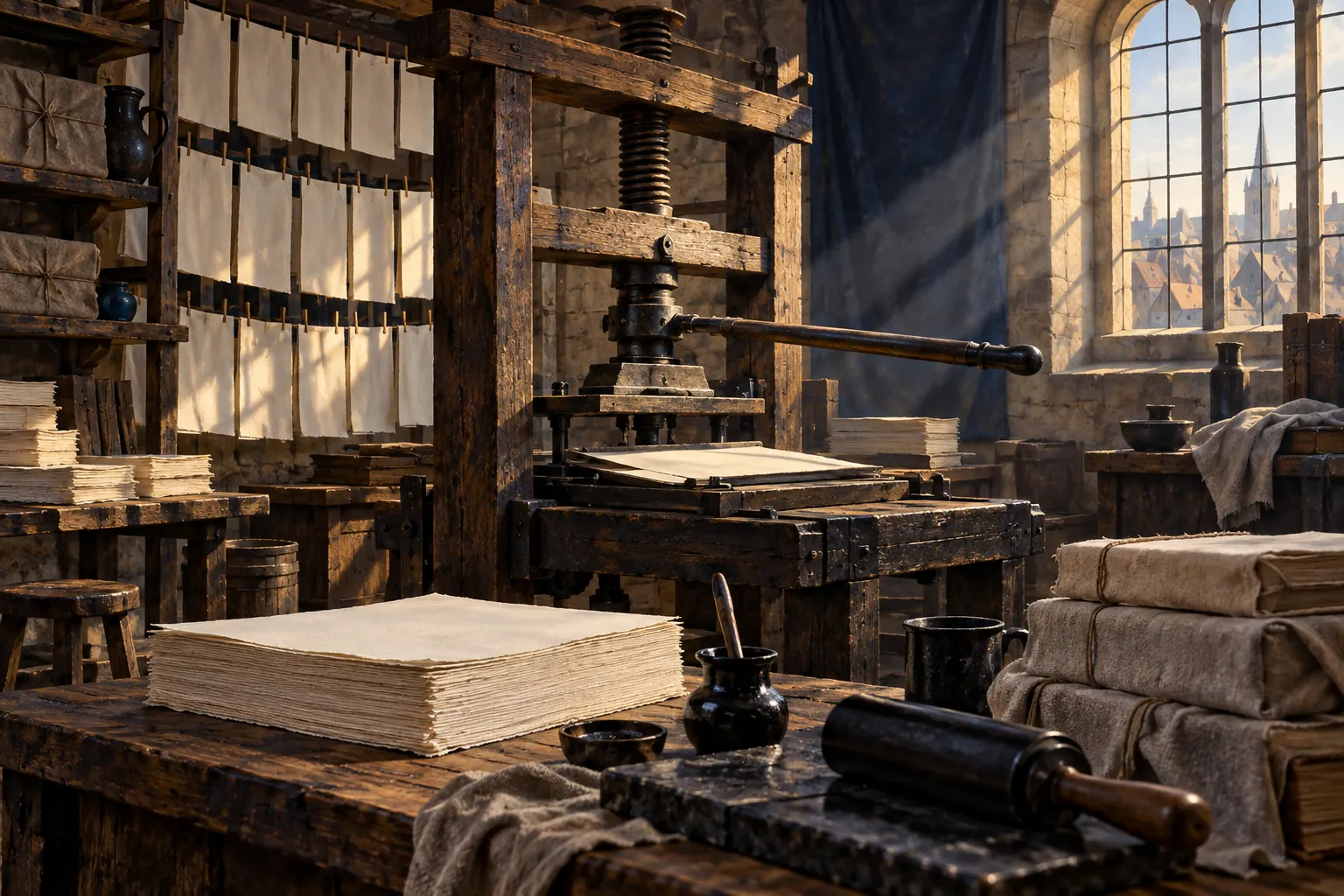
The Library of Congress's Luther collection illustrates how printed works spread his arguments and how his critique widened. Printing helped make religious controversy available beyond one local encounter. Surviving books and pamphlets give historians evidence of what was circulated and how arguments were presented. [2]
One example is The Babylonian Captivity of the Church, published in 1520. The Library of Congress describes its attack on sacramental authority and the importance of its portrait of Luther to his public image. Text and visual presentation worked together in the circulation of reforming arguments. [2]
Different regions followed different paths
The movement included developments associated with Luther, Calvin and reform in England, alongside Catholic responses. Political patrons and local circumstances shaped what could take root. The result was not one centrally governed Protestant church but several developing movements and institutions. [1]
Henry VIII's position changed over time. His 1521 Defence of the Seven Sacraments opposed Luther and defended papal authority. He later broke with Rome after the pope refused to annul his marriage to Catherine of Aragon. England's separation thus involved dynastic and political questions as well as religious disputes. [5]
How to build a useful timeline
Use separate tracks for theological arguments, political decisions and the circulation of texts. Add a place to each event. This helps distinguish developments that happened near the same time without assuming that one directly caused every other one.
Then connect the history to present comparisons carefully. Today's Catholic and Protestant teachings are best described through current official sources, while sixteenth-century disputes require historical evidence. The two kinds of study illuminate each other, but neither should replace the other.
Sources & further reading
The numbered links connect claims to the sources below. Sources checked October 13, 2026 by a separate AI fact-checking agent. This is not human or specialist review. Read our editorial approach.
- The Reformation ↗The Metropolitan Museum of Art · Accessed October 13, 2026
- Luther the Heretic ↗Library of Congress · Accessed October 13, 2026
- Luther Memorials in Eisleben and Wittenberg ↗UNESCO World Heritage Centre · Accessed October 13, 2026
- Catechism of the Catholic Church: X. Indulgences ↗Libreria Editrice Vaticana · Accessed October 13, 2026
- Defender of the Faith ↗British Library · Accessed October 13, 2026
Found a problem? Send a correction with the passage and a supporting source.
Continue your reading
All articles ↗
Comparisons · 3 min read
Catholic vs Protestant: beliefs, authority and worship
Compare Catholic and Protestant Christianity on Scripture, church authority, sacraments and salvation, with careful attention to differences among Protestants.

Sacred texts · 3 min read
How many books are in the Bible? Why counts differ
Compare Protestant, Catholic, Orthodox and Jewish collections, and understand why 66, 73 and 24 describe different canons or counting conventions.
Comparisons · 3 min read
Orthodox vs Catholic: what separates the churches?
Understand Eastern Orthodox and Catholic Christianity, including papal authority, the Filioque, shared traditions and the gradual East–West separation.