
Overview
Twelvers are the largest branch of Shia Islam, holding that twelve imams descended from ʿAlī and Fāṭima guided the community, the last of them hidden since the ninth century; that shared belief, and the history behind it, is covered in the Shia profile. What distinguishes Twelvers is the particular shape their theology and learning took: creed organised around five "roots of religion", a legal method that triumphed over a rival school after centuries of argument, and a clerical ladder running from student to grand ayatollah. Twelver scholars also produced major works of philosophy and law under the Safavids and their successors. Today Twelvers form the state religion of Iran and large communities across Iraq, Azerbaijan, Lebanon and the Gulf.[1–5]
History
Shaping the creed 9th–13th century
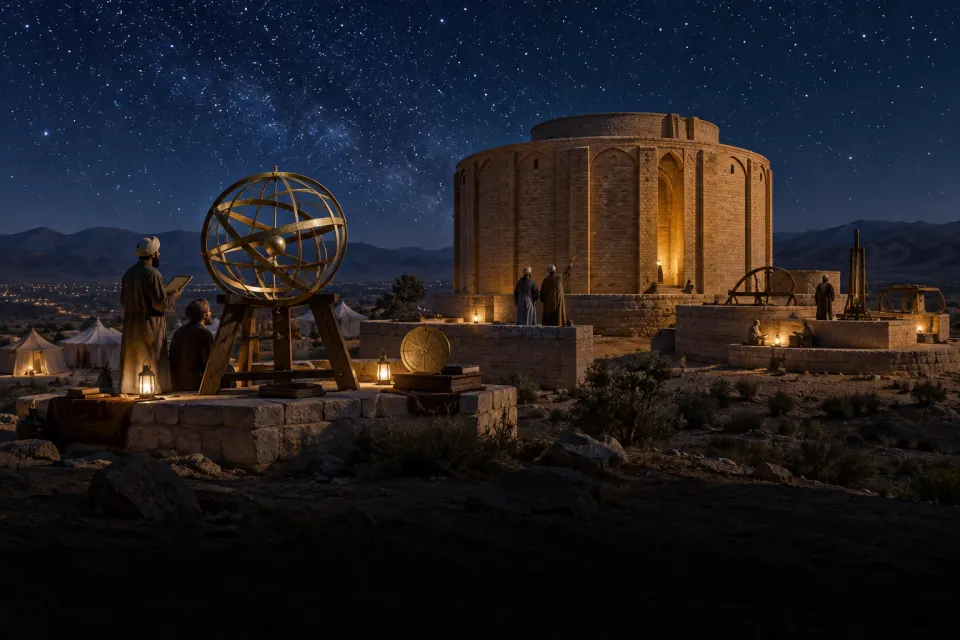
Twelver theologians organised belief around five "roots of religion" (uṣūl al-dīn): God's oneness, divine justice, prophecy, the imamate and the resurrection. The Persian scholar Naṣīr al-Dīn al-Ṭūsī, born in Tus in 1201, became the school's great systematiser: his Tajrīd al-Iʿtiqād set out Twelver theology in rigorous form, work he carried on even while serving the Mongol conqueror Hülegü, for whom he built an observatory at Maragheh in 1259. He died in Baghdad in 1274.[6–10]
The Akhbārī challenge and the Uṣūlī victory 17th–18th century
From the seventeenth century, Akhbārī scholars held that only the Qur'an and the hadith of the Prophet and imams carried authority, and rejected ijtihād, the trained jurist's use of reason to derive new rulings. For a time Akhbārism dominated the shrine cities of Iraq. Muḥammad Bāqir Behbahānī, born in Isfahan around 1706, settled in Karbala and led the counterattack there. By the late eighteenth century the rationalist Uṣūlī school had prevailed, cementing the authority of trained mujtahids that still structures Twelver religious life.[11–13]
Philosophy under the Safavids 16th–17th century
Safavid patronage of Twelver learning also produced a philosophical flowering. Mullā Ṣadrā, born in Shiraz around 1571 and trained in Isfahan, fused rational philosophy, mystical insight and Twelver scripture into a new metaphysics of existence. Later scholars have judged him the most significant Islamic philosopher since Avicenna. He died around 1640 in Basra or Najaf.[14–16]
Key moments
- 1501 CEIran declared Shiʿi · Tabriz, Iran
- 1979 CEThe Iranian Revolution · Tehran, Iran
Beliefs
Uṣūl al-Dīn · أصول الدين
roots of religion
Twelver theology is organised around five roots: tawḥīd, the oneness of God; ʿadl, divine justice; nubuwwa, prophecy; imāma, the imamate; and maʿād, the resurrection and judgment. These roots are distinct from the furūʿ al-dīn, the "branches" of practical duty such as prayer and fasting, and from the Sunni five pillars, a different, ritual-focused list.[2, 17]
Akhbārī and Uṣūlī · أخباري / أصولي
The two historic approaches to Twelver law: Akhbārīs held that only the Qur'an and the hadith of the Prophet and imams could settle a question, while Uṣūlīs held that a trained jurist could also reason from general principles. The Uṣūlī approach has prevailed since the late eighteenth century, though the underlying question, how far reason may supplement revelation, still shapes Twelver legal debate.[3, 11–12]
Practice

Climbing the clerical ranks
A Twelver cleric trains for years in a seminary before earning the title mujtahid, qualified to reason independently from the sources of law. Further recognition brings the titles ḥujjat al-islām and then āyatollāh, "sign of God"; the most senior scholars, recognised as grand āyatollāhs, may become a marjaʿ whose rulings others follow.[4, 18]
People
Naṣīr al-Dīn al-Ṭūsī · نصیر الدین طوسی
scholar · 1201–1274
A Persian theologian, philosopher and scientist, al-Ṭūsī systematised Twelver creed in his Tajrīd al-Iʿtiqād and, in Mongol service, built the observatory at Maragheh, making him one of the few figures central to both Twelver theology and medieval science.[7–9]
Muḥammad Bāqir Behbahānī · محمد باقر بهبهانی
scholar · c. 1706–1791
Known as Vaḥīd Behbahānī, "Behbahānī the unique", he led the Uṣūlī school's victory over Akhbārism from his base in Karbala, restoring the mujtahid's authority to reason from Twelver law's sources.[12–13]
Mullā Ṣadrā · ملا صدرا
scholar · c. 1571–c. 1640
A philosopher trained in Isfahan under Safavid patronage, Mullā Ṣadrā combined logical reasoning, mystical experience and Twelver scripture in a new metaphysics of existence, and is widely regarded as the most important Islamic philosopher of the last several centuries.[14–15]
Places
Jamkaran Mosque
IRN
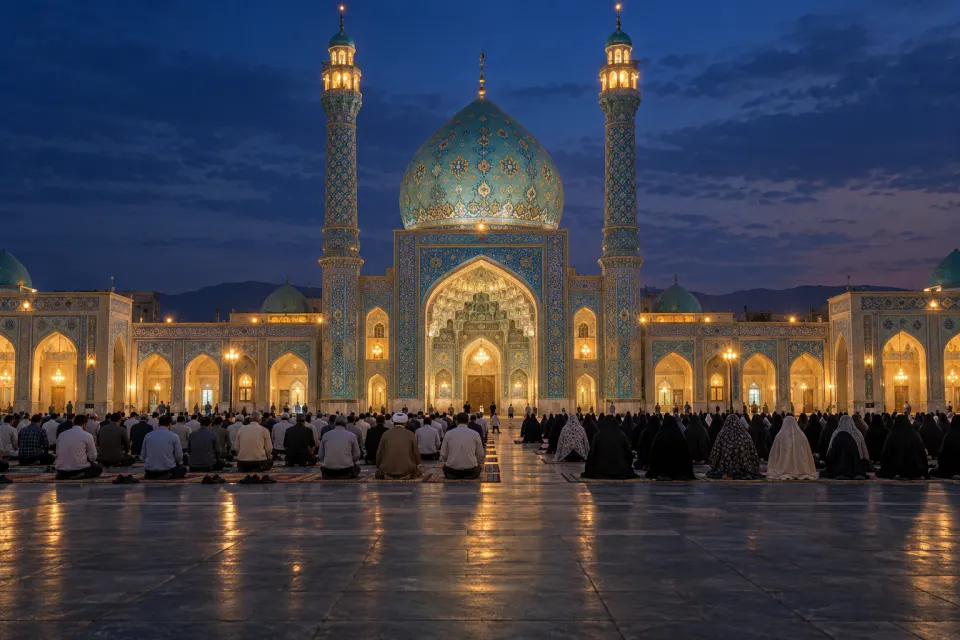
By tradition built after the Hidden Imam appeared to a local scholar near Qom in the tenth century, Jamkaran has grown since the 2000s into a vast pilgrimage complex where Twelvers come, especially on Tuesday evenings, to pray for the Mahdī's return.[19–20]
Maragheh Observatory
IRN
Built in 1259 for the Mongol ruler Hülegü under Naṣīr al-Dīn al-Ṭūsī's direction, the observatory paired astronomical research with a major library, embodying the Twelver scholar's double career as theologian and scientist.[7]
Art & objects
Public-domain objects from museum collections. Select one to see it at the museum.

Numbers
- Twelvers among Shia Muslims
- Large majority of Shia Muslims; no separate count published[5]
Common misconceptions
Myth The Akhbārī school disappeared once the Uṣūlīs prevailed in the eighteenth century.
Fact Uṣūlī jurists did win out in the main shrine cities by the late 1700s, routing Akhbārī scholars at Karbala and Najaf, but the dispute over how far reason may supplement the Qur'an and hadith was a centuries-long argument, not a single event, and shaped Twelver legal thought well into the following century.[11–12]
Myth The Twelver "five roots of religion" are the same as the Sunni "five pillars of Islam".
Fact The five pillars are ritual duties, such as prayer and pilgrimage; the five roots (uṣūl al-dīn) are creedal commitments, about God, prophecy, justice, the imamate and the resurrection. Twelvers hold both duties and roots, but the roots are a distinct, specifically Imami framework for belief, not a replacement for ritual practice.[2, 17]
Glossary
- Uṣūl al-Dīn · أصول الدين
- The "roots of religion": Twelver theology's five creedal commitments (God's oneness, justice, prophecy, the imamate, the resurrection).[2]
- Akhbārī · أخباري
- A follower of the school holding that only the Qur'an and the hadith of the Prophet and imams can settle a legal question, without independent reasoning.[11]
- Uṣūlī · أصولي
- A follower of the now-dominant school holding that a trained jurist may also reason from general legal principles (uṣūl al-fiqh).[11–12]
- Āyatollāh · آیتالله
- "Sign of God": a senior clerical rank above ḥujjat al-islām, reached after advanced seminary training.[18]
- Ḥujjat al-Islām · حجة الإسلام
- "Proof of Islam": a mid-ranking clerical title, below āyatollāh in the modern hierarchy.[18]
- Taqlīd · تقلید
- Following the rulings of a qualified jurist; the practice through which most Twelvers relate to religious law.[3]
Sources
Each statement above was checked against published sources; the verdict says whether it stood as written, was corrected or was hedged.
- VerifiedBritannica, Twelver Shia summary, extract; Encyclopedia.com, Shiism: Ithnā ʿAshariyah.
- VerifiedEncyclopaedia Iranica, SHIʿITE DOCTRINE, extract; Encyclopedia.com, Shiism: Ithnā ʿAshariyah.
- VerifiedEncyclopedia.com, Usuli; Encyclopaedia Iranica, IRAN ix. Religions in Iran: Shiʿism in Iran Since the Safavids, extract.
- VerifiedEncyclopaedia Iranica, SHIʿITE DOCTRINE ii. Hierarchy in the Imamiyya, extract; Encyclopedia.com, Shiism: Ithnā ʿAshariyah.
- VerifiedBritannica, Twelver Shia summary, extract; Encyclopedia.com, Shiism: Ithnā ʿAshariyah.
- VerifiedEncyclopaedia Iranica, SHIʿITE DOCTRINE, extract; Encyclopedia.com, Shiism: Ithnā ʿAshariyah.
- VerifiedBritannica, Naṣīr al-Dīn al-Ṭūsī, extract; Encyclopedia.com, Nasir al-Din al-Tusi.
- VerifiedBritannica, Naṣīr al-Dīn al-Ṭūsī, extract; Encyclopedia.com, Nasir al-Din al-Tusi.
- VerifiedBritannica, Naṣīr al-Dīn al-Ṭūsī, extract; Encyclopedia.com, Nasir al-Din al-Tusi.
- VerifiedBritannica, Naṣīr al-Dīn al-Ṭūsī, extract; Encyclopedia.com, Nasir al-Din al-Tusi.
- VerifiedEncyclopedia.com, Usuli; Encyclopaedia Iranica, IRAN ix. ... Shiʿism in Iran Since the Safavids, extract.
- VerifiedEncyclopaedia Iranica, BEHBAHĀNĪ, MOḤAMMAD-BĀQER, extract; Encyclopedia.com, Usuli.
- VerifiedEncyclopaedia Iranica, BEHBAHĀNĪ, MOḤAMMAD-BĀQER, extract; Encyclopedia.com, Usuli.
- VerifiedBritannica, Mullā Ṣadrā, extract; Encyclopaedia Iranica, MOLLĀ ṢADRĀ ŠIRĀZI, extract.
- VerifiedBritannica, Mullā Ṣadrā, extract; Encyclopaedia Iranica, MOLLĀ ṢADRĀ ŠIRĀZI, extract.
- VerifiedBritannica, Mullā Ṣadrā, extract; Encyclopaedia Iranica, MOLLĀ ṢADRĀ ŠIRĀZI, extract.
- VerifiedEncyclopaedia Iranica, SHIʿITE DOCTRINE, extract; Encyclopedia.com, Shiism: Ithnā ʿAshariyah.
- VerifiedEncyclopaedia Iranica, SHIʿITE DOCTRINE ii. Hierarchy in the Imamiyya, extract; Encyclopedia.com, Shiism: Ithnā ʿAshariyah.
- VerifiedEncyclopaedia Iranica, JAMKARĀN, extract; University of Qom, Jamkaran.
- VerifiedEncyclopaedia Iranica, JAMKARĀN, extract; University of Qom, Jamkaran.
Last fact-checked 3 October 2026.