Overview
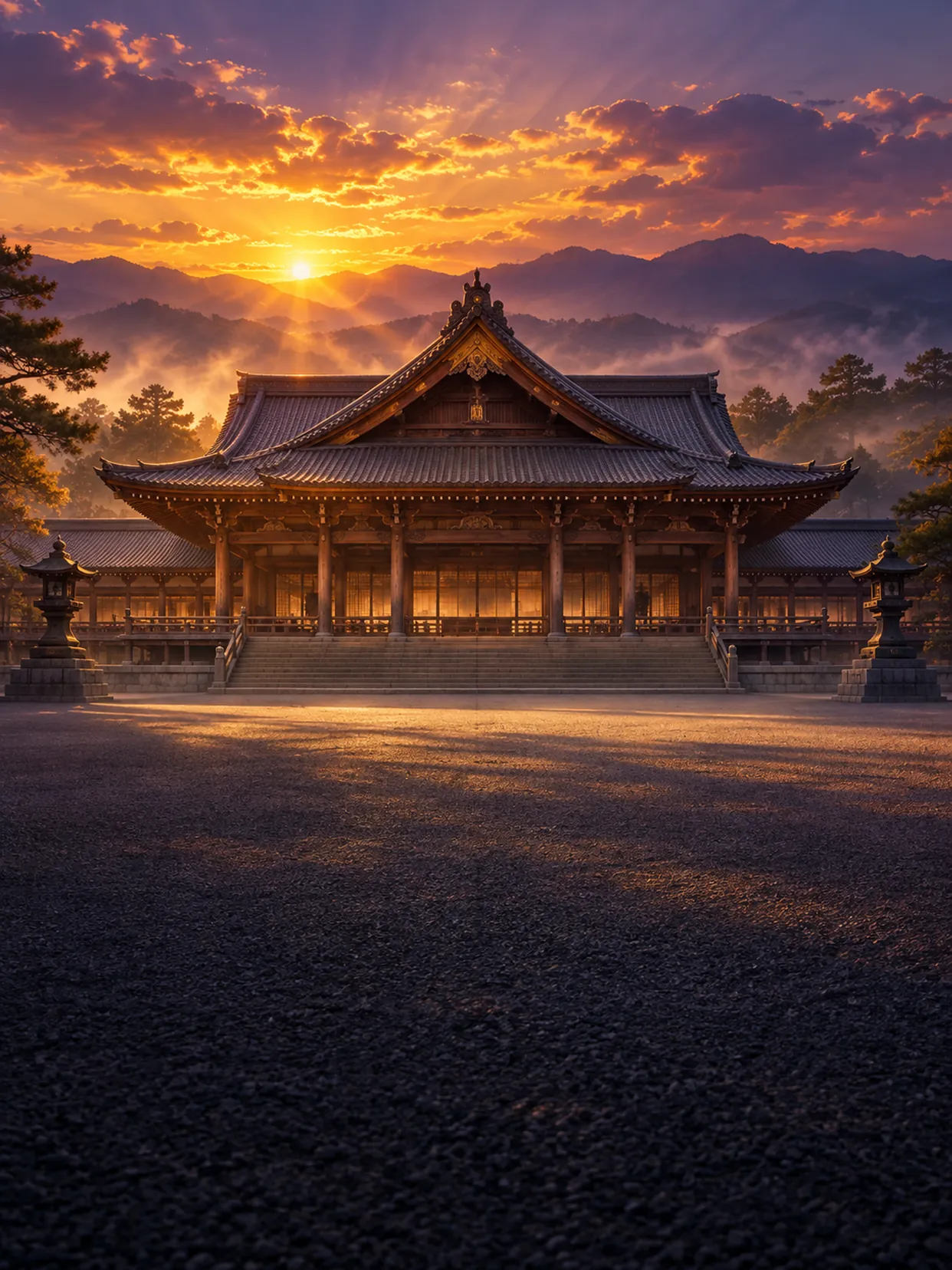
Tenrikyo, "the Religion of Divine Wisdom", began in 1838 when Nakayama Miki, a farmer's wife in Yamato Province, said she became possessed by Tenri-O-no-Mikoto, "God the Parent", who called her his "living shrine" and chose her to reveal his will. Her teaching promises a "Joyous Life" for all humanity, free of illness and suffering, achieved by clearing selfish impurities from the heart and by charitable service, and centres on the jiba, a spot in what is now Tenri City held to be the place where God created humankind. Once classified as one of the Sect Shinto groups, Tenrikyo was redefined as a distinct faith after Japan's 1945 defeat ended state control of religion. Still led by Nakayama's descendants, it has grown into one of Japan's largest new religions, with missions, hospitals, a university and congregations abroad.[1–2, 4–7]
History

A revelation and years of persecution 1838–1887
In 1838, when she was forty years old, Nakayama Miki is said to have become the vessel of Tenri-O-no-Mikoto, who declared her his "living shrine" (Kami no Yashiro) and called her to a mission of healing and charity. She gave away her family's wealth in alms, taught that divine protection follows a life of sincere piety, and demonstrated her teaching with reported healings, drawing followers even as the authorities repeatedly persecuted and imprisoned her for defying public order. She died on 26 January 1887, urging her disciples to continue a dance-service the police had banned, and is held by Tenrikyo not to have died but to remain spiritually present at her sanctuary.[1, 10]
A structured church From 1887
After Nakayama's death, her closest disciple, Iburi Izo, continued to receive guidance, compiled afterward as the Osashizu, and oversaw the growth of a formal church organisation. As the new structure took shape, Tenrikyo was officially recognised as one of the groups making up Sect Shinto, the status the Meiji state gave to independent new religions it did not absorb into shrine Shinto.[5, 7]
Growth, war and a Shinto label 1896–1945
From the 1890s Tenrikyo sent missionaries abroad, reaching the United States in 1896 and Taiwan, Korea and China by 1901, and by the years before the Second World War it was one of Japan's most powerful religious movements. Its formal status as a Sect Shinto body, however, meant its teaching and institutions were shaped to fit government expectations, intertwining Nakayama's message with Shinto forms and wartime nationalism in ways many of her followers saw as distortions of her original teaching.[11]
Independence and a global mission 1945–present
The religious freedom guaranteed by Japan's 1947 constitution let Tenrikyo abandon its Sect Shinto label and launch a "restoration" (fukugen) movement to recover Nakayama's original teaching from decades of Shinto and nationalist overlay, redefining itself as a faith distinct from Shinto. Leadership has stayed within the Nakayama family, and the religion has built a university, a hospital, an orphanage, a library, a museum and a publishing house, while continuing missionary work that every member is expected to take part in; more than 200 churches now serve congregations outside Japan, chiefly in Japanese communities abroad.[6–7, 11–12]
Key moments
- 1838 CETenrikyo · Tenri, Nara Prefecture, Japan
Beliefs
Oyagami · 親神 · 天理王命
God the Parent; Tenri-O-no-Mikoto
Tenrikyo holds that one God, revealed through Nakayama as Tenri-O-no-Mikoto, created the world and humanity purely to delight in seeing people live joyfully, and continues to act as a loving parent toward all people regardless of creed.[2]
Joyous Life · 陽気ぐらし yōkigurashi
a life lived in mutual helpfulness and joy
The goal of faith is not personal salvation after death but the Joyous Life here and now, reached by clearing away the selfish "dusts" that cloud the heart and by helping others; illness and misfortune are read as signals calling a person back to this path.[13]
A borrowed body · かしもの・かりもの kashimono-karimono
something lent, something borrowed
Tenrikyo teaches that the physical body is lent by God, not owned outright, and that death is a "return" (denaoshi) for rebirth rather than an end. The tradition holds no doctrine of original sin: human selfishness, not an inherited fault, is what the revelation was given to correct.[14]
Practice

Selfless service · ひのきしん
Hinokishin, spontaneous service offered in gratitude rather than for reward, from sweeping a street to formal community work, is considered one of the three essential activities of faith alongside receiving the osazuke and making pilgrimage to the jiba.[15]
The Kagura Zutome · かぐらづとめ
Tenrikyo's central rite is a seated and dance service performed around the Kanrodai monument at the jiba, following songs and movements Nakayama herself composed and taught; it was for decades restricted or banned by the police as a threat to public order.[1, 10]
Osazuke and healing · おさづけ
The "holy grant" of osazuke is a rite that authorises a believer to pray for the healing of others in God's name; receiving it is regarded as a form of spiritual rebirth at the jiba and a step toward becoming an active agent of God's charity.[15]
Missionary service
Every member of Tenrikyo is expected to take part in spreading the teaching, a duty that took missionaries abroad within decades of the founder's death and today sustains more than 200 churches outside Japan.[11]
People
Nakayama Miki · 中山みき
founder · 1798–1887
A farmer's wife of Yamato Province, Nakayama Miki is said to have become possessed by Tenri-O-no-Mikoto in 1838 and thereafter to have taught, healed and given away her family's wealth despite repeated arrest. Her writings and example remain the model Tenrikyo followers look to, and she is held to remain spiritually present at her sanctuary rather than to have died.[1, 10]
Iburi Izo · 飯降伊蔵
teacher · 1833–1907
Nakayama's most trusted disciple, Iburi Izo continued to deliver guidance after her death, compiled afterward as the Osashizu, and shaped the organisation that turned Tenrikyo into a structured church.[7]
Scripture
Ofudesaki · おふでさき
1869–1882
"Tip of the Divine Writing Brush": 1,711 verses in traditional waka style, personally written by Nakayama Miki, setting out the creation of the world, the nature of God, and the meaning of the jiba and its Kanrodai.[3]
Mikagura-uta · みかぐらうた
1866–1875
"Songs for the Sacred Dance": the verses, also written by Nakayama, that are sung during the Kagura Zutome service and its accompanying dance.[3]
Osashizu · おさしづ
1887–1907
"Divine Directions": guidance delivered through Iburi Izo after Nakayama's death, covering both prophetic instruction and detailed answers to individual believers' questions, and used to shape church organisation.[3, 7]
Places
Jiba and Kanrodai, Tenri City
JPN
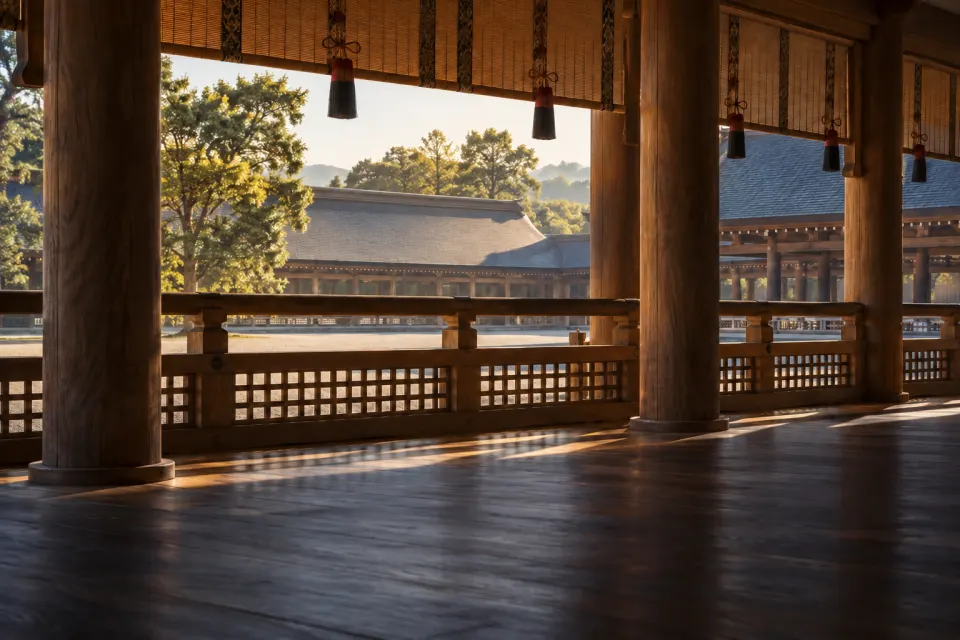
Held to be the exact spot where God created humankind, the jiba lies at the centre of Tenrikyo's main sanctuary in Tenri City, Nara Prefecture, marked by the Kanrodai monument around which the Kagura Zutome service is performed; the city takes its name from the religion's headquarters there.[4]
Numbers
- Followers (historical estimate; no current reliable count)
- c. 2.5–3 million (reported c. 1980)[8–9]
Britannica reported about 2,500,000 members in 1980; another reference work gave about 3 million with over 16,000 churches by the 1980s. Pew states no reliable current estimate exists.
National censuses
| Country | Year | Count | Share |
|---|---|---|---|
| Australia Tenrikyo | 2021 | 103 | 0.0% |
| New Zealand Tenrikyo | 2018 | 12 | 0.0% |
Source: Australian Bureau of Statistics, Census of Population and Housing 2021, 'Religious affiliation in Australia' (Table 4), CC BY 4.0. Source: Stats NZ, 2018 Census, licensed by Stats NZ for re-use under the Creative Commons Attribution 4.0 International licence.
How we know
Why there is no current count
Japan's religious statistics rely on each group's own reporting, and new religions such as Tenrikyo are not independently audited, so published membership figures vary widely by source and date. Pew Research Center, surveying the field of new Japanese religions broadly, states plainly that reliable estimates of Tenrikyo's following are not available, which is why this profile gives only the older, specifically sourced figures from around 1980 rather than a current total.[9]
Common misconceptions
Myth Tenrikyo is simply a branch of Shinto.
Fact Tenrikyo was classified as a form of Sect Shinto mainly because the Meiji state required independent new religions to be filed under an existing category, not because its teaching derives from Shinto doctrine. Once religious freedom ended that requirement in 1947, Tenrikyo moved to recover and teach Nakayama Miki's own revelation as a faith distinct from Shinto.[5–6, 16]
Myth Tenrikyo is a small, inward-looking sect.
Fact Tenrikyo has sent missionaries abroad since the 1890s, runs a university, a hospital, an orphanage and a publishing house, and supports more than 200 churches outside Japan; every member is expected to take an active part in spreading the teaching.[11–12, 17]
Glossary
- Jiba · じば
- The sacred spot at Tenrikyo's Tenri City sanctuary held to be where God created humankind, and the destination of pilgrimage.[4]
- Kanrodai · 甘露台
- The monument marking the jiba, around which the Kagura Zutome dance service is performed.[4]
- Hinokishin · ひのきしん
- Spontaneous, selfless service offered in gratitude to God, from everyday chores to organised community work.[15]
- Yōkigurashi · 陽気ぐらし
- The "Joyous Life": Tenrikyo's goal of a life of mutual help and joy for all humanity, to be realised in this world.[13]
- Kashimono-karimono · かしもの・かりもの
- "Something lent, something borrowed": the teaching that the physical body belongs to God and is only lent to a person for life.[14]
- Osazuke · おさづけ
- The "holy grant": a rite authorising a believer to pray for others' healing in God's name.[15]
- Fukugen · 復元
- "Restoration": the postwar movement to recover Nakayama Miki's original teaching from decades of enforced Shinto and nationalist overlay.[6]
Sources
Each statement above was checked against published sources; the verdict says whether it stood as written, was corrected or was hedged.
- VerifiedBritannica, Tenrikyō; Encyclopedia of Religion, 2nd ed., Tenrikyō, via Encyclopedia.com.
- VerifiedEncyclopedia of Religion, 2nd ed., Tenrikyō, via Encyclopedia.com; Britannica, Tenrikyō.
- VerifiedEncyclopedia of Religion, 2nd ed., Tenrikyō, via Encyclopedia.com; Britannica, Tenrikyō.
- VerifiedBritannica, Tenrikyō; Encyclopedia of Religion, 2nd ed., Tenrikyō, via Encyclopedia.com.
- CorrectedBritannica, Tenrikyō; Encyclopedia of Religion, 2nd ed., Tenrikyō, via Encyclopedia.com.
- VerifiedEncyclopedia of Religion, 2nd ed., Tenrikyō, via Encyclopedia.com; Britannica, Shintō.
- VerifiedBritannica, Tenrikyō; Encyclopedia of Religion, 2nd ed., Tenrikyō, via Encyclopedia.com.
- VerifiedBritannica, Tenrikyō; Encyclopedia of Religion, 2nd ed., Tenrikyō, via Encyclopedia.com.
- VerifiedPew Research Center, The Future of World Religions: Other Religions; Britannica, Tenrikyō.
- VerifiedEncyclopedia of Religion, 2nd ed., Tenrikyō, via Encyclopedia.com; Britannica, Tenrikyō.
- VerifiedEncyclopedia of Religion, 2nd ed., Tenrikyō, via Encyclopedia.com; Britannica, Tenrikyō.
- VerifiedBritannica, Tenrikyō; Encyclopedia of Religion, 2nd ed., Tenrikyō, via Encyclopedia.com.
- VerifiedEncyclopedia of Religion, 2nd ed., Tenrikyō, via Encyclopedia.com; Britannica, Tenrikyō.
- VerifiedEncyclopedia of Religion, 2nd ed., Tenrikyō, via Encyclopedia.com; Britannica, Tenrikyō.
- VerifiedEncyclopedia of Religion, 2nd ed., Tenrikyō, via Encyclopedia.com; Britannica, Tenrikyō.
- VerifiedBritannica, Tenrikyō; Encyclopedia of Religion, 2nd ed., Tenrikyō, via Encyclopedia.com.
- VerifiedEncyclopedia of Religion, 2nd ed., Tenrikyō, via Encyclopedia.com; Britannica, Tenrikyō.
Last fact-checked 3 October 2026.