The story behind the day
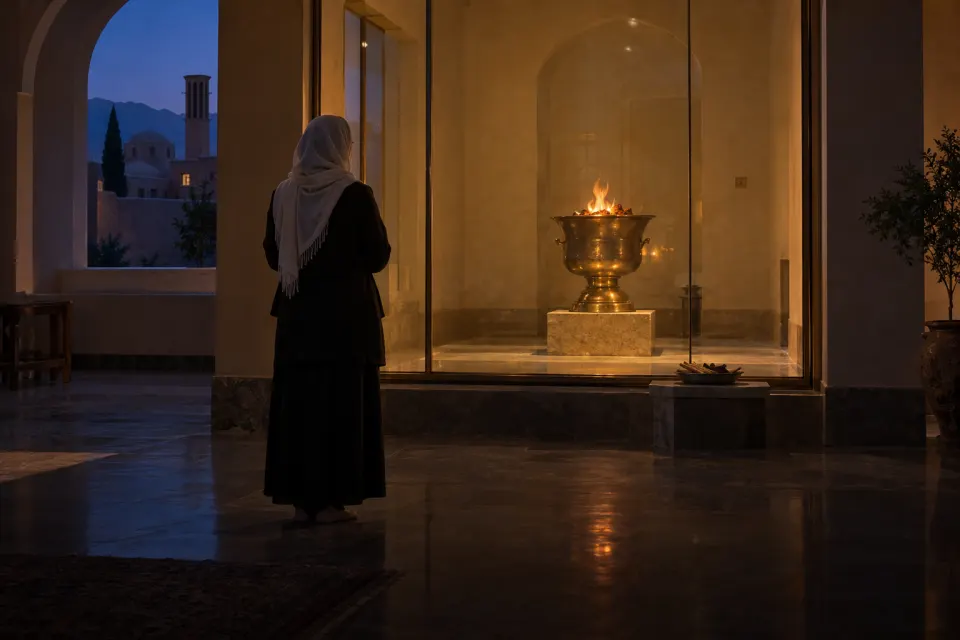
Zartosht No-Diso is the day on which Zoroastrians remember the death of Zarathushtra, whom they revere as the founder of their faith. In the Fasli reckoning it falls on 26 December, in midwinter, while the other Zoroastrian calendars place it at other times of the year. One tradition holds that he was killed while tending the sacred fire, in a battle of his time. Accounts of his death differ, scholars cannot confirm the story, and they still debate when he lived.[1–4]
Origins
Zoroastrians remember the death of Zarathushtra on Zartosht No-Diso, the traditional anniversary of the death of the prophet they honour as the founder of their religion. By one tradition he took part in the wars of his time and died while officiating at the fire altar. A legend of the same kind has him killed while tending the sacred fire in a temple at Balkh.[1–2]
What it marks
The day marks the end of the prophet's life. The traditions are not uniform: one account has him killed at the altar, while other legends say he died peacefully, and the story of his death at the altar is described as difficult to confirm.[2–3]
How it came to be
Even the date of the prophet's life is uncertain. The sources are meagre, conflicting and often ambiguous. Modern historians place him somewhere between about 1600 and 800 BCE, many favouring a date within 1500 to 1000 BCE, but a tradition that counts 258 years from Zarathushtra to Alexander once led many in the West to a date in the sixth century BCE. The death anniversary is therefore a matter of Zoroastrian tradition rather than of historical record.[4, 6–7]
Across traditions
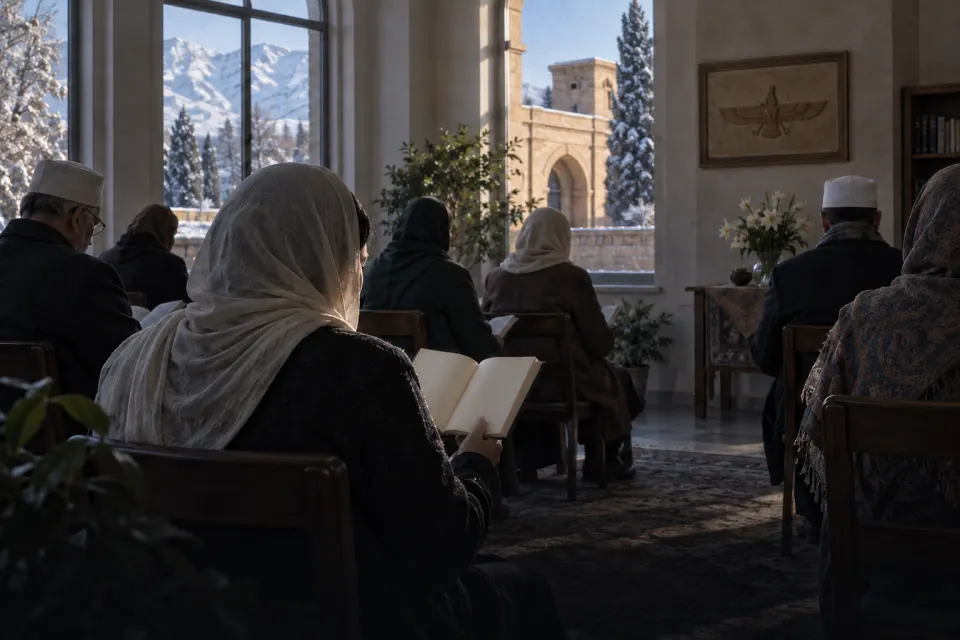
Zoroastrians follow three calendars. In the Fasli calendar, which was devised in 1906 and keeps to the seasons, the day falls on 26 December. The Shenshai calendar, followed by most Parsis, has its New Year in August, and the Kadmi calendar differs from Shenshai by one month, so on those reckonings the anniversary falls at other times of the year.[5, 8–11]
Sources
Each statement above was checked against published sources; the verdict says whether it stood as written, was corrected or was hedged.
- Verifiedfezana.org, Glossary; Zoroastrianism.
- VerifiedBrigham Young University, Religious Studies Center, Zoroastrianism; Albert de Jong, Zarathushtra, Encyclopedia of Religion; Zoroaster, Concise Oxford Dictionary of World Religions.
- VerifiedAlbert de Jong, Zarathushtra, Encyclopedia of Religion; Brigham Young University, Religious Studies Center, Zoroastrianism.
- VerifiedA. Shapur Shahbazi, The 'Traditional date of Zoroaster' explained, Bulletin of the School of Oriental and African Studies 40.1; Brigham Young University, Religious Studies Center, Zoroastrianism.
- VerifiedFEZANA, Age-Appropriate Lesson Plan: Calendar; UNESCO-Parzor; Zoroastrianism.
- VerifiedA. Shapur Shahbazi, The 'Traditional date of Zoroaster' explained, Bulletin of the School of Oriental and African Studies 40.1; Zoroaster, Concise Oxford Dictionary of World Religions; Albert de Jong, Zarathushtra, Encyclopedia of Religion.
- VerifiedZoroastrianism and Contemporary Philosophy, Cambridge Elements, Cambridge University Press; Albert de Jong, Zarathushtra, Encyclopedia of Religion.
- VerifiedFEZANA, Age-Appropriate Lesson Plan: Calendar; Jamsheed K. Choksy / D. O. Lodrick, Parsis, Encyclopedia of Religion and Worldmark Encyclopedia of Religious Practices.
- VerifiedZoroastrian Society of British Columbia, Calendars; FEZANA, Navroze & Khordad Saal Mubarak; Zoroastrianism.
- VerifiedJamsheed K. Choksy / D. O. Lodrick, Parsis, Encyclopedia of Religion and Worldmark Encyclopedia of Religious Practices; fezana.org, Glossary.
- VerifiedFEZANA, Age-Appropriate Lesson Plan: Calendar; Zoroastrian Society of British Columbia, Calendars; Zoroastrianism.