Overview
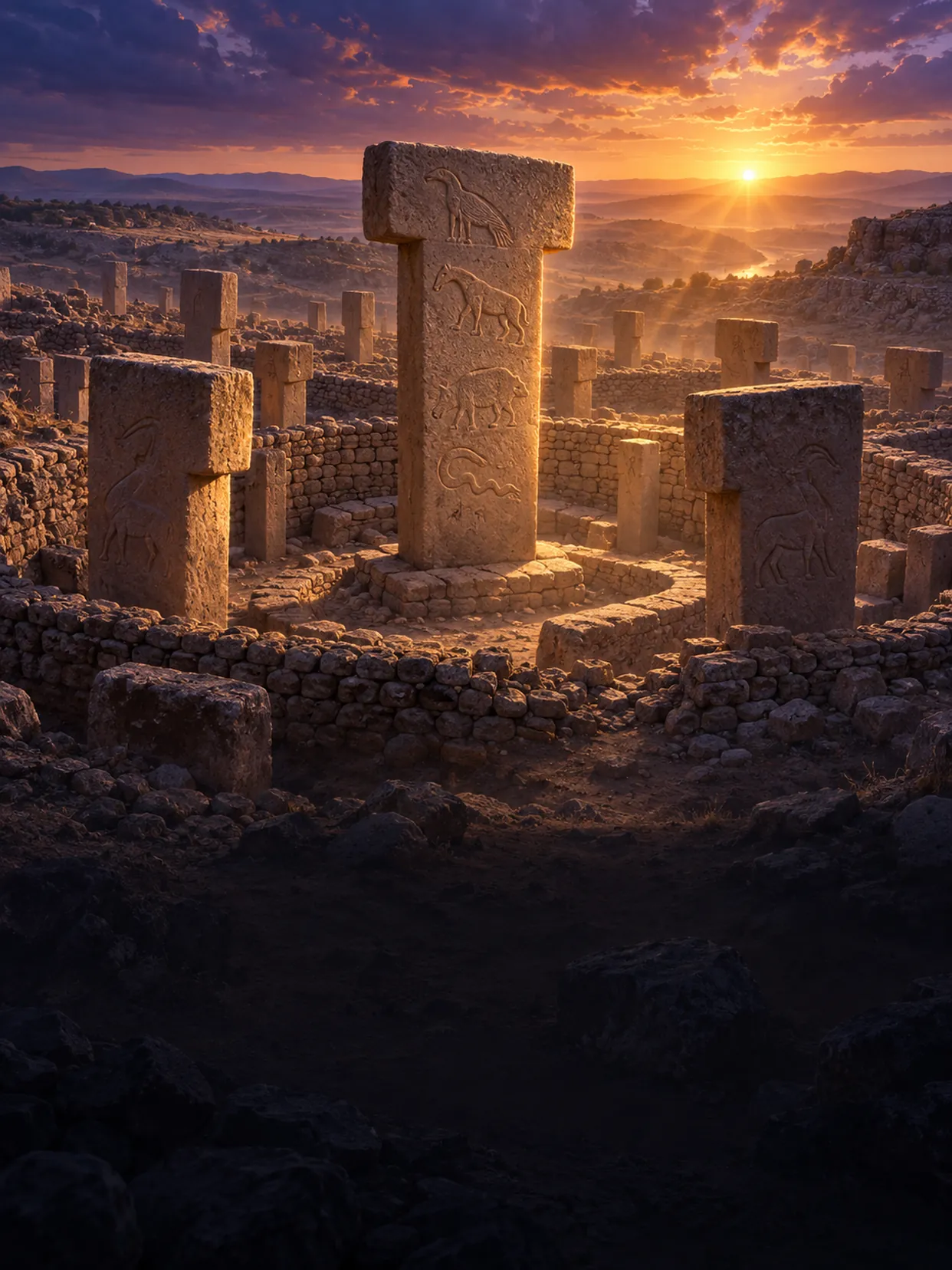
Göbekli Tepe is a Neolithic hill sanctuary in southeastern Türkiye, dated to roughly 9600–8200 BCE, where hunter-gatherers raised rings of massive carved stone pillars before anyone in the region farmed, kept livestock, or made pottery, and which most archaeologists read as a gathering place for rituals that drew people from well beyond a single settlement.[1, 5]
History
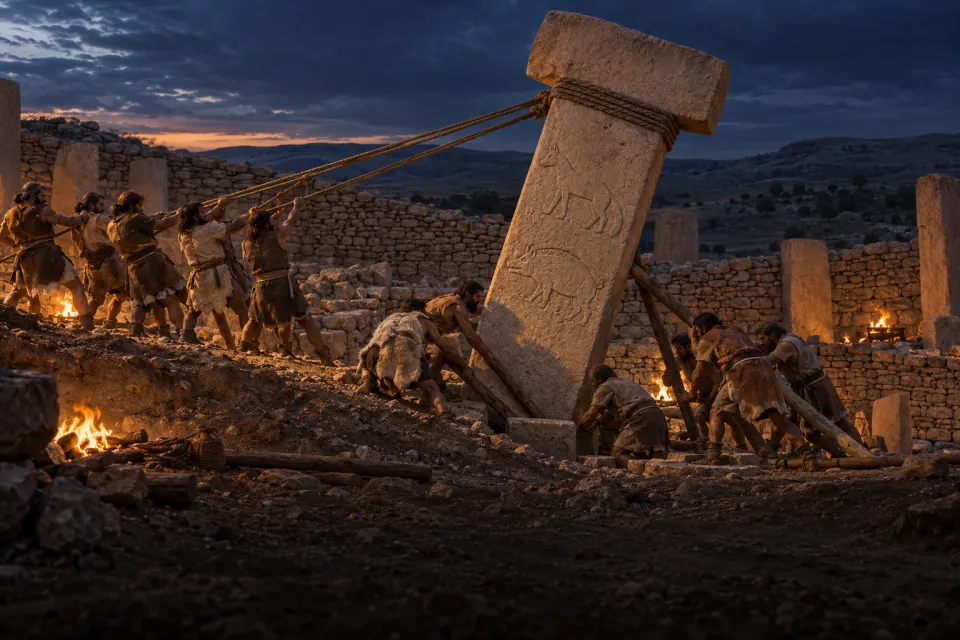
Hunter-gatherers raise the pillars c. 9600–8200 BCE
Groups of hunter-gatherers in Upper Mesopotamia built monumental round-oval and rectangular enclosures at Göbekli Tepe, framed by T-shaped limestone pillars, some over five metres tall, carved with wild animals. The builders had not yet domesticated plants or animals: the site has produced large quantities of wild gazelle bone and wild plant remains, but no clear hearths, trash pits, or other everyday domestic debris.[1–4]
Excavation since the 1990s 1990s–present
Göbekli Tepe has been excavated and studied since the mid-1990s, work that revealed monuments far older than archaeologists had assumed could exist at that stage of human history.[6]
Key moments
- c. 9500 BCEGöbekli Tepe raised · Şanlıurfa, southeastern Türkiye
Places
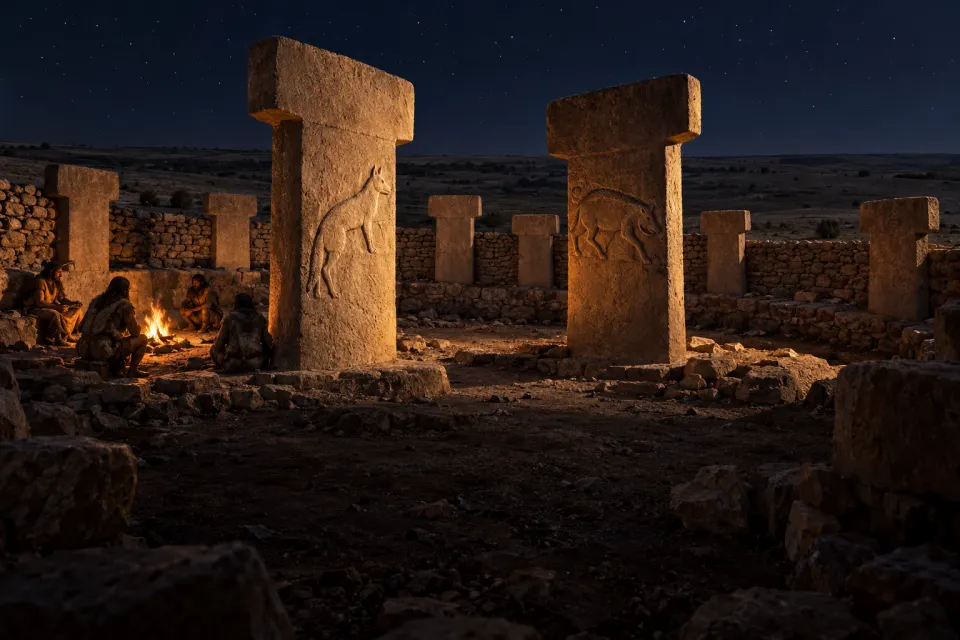
Göbekli Tepe
TUR · UNESCO World Heritage, 2018
Monumental T-shaped pillar enclosures raised by hunter-gatherers near Şanlıurfa, probably for ritual and social gatherings, before farming or pottery existed in the region.[1]
How we know
How we know
Excavation since the mid-1990s has uncovered the site's T-shaped pillars, animal carvings, and wild gazelle bone and wild plant remains, but no hearths or trash pits typical of a permanent settlement. Most archaeologists read this as evidence of a ritual or gathering site rather than everyday housing, though the exact purpose is debated.[2, 5–6]
Glossary
- T-shaped pillar
- A limestone monolith, some up to about 5.5 metres tall, carved with images of wild animals, that frames Göbekli Tepe's enclosures.[3–4]
- Pre-Pottery Neolithic
- The period, before farming, livestock-keeping or pottery existed in the region, in which hunter-gatherers built Göbekli Tepe's enclosures.[1–2]
- Enclosure
- One of Göbekli Tepe's monumental round-oval or rectangular stone structures, probably used for rituals and social gatherings.[1, 5]
Sources
Each statement above was checked against published sources; the verdict says whether it stood as written, was corrected or was hedged.
- VerifiedUNESCO World Heritage Centre, Göbekli Tepe; Britannica, Göbekli Tepe.
- VerifiedBritannica, Göbekli Tepe; UNESCO World Heritage Centre, Göbekli Tepe.
- VerifiedUNESCO World Heritage Centre, Göbekli Tepe; Britannica, Göbekli Tepe.
- VerifiedUNESCO World Heritage Centre, Göbekli Tepe; Britannica, Göbekli Tepe.
- VerifiedUNESCO World Heritage Centre, Göbekli Tepe; Britannica, Göbekli Tepe.
- VerifiedBritannica, Göbekli Tepe; UNESCO World Heritage Centre, Göbekli Tepe.
Last fact-checked 6 October 2026.