
Overview
Celtic religion is the scholars' name for the beliefs and rituals of the Iron Age peoples who spoke Celtic languages, from Gaul and the British Isles to central Europe and, for a while, Anatolia. It was never one church with one creed: hundreds of divine names survive, most recorded only once, beside a handful of widely honoured gods. Its followers left no scriptures. We depend on Greek and Roman observers, inscriptions and carvings made under Roman rule, archaeology, and Irish and Welsh tales written down centuries later by Christian monks. Each source has its own slant, so scholars still debate the druids, sacrifice, and whether 'Celtic' names one shared culture at all.[9–12]
History

Iron Age peoples c. 800–200 BCE
Archaeologists divide Europe's Iron Age by type-sites; La Tène, on Lake Neuchâtel in Switzerland, names the later phase, from about 450 BCE. Greek writers such as Hecataeus and Herodotus mention Celts from the 5th century BCE, and by the early 3rd century Celtic-speaking groups stretched from Britain to Asia Minor. Religion before Rome is seen mostly in graves and offerings. Many dead were buried with food, weapons or ornaments, suggesting belief in an afterlife, though customs varied and not everyone received grave goods.[13–15]
Sanctuaries and offerings c. 300–50 BCE
From the 3rd century BCE, communities in northern Gaul built ditched sacred enclosures. At Gournay-sur-Aronde, cattle were given wholly to the god and left to decay in a central pit, while young pigs and lambs were shared between people and gods. At Ribemont-sur-Ancre, the headless bodies of perhaps 500 to 700 warriors from a battle of about 260 BCE were exposed in a victory monument. Elsewhere, weapons and chariot fittings went into lakes, rivers and bogs, too many to be accidental losses; most archaeologists read them as offerings.[16–19]
Caesar, Rome and the Gallo-Roman gods 58 BCE–4th century CE
Julius Caesar conquered Gaul between 58 and 51 BCE, and his war commentary is the fullest ancient account of Gaulish religion. Under Roman rule, local gods were matched with Roman ones, so that at Bath the spring goddess Sulis became Sulis Minerva, and inscribed altars and stone temples spread. Roman writers say the druid order was banned in the 1st century CE, and Tacitus describes troops attacking druids on Anglesey around 60 CE. Worship of the gods went on; Bath's curse tablets run to the late 4th century.[20–23]
Christianisation and the monks' myths 4th–12th centuries CE
Christianity spread through the Roman provinces and, from at least the 4th century, into Ireland, which Rome never ruled. There the British-born missionary Patrick worked in the 5th century. By the early 7th century the druids had lost their place, but the filid, hereditary learned poets, kept much old lore alongside the clergy. Irish monks wrote in their own language from around 600, Welsh scribes later. Their tales recast old gods as the Tuatha Dé Danann, an ancient people of Ireland; how much genuine myth they keep is still debated.[24–27]
Antiquarians and modern Druids 17th century–today
The antiquarians John Aubrey and William Stukeley credited druids with stone circles such as Stonehenge. In 1792 the Welsh poet Edward Williams, known as Iolo Morganwg, held a bardic Gorsedd in London; he also passed off many of his own writings as medieval texts, and his Gorsedd later became part of Welsh eisteddfodau. Fraternal druid orders arose from 1781, and early 20th-century esoteric groups began rituals at Stonehenge. From these roots grew modern Druidry, a new religious movement now largely part of modern Paganism.[28–30]
Beliefs
Gods of place and people
Most of the several hundred divine names known from Gaul and from Roman Britain occur only once, suggesting that many gods belonged to one spring, district or tribe. Others reply that many names are local titles of fewer great gods, since a few, such as Lugus, were honoured widely. Lucan's Teutates may mean 'god of the tribe', perhaps a title rather than one deity.[31–33]
The Otherworld
Irish tales describe an Otherworld without sickness, age or death, under the ground or on islands across the sea, where a hundred years can pass like a day. Medieval tradition housed the old gods in ancient mounds. Caesar says the druids taught that souls do not die but pass into another body.[34–36]
Sacred waters
Rivers, springs and lakes were holy. Many rivers carried goddess names: the Marne was Matrona and the Seine Sequana. Healing springs had deities too, like Sulis at Bath. Faith in healing wells outlived the old religion in Christian form.[37–38]
The goddess and the king
Irish literature pictures kingship as a sacred marriage between the ruler and a goddess who personifies the land; a new king was said to wed his kingdom. Scholars connect this with the many divine couples of Romano-Celtic sculpture and with Iron Age bog offerings linked to kingship.[39]
The power of the head
Diodorus and Strabo, both probably drawing on one lost source, say Gauls cut off enemies' heads, hung them from their horses and kept prized ones in cedar oil. Chemical analysis of skulls from Le Cailar in Gaul found real embalming resin, confirming the practice though not the cedar itself. In southern Gaul, Roquepertuse displayed skulls in stone niches and Entremont had pillars carved with severed heads. Older books saw one Celtic 'cult of the head'; recent work sees varied local practices.[40–43]
Practice

Sacrifice
Animal sacrifice is well attested: Gournay's thousands of bones come from cattle, pigs and sheep, the animals Greeks and Romans also offered. Caesar, Lucan and Pliny accuse Gauls and Britons of human sacrifice, Caesar describing victims burned in huge wicker figures. These writers were hostile and partly repeating hearsay, so historians are cautious, though some finds may reflect ritual killing.[44–46]
Druids and their teaching
Caesar says druids judged disputes, oversaw sacrifices and met yearly in the land of the Carnutes, and that pupils memorised verses for up to twenty years because the teaching was not written down. Pliny adds a white-robed druid cutting mistletoe from an oak with a golden sickle. No find has been proved to be a druid's.[47–49]
Divination and learned orders
Diodorus reports Gaulish seers reading the future from the flight and calls of birds and from sacrificed animals. Classical writers describe three learned groups: druids, seers (vates) and bards. Early Ireland had a matching pattern of druids, filid and bards, and the poets outlasted the druids by centuries.[50–51]
Gifts and curses
Offerings ranged from weapons dropped in lakes to hoards of coins and neck-rings (torcs) buried in the ground. Under Rome, worshippers at Bath wrote to Sulis Minerva on small lead or pewter sheets, asking her to avenge wrongs, and threw them into the spring.[52–53]
Holy days
The year ahead
| Date | Holy day | Reckoned |
|---|---|---|
| 31 October 2026 – 1 November 2026 | Samhain Samain | 31 October |
| 1 February 2027 | Imbolc | 1 February |
| 1 May 2027 | Beltaine | 1 May |
| 1 August 2027 | Lughnasa Lughnasadh | 1 August |
Samhain · Samain
31 October–1 November (start of winter)
The great early Irish feast of summer's end, often called the Celtic New Year, though the evidence for that is inconclusive. A Gaulish month Samon(ios) on the Coligny calendar may be related. It is one root of Halloween.[54]
Imbolc · Imbolc / Oímelc
1 February (start of spring)
Apparently a feast of purification at the lambing season, when ewes came into milk. It was linked with the goddess Brigid, and after conversion it became St Brigid's feast day.[55]
Beltaine · Beltaine
1 May (start of summer)
The summer feast of bonfires, opening the season of open pasture. Cormac's Glossary, compiled around 900, says cattle were driven between two fires on this day to protect them from disease.[56]
Lughnasa · Lughnasadh
1 August (start of autumn)
The 'festival of Lugh', a late-summer assembly in Ireland still kept in local forms. Augustus founded a 1 August festival at Lyon, the town named for Lugus; the scholar James MacKillop sees it as an anticipation of Lughnasa.[57]
People
Lugus / Lugh
deity
Caesar's 'Mercury', the Gauls' most honoured god and inventor of all arts, is usually identified with Lugus, whose name lies behind Lugudunum, now Lyon. A dedication at Osma in Spain names the Lugoves. Irish Lugh and Welsh Lleu are his literary cousins.[58]
Cernunnos
deity
His name, probably 'the horned one', is written only once, on the Pillar of the Boatmen raised in Paris under Tiberius. Antlered figures with a torc and ram-horned serpent appear elsewhere, famously on the Gundestrup cauldron, but their names are unknown.[59–60]
Epona
deity
Goddess of horses, asses and mules, her name comes from the Celtic word for horse; she is usually shown seated on or beside a horse. Cavalrymen spread her cult across the Roman empire, even to an imperial guard's barracks in Rome.[61]
Sulis
deity
A British goddess of the hot springs at Bath, joined by the Romans with Minerva. Her Roman temple and baths at Aquae Sulis lie within a UNESCO World Heritage Site, and worshippers threw curse tablets into her sacred spring.[62]
Taranis
deity
'The Thunderer', one of three Gaulish gods named by Lucan in the 1st century CE, with Esus and Teutates. He is linked with the wheel and lightning and usually equated with Jupiter; later commentators claim his victims were burned.[63]
The Matres
deity
'The Mothers': goddesses carved across the Romano-Celtic world, usually as three seated women holding fruit, bread or babies. Known mostly from Roman-period reliefs and altars, they show local belief in fertility and plenty taking Roman artistic form.[64]
The Dagda
deity
'The Good God', a leader of the Tuatha Dé Danann in medieval Irish literature, with a cauldron that never empties and a club that can kill or restore life. Scholars compare him with the Gaulish mallet-bearing god Sucellos.[65]
Brigid · Brigit
deity
Irish goddess of poetry, crafts and healing, daughter of the Dagda and linked to the feast of Imbolc. She is often equated with Brigantia of the British Brigantes, and much of her lore seems to have passed to St Brigid of Kildare.[66]
Scripture
Caesar, The Gallic War, Book 6 · Commentarii de bello Gallico
50s BCE
Caesar's account of his campaigns contains the most detailed ancient description of druids, sacrifice and Gaulish gods. It is early and vivid, but written by a conquering general for Roman readers, and modern historians read it with caution.[67]
The Coligny calendar
Roman period; datings vary
Bronze plates found in 1897 at Coligny in eastern France set out five years of a Gaulish lunisolar calendar, with named months and a peg hole beside each day. It is the longest known text in the Gaulish language.[68]
The (Second) Battle of Mag Tuired · Cath Maige Tuired
Medieval, from earlier material
The central tale of Ireland's Mythological Cycle, in which the Tuatha Dé Danann defeat the malevolent Fomoiri. Lugh, the Dagda and other figures who look like old gods take leading roles in the great battle.[69]
The Four Branches of the Mabinogi · Pedair Cainc y Mabinogi
Late 11th c.; manuscripts 14th c.
Four linked Welsh tales, the core of the collection now called the Mabinogion, preserved in 14th-century manuscripts such as the White Book of Rhydderch. Figures such as Lleu and Rhiannon may echo older Celtic gods.[70]
Places

Roman Baths and temple of Sulis Minerva, Bath
GBR · UNESCO World Heritage, 1987
Britain's only hot springs, sacred to Sulis. The Roman temple and baths built around them belong to the City of Bath World Heritage Site, inscribed in 1987; the spring yielded the curse tablets.[71]
Gournay-sur-Aronde sanctuary
FRA
A fully excavated sanctuary of the Bellovaci, just south of the village of Gournay-sur-Aronde in northern France, founded around the mid-3rd century BCE, with an enclosure, ditches and a pit altar. A masonry building replaced it in Roman times.[72]
La Tène
CHE
A site on Lake Neuchâtel where weapons, tools and human skulls were found from 1857. Most specialists now see it as a place of offering and display. It named the later European Iron Age.[73]
Llyn Cerrig Bach
GBR
A small lake on Anglesey where about 180 metal objects, including swords, spearheads and chariot fittings, came to light during wartime airfield work in the 1940s. They were thrown in over a period of about two centuries.[74]
Where it spread
| Region | From | How |
|---|---|---|
| Austria | 600 BCE – 400 CE | Hallstatt, the early heartland; later Roman Noricum |
| Germany | 600 BCE – 400 CE | South and west: Hallstatt and La Tène sites |
| Spain | 600 BCE – 400 CE | Celtiberians of the central and northern meseta |
| France | 600 BCE – 400 CE | Gaul; druids suppressed under Rome, Gallo-Roman cults continued |
| United Kingdom | 500 BCE – 400 CE | Iron Age Britain; Roman troops attacked Anglesey (Mona), where druids had taken refuge, in 60 or 61 CE |
| Portugal | 500 BCE – 400 CE | Celtic peoples of the north and south-west |
| Switzerland | 450 BCE – 400 CE | La Tène on Lake Neuchâtel; the Helvetii |
| Czechia | 450 BCE – 10 BCE | Bohemia, named for the Boii |
| Hungary | 400 BCE – 400 CE | Carpathian Basin, later Roman Pannonia |
| Italy | 400 BCE – 50 BCE | Cisalpine Gaul in the Po valley |
| Belgium | 300 BCE – 400 CE | The Belgae of northern Gaul |
| Ireland | 300 BCE – 550 CE | Never under Rome; Christian from the 5th–6th centuries |
| Turkey | 278 BCE – 25 BCE | Galatians around Ankara |
Art & objects
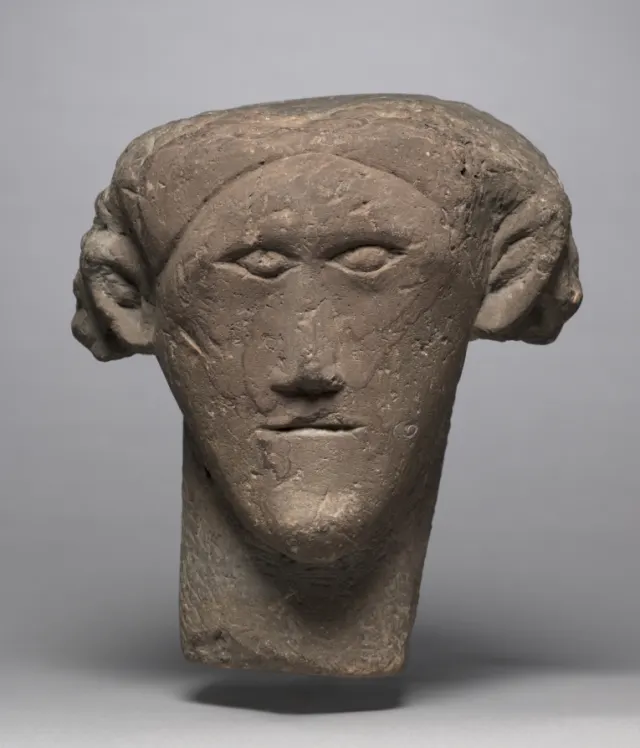
Public-domain objects from museum collections. Select one to see it at the museum.


How we know
Outsiders with agendas
Almost every early account comes from Greeks and Romans: Posidonius, Caesar, Diodorus, Lucan, Pliny and Tacitus. Some never met a druid and relied on hearsay, and Caesar wrote as a conqueror with reasons to justify his war. Irish and Welsh literature, by contrast, is rich but late, written by monks in countries already Christian, and its druids often follow biblical models of wicked magicians.[75–76]
Stones, inscriptions and images
Most inscriptions and carvings of gods date from Roman rule and borrow Roman forms and names: a god appears as 'Mercury' or 'Mars' with a Celtic epithet, so the original deity is often unclear. From before Rome, images are few and no written myths survive to explain them. Where insular literature and continental monuments agree, centuries and great distances still separate them.[77]
Lindow Man and the sacrifice debate
Lindow Man, found in a Cheshire peat bog in 1984, had blows to the head, a cord around his neck and a broken neck; radiocarbon places his death between about 2 BCE and 119 CE. Some archaeologists see a ritual sacrifice, but the British Museum notes he may have been murdered or executed, and his injuries are disputed. Irish bog bodies of the same era are read as possible kingship sacrifices.[78–80]
Common misconceptions
Myth The druids built Stonehenge.
Fact Stonehenge was begun around 3000 BCE and its stones raised around 2500 BCE, long before druids are recorded. The idea came from 17th- and 18th-century antiquarians such as John Aubrey and William Stukeley, and was strengthened by druid orders gathering there.[81]
Myth The Celts shared one pantheon, like the Greek Olympians.
Fact There was no single Celtic pantheon. Most divine names are local, Irish literary gods cannot simply be matched with Gaulish inscriptions, and scholars now doubt that all Celtic speakers shared one culture. A few deities, such as Lugus and Epona, were widely known.[82]
Myth Modern Druids preserve the secret teachings of the ancient druids.
Fact The ancient druids left no writings, and their teaching was lost. Much of what passed for druid lore in the 18th and 19th centuries was composed by Iolo Morganwg and other revivalists; historians see modern Druidry as a modern creation inspired by the past.[83]
Glossary
- Druid
- A member of the priestly and learned class of Iron Age Gaul, Britain and Ireland, known mainly from hostile classical writers and later Irish texts.[84]
- Filid · filid (sing. fili)
- Early Irish hereditary learned poets, the counterparts of the Gaulish seers (vates), who kept traditional lore well into the Christian period.[85]
- Nemeton
- A Gaulish word apparently meaning sacred grove or sanctuary, found in place-names from Britain to Galatia.[86]
- Interpretatio romana
- The Roman habit of naming foreign gods after Roman ones, as when Caesar calls the Gauls' chief god Mercury.[87]
- Tuatha Dé Danann
- 'People of the goddess Danu': the divine race of Irish medieval literature, presented as early inhabitants of Ireland who withdrew into the hills.[88]
- Síd · síd (pl. síde)
- In Irish tradition, an Otherworld mound where the old gods lived; some were far older monuments, such as Neolithic Newgrange.[89]
- Votive deposit
- Objects given to gods by placing them in water, pits or the ground, often deliberately damaged so they could not be used again.[90]
- Gorsedd · Gorsedd y Beirdd
- The 'assembly of the bards' devised by Iolo Morganwg in 1792 and later made part of Welsh eisteddfodau.[91]
Sources
Each statement above was checked against published sources; the verdict says whether it stood as written, was corrected or was hedged.
- HedgedJ. Joy; Britannica, druid; Britannica, St. Patrick; D. Ó Cróinín, Religion: The Coming of Christianity, Encyclopedia of Irish History and Culture.
- VerifiedBritannica, Celtic religion; P. Mac Cana, Celtic Religion: An Overview, Encyclopedia of Religion.
- VerifiedBritannica, druid; Britannica, Celtic religion; Oxford Reference, religion, Celtic.
- VerifiedBritannica, Celtic religion: The Celtic gods, read with the following sections; P. Mac Cana, Celtic Religion: An Overview, Encyclopedia of Religion; R. Hutton; Oxford Reference, Epona.
- VerifiedBritannica, Celtic religion: The Celtic gods, read with the following sections; Oxford Reference, religion, Celtic; Diodorus Siculus 5.29 and 5.31.
- VerifiedBritannica, Celtic religion: The Celtic gods, read with the following sections; J. Joy; A. Allély; Oxford Reference, J. MacKillop, nemeton.
- VerifiedLugdunum – musée et théâtres romains; Département de l'Ain, Patrimoines: Calendrier et dieu gaulois de Coligny; Oxford Reference, J. MacKillop, Samain; Britannica, Celtic religion: The Celtic gods, read with the following sections.
- VerifiedBritannica, druid; A. Stout, review of R. Hutton, Blood and Mistletoe.
- VerifiedBritannica, Celtic religion; P. Mac Cana, Celtic Religion: An Overview, Encyclopedia of Religion.
- VerifiedBritannica, Celtic religion: The Celtic gods, read with the following sections; P. Mac Cana, Celtic Religion: An Overview, Encyclopedia of Religion; R. Hutton; Oxford Reference, religion, Celtic.
- VerifiedOxford Reference, religion, Celtic; Britannica, Celtic religion; J. Joy.
- HedgedBritannica, druid; Oxford Reference, G. D. Woolf, religion, Celtic; I. Armit, Headhunting and the Body in Iron Age Europe.
- VerifiedOxford Reference, La Tène; G. Kaenel, Tène, La.
- VerifiedP. Mac Cana, Celtic Religion: An Overview, Encyclopedia of Religion; Britannica, Celtic religion.
- VerifiedBritannica, Celtic religion: The Celtic gods, read with the following sections; J. Joy.
- VerifiedA. Allély; J.-L. Brunaux, Gallic Blood Rites, Archaeology 54.2; J.-L. Brunaux, P. Méniel & A. Rapin, Un sanctuaire gaulois à Gournay-sur-Aronde.
- VerifiedA. Allély; J.-L. Brunaux, P. Méniel & A. Rapin, Un sanctuaire gaulois à Gournay-sur-Aronde.
- HedgedA. Allély; Clauzel et al., Geographic origin and social status of the Gallic warriors from Ribemont-sur-Ancre, International Journal of Osteoarchaeolog; J.-L. Brunaux, Gallic Blood Rites, Archaeology 54.2.
- VerifiedJ. Joy; coflein.gov.uk; Amgueddfa Cymru – Museum Wales, Collections Online, Iron Age iron sword from Llyn Cerrig Bach.
- VerifiedBritannica, Celtic religion; P. Mac Cana, Celtic Religion: An Overview, Encyclopedia of Religion; Britannica, Celtic religion: The Celtic gods, read with the following sections; Oxford Reference, Druid.
- VerifiedOxford Reference, interpretatio Romana; Britannica, Celtic religion: The Celtic gods, read with the following sections; Roman Baths; Oxford Reference, religion, Celtic.
- HedgedBritannica, druid; Tacitus, Annals 14.29-30; Britannica, Celtic religion: The Celtic gods, read with the following sections; Oxford Reference, religion, Celtic.
- VerifiedRoman Baths; UNESCO, Bath's Roman curse tablets added to UNESCO Memory of the World register; A. Allély.
- VerifiedBritannica, druid; P. Mac Cana, Celtic Religion: An Overview, Encyclopedia of Religion.
- VerifiedBritannica, St. Patrick; D. Ó Cróinín, Religion: The Coming of Christianity, Encyclopedia of Irish History and Culture.
- VerifiedBritannica, Celtic religion: The Celtic gods, read with the following sections; P. Mac Cana, Celtic Religion: An Overview, Encyclopedia of Religion; Oxford Reference, religion, Celtic.
- HedgedBritannica, Celtic religion; P. Mac Cana, Celtic Religion: An Overview, Encyclopedia of Religion; Britannica, Tuatha Dé Danann; Britannica, Celtic religion: The Celtic gods, read with the following sections.
- VerifiedBritannica, druid; English Heritage, Set in Stone?.
- VerifiedOxford Reference, J. MacKillop, Iolo Morganwg; G. J. Williams; A. Stout, review of R. Hutton, Blood and Mistletoe; Britannica, druid.
- VerifiedBritannica, druid; A. Stout, review of R. Hutton, Blood and Mistletoe.
- CorrectedBritannica, Celtic religion: The Celtic gods, read with the following sections; P. Mac Cana, Celtic Religion: An Overview, Encyclopedia of Religion; R. Hutton.
- HedgedBritannica, Celtic religion: The Celtic gods, read with the following sections; Oxford Reference, religion, Celtic; Oxford Reference, Lugus.
- HedgedBritannica, Celtic religion: The Celtic gods, read with the following sections; Oxford Reference, Teutates.
- VerifiedBritannica, Celtic religion: The Celtic gods, read with the following sections; P. Mac Cana, Celtic Religion: An Overview, Encyclopedia of Religion; Oxford Reference, religion, Celtic.
- VerifiedP. Mac Cana, Celtic Religion: An Overview, Encyclopedia of Religion; Britannica, Tuatha Dé Danann; Britannica, Celtic religion: The Celtic gods, read with the following sections.
- VerifiedCaesar, Gallic War 6.13-18; Britannica, Celtic religion: The Celtic gods, read with the following sections.
- VerifiedBritannica, Celtic religion: The Celtic gods, read with the following sections; Oxford Reference, J. MacKillop, Sulis; Roman Baths.
- VerifiedOxford Reference, religion, Celtic; Britannica, Celtic religion: The Celtic gods, read with the following sections.
- HedgedP. Mac Cana, Celtic Religion: An Overview, Encyclopedia of Religion; Oxford Reference, religion, Celtic; National Museum of Ireland, Kingship and Sacrifice.
- VerifiedDiodorus Siculus 5.29; Strabo, Geography 4.4.5; I. Armit, Headhunting and the Body in Iron Age Europe.
- VerifiedS. Ghezal, E. Ciesielski, B. Girard, A. Creuzieux, P. Gosnell, C. Mathe, C. Vieillescazes & R. Roure; cnrs.fr, Gauls embalmed heads their defeated enemies.
- VerifiedLarousse, Encyclopédie, Roquepertuse; Oxford Reference, T. Darvill, Entremont.
- HedgedI. Armit, Headhunting and the Body in Iron Age Europe; Oxford Reference, G. D. Woolf, religion, Celtic.
- VerifiedA. Allély; J.-L. Brunaux, P. Méniel & A. Rapin, Un sanctuaire gaulois à Gournay-sur-Aronde.
- VerifiedCaesar, Gallic War 6.13-18; Britannica, Celtic religion: The Celtic gods, read with the following sections; Britannica, druid.
- HedgedBritannica, druid; Oxford Reference, Druid; J. Joy; Oxford Reference, T. Darvill, Lindow Man.
- VerifiedCaesar, Gallic War 6.13-18; Britannica, druid; Britannica, Celtic religion: The Celtic gods, read with the following sections.
- VerifiedBritannica, druid; Oxford Reference, Druid.
- VerifiedBritannica, druid; J. Joy.
- VerifiedDiodorus Siculus 5.29 and 5.31; Britannica, druid.
- VerifiedBritannica, Celtic religion: The Celtic gods, read with the following sections; Oxford Reference, religion, Celtic; Diodorus Siculus 5.29 and 5.31.
- VerifiedJ. Joy; coflein.gov.uk.
- VerifiedRoman Baths; UNESCO, Bath's Roman curse tablets added to UNESCO Memory of the World register.
- HedgedBritannica, Samhain; Oxford Reference, J. MacKillop, Samain; P. Mac Cana, Celtic Religion: An Overview, Encyclopedia of Religion.
- VerifiedBritannica, Imbolc; Britannica, Celtic religion: The Celtic gods, read with the following sections; Oxford Reference, J. MacKillop, Brigit.
- VerifiedBritannica, Beltane; Oxford Reference, Beltane.
- CorrectedOxford Reference, Lughnasa; Britannica, Celtic religion: The Celtic gods, read with the following sections; Oxford Reference, J. MacKillop, Lug Lámfhota.
- VerifiedBritannica, Celtic religion: The Celtic gods, read with the following sections; P. Mac Cana, Celtic Religion: An Overview, Encyclopedia of Religion; Oxford Reference, J. MacKillop, Lug Lámfhota; Oxford Reference, Lugus.
- VerifiedBritannica, Celtic religion: The Celtic gods, read with the following sections; French Ministry of Culture; Oxford Reference, J. MacKillop, Cernunnos.
- HedgedNational Museum of Denmark, The pictures on the Gundestrup Cauldron; Britannica, Celtic religion: The Celtic gods, read with the following sections; Britannica, Cernunnos.
- VerifiedBritannica, Epona; P. Mac Cana, Celtic Religion: An Overview, Encyclopedia of Religion; Britannica, Celtic religion: The Celtic gods, read in full with the following sections; Oxford Reference, Epona (supporting).
- VerifiedOxford Reference, J. MacKillop, Sulis; Britannica, Celtic religion: The Celtic gods, read with the following sections; City of Bath World Heritage Site; Roman Baths.
- VerifiedBritannica, Taranis; Oxford Reference, Taranis; Oxford Reference, J. MacKillop, Samain.
- VerifiedOxford Reference, J. MacKillop, Matres; Britannica, Celtic religion: The Celtic gods, read with the following sections; P. Mac Cana, Celtic Religion: An Overview, Encyclopedia of Religion.
- VerifiedBritannica, Dagda; Oxford Reference, Dagda; Britannica, Celtic religion: The Celtic gods, read with the following sections.
- VerifiedBritannica, Brigit; Oxford Reference, J. MacKillop, Brigit; Britannica, Celtic religion: The Celtic gods, read with the following sections.
- VerifiedCaesar, Gallic War 6.13-18; Britannica, druid; Oxford Reference, Druid.
- VerifiedLugdunum – musée et théâtres romains; Département de l'Ain, Patrimoines: Calendrier et dieu gaulois de Coligny; Oxford Reference, J. MacKillop, Coligny; P. Mac Cana, Celtic Religion: An Overview, Encyclopedia of Religion.
- VerifiedOxford Reference, Cath Maige Tuired; Britannica, Celtic religion: The Celtic gods, read with the following sections; Oxford Reference, J. MacKillop, Lug Lámfhota.
- VerifiedBritannica, Mabinogion; Oxford Reference, Mabinogi; Britannica, Celtic religion: The Celtic gods, read with the following sections.
- VerifiedCity of Bath World Heritage Site; Roman Baths; UNESCO, Bath's Roman curse tablets added to UNESCO Memory of the World register.
- CorrectedA. Allély; J.-L. Brunaux, P. Méniel & A. Rapin, Un sanctuaire gaulois à Gournay-sur-Aronde.
- CorrectedG. Kaenel, Tène, La; Oxford Reference, La Tène.
- Verifiedcoflein.gov.uk; Oxford Reference, J. MacKillop, Llyn Cerrig Bach; Amgueddfa Cymru – Museum Wales, Collections Online, Iron Age iron sword from Llyn Cerrig Bach.
- VerifiedBritannica, druid; Britannica, Celtic religion; Tacitus, Annals 14.29-30; Diodorus Siculus 5.29 and 5.31.
- VerifiedBritannica, Celtic religion; Britannica, druid; P. Mac Cana, Celtic Religion: An Overview, Encyclopedia of Religion.
- VerifiedBritannica, Celtic religion; Oxford Reference, religion, Celtic; Oxford Reference, interpretatio Romana; French Ministry of Culture.
- VerifiedBritish Museum, Lindow Man; Oxford Reference, T. Darvill, Lindow Man; J. Joy.
- HedgedBritish Museum, Lindow Man; Oxford Reference, T. Darvill, Lindow Man; J. Joy.
- HedgedNational Museum of Ireland, Kingship and Sacrifice; J. A. Lobell & S. S. Patel, Clonycavan and Old Croghan Men, Archaeology.
- VerifiedEnglish Heritage, History of Stonehenge; English Heritage, Set in Stone?; Britannica, druid.
- VerifiedBritannica, Celtic religion: The Celtic gods, read with the following sections; Oxford Reference, G. D. Woolf, religion, Celtic; I. Armit, Headhunting and the Body in Iron Age Europe; Oxford Reference, Epona.
- VerifiedBritannica, druid; Oxford Reference, J. MacKillop, Iolo Morganwg; A. Stout, review of R. Hutton, Blood and Mistletoe.
- VerifiedBritannica, druid; Oxford Reference, Druid.
- VerifiedBritannica, Celtic religion: The Celtic gods, read with the following sections; P. Mac Cana, Celtic Religion: An Overview, Encyclopedia of Religion; Oxford Reference, religion, Celtic.
- VerifiedOxford Reference, J. MacKillop, nemeton; P. Mac Cana, Celtic Religion: An Overview, Encyclopedia of Religion.
- VerifiedOxford Reference, interpretatio Romana; Caesar, Gallic War 6.13-18; Britannica, Celtic religion: The Celtic gods, read with the following sections.
- VerifiedBritannica, Tuatha Dé Danann; Oxford Reference, Cath Maige Tuired.
- VerifiedP. Mac Cana, Celtic Religion: An Overview, Encyclopedia of Religion; Britannica, Celtic religion: The Celtic gods, read with the following sections.
- VerifiedJ. Joy; Amgueddfa Cymru – Museum Wales, Collections Online, Iron Age iron sword from Llyn Cerrig Bach.
- VerifiedOxford Reference, J. MacKillop, Iolo Morganwg; G. J. Williams.
Last fact-checked 3 October 2026.