
Overview
Canaanite religion is the term for the related religious traditions of the ancient Levant, the coastal strip of Syria and Palestine, during the second millennium BCE. Most of what is known about its pantheon and myths comes from clay tablets found at Ugarit, a city on the Syrian coast, rather than from any single Canaanite scripture. Biblical writers repeatedly condemned the gods and practices of Canaan as a threat to Israelite worship of YHWH alone.[1, 5–7]
History
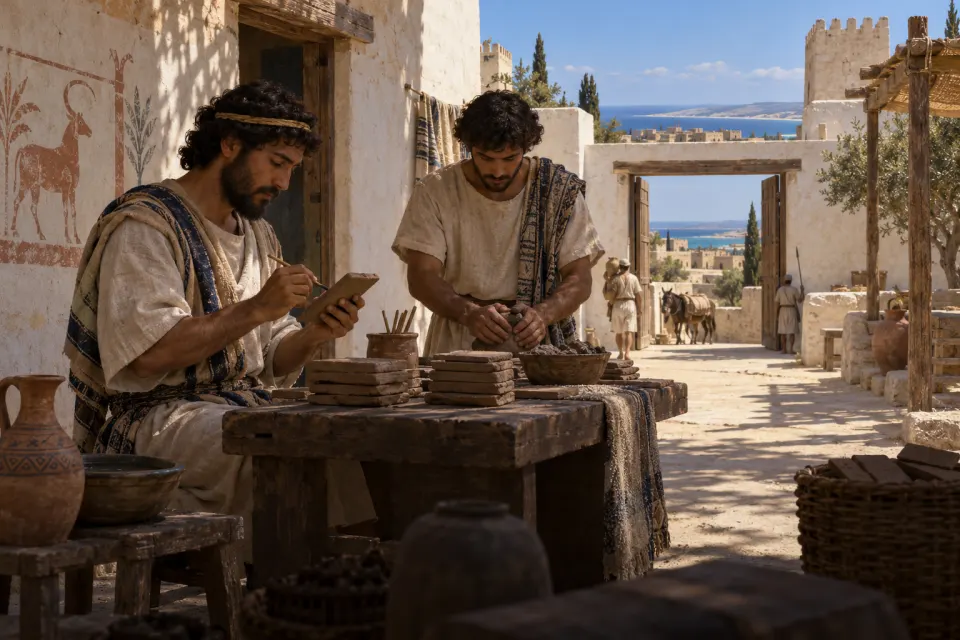
Ugarit and its tablets c. 1500–1200 BCE; excavated from 1929
Ugarit, on the Syrian coast, reached its most prosperous and best-documented period in the Late Bronze Age, shortly before its destruction. A Syrian farmer's accidental discovery of a tomb in 1928 led to systematic excavation from 1929 under the French archaeologist Claude F. A. Schaeffer. The excavators uncovered royal palaces, temples and a high priest's library of clay tablets written in a newly identified alphabetic cuneiform script, alongside texts in Akkadian, Hurrian, Egyptian and other languages used by the city's cosmopolitan scribes.[3, 8–11]
Destruction, and an afterlife in the Bible c. 1200 BCE onward
Ugarit was sacked and burned, probably by the Sea Peoples, around 1200 BCE. Ugarit itself is never mentioned in the Hebrew Bible, but its tablets opened a direct window onto the Canaanite mythology and language behind much of the Bible's own poetry.[12–13]
Key moments
- c. 1300 BCEMyths of Baal at Ugarit · Ras Shamra, Syria
Beliefs
El · ʾIlu
god
El stood at the head of the Ugaritic pantheon as father of the gods.[14]
Baal · Baʿlu
lord
Myth tells how Baal defeated the sea-god Yamm, but was later overcome by Mot, the god of death: even a great god could not escape death.[4]
Asherah · Athirat
Asherah, called Athirat in the Ugaritic texts, was one of the pantheon's chief goddesses.[15]
Practice
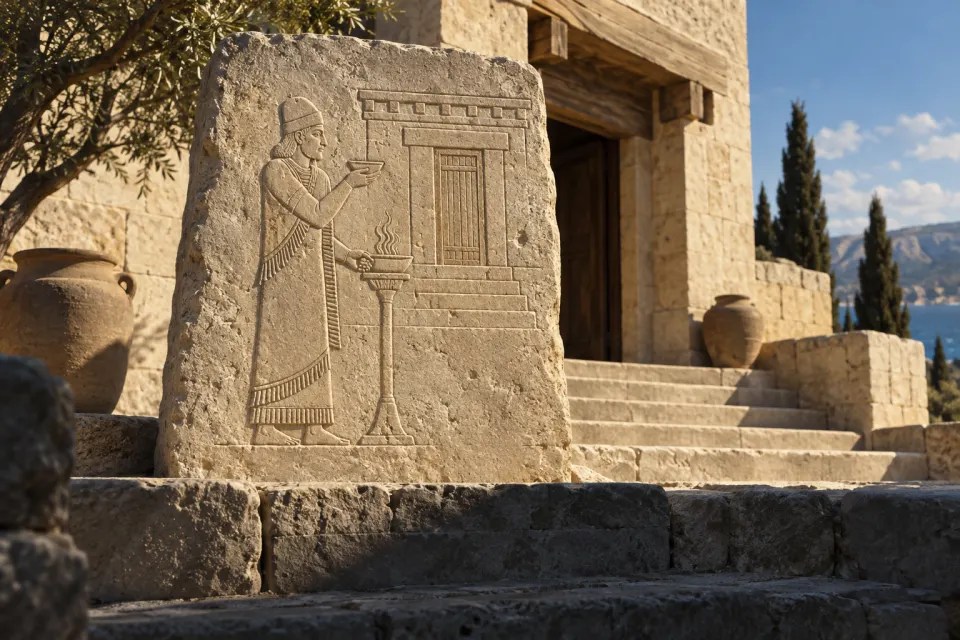
Temple priesthood
Ugarit's temples were staffed by priests called khnm, a word related to the Hebrew term for priest, kohen.[16]
Scripture
The Baal Cycle
A set of mythological tablets from Ugarit recounting Baal's conflicts with Yamm, the sea, and Mot, death.[4]
Places
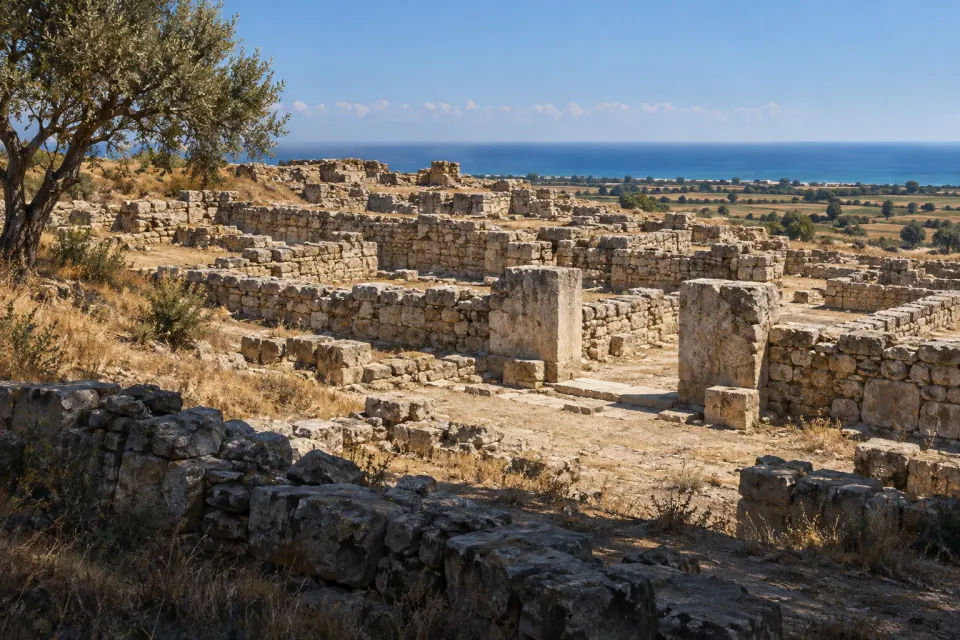
Ugarit (Ras Shamra)
SYR
The ruined city of Ugarit, at the mound of Ras Shamra on Syria's Mediterranean coast, is the single most important source for Canaanite religion. Its excavated palaces and temples yielded the Baal Cycle tablets before the city's destruction around 1200 BCE.[4, 6, 9, 12]
Art & objects
Public-domain objects from museum collections. Select one to see it at the museum.
 Shekel (Coin) Depicting the God MelkarthTyre, 31-30 BCE
 Stater: Baal (obverse); Head of Pharnabazos (reverse)Iran, Achaemenid (550–330 BCE), minted at Tarsos (Kilikia), 379–374 BCE
 Dish with Tambourine PlayersPhoenicia, 700–600 BCE
 Decorative Plaque: Ram-Headed Sphinxes Flanking a Sacred TreePhoenicia, Iraq, Nimrud, 900–800 BCE
 Smiting god figureCanaanite, Late Bronze Age, ca. 1500 BCE
 Enthroned deityCanaanite, Late Bronze Age, ca. 14th–13th century BCE
 FigurineCanaanite, Late Bronze Age, ca. 1500 BCE
 Enthroned deityCanaanite, Late Bronze Age, ca. 14th–13th century BCE
 Goddess wearing a headdress surmounted by a birdCanaanite, Late Bronze Age, ca. late 2nd millennium BCE
 Smiting god, wearing an Egyptian atef crownCanaanite, Late Bronze Age, ca. 15th–14th century BCE
 Smiting weather god or warrior with horned headgearCanaanite, Late Bronze Age, ca. 14th–13th century BCE
 Head of a bullCanaanite, Early Bronze Age, ca. late 3rd millennium BCE
How we know
How we know
Almost everything known about Canaanite religion in detail comes from the city of Ugarit, whose archives were unearthed from 1929 onward.[3, 6]
Common misconceptions
Myth "Baal" was the personal name of a single god worshipped everywhere in Canaan.
Fact Baal (Baʿlu) literally means "lord" or "owner" and functioned partly as a title, though the storm-god of the Ugaritic myths was its most famous bearer.[17]
Glossary
- Baal · Baʿlu
- "Lord"; title and name of the Canaanite storm-and-fertility god, hero of the Baal Cycle.[4, 17]
- El · ʾIlu
- "God"; father of the gods and head of the Ugaritic pantheon.[14]
- Asherah · Athirat
- One of the Ugaritic pantheon's chief goddesses, called Athirat at Ugarit.[15]
- Ugarit · Ras Shamra
- A Bronze Age city on the Syrian coast whose archives, excavated from 1929, are the chief source for Canaanite mythology.[3, 6]
Sources
Each statement above was checked against published sources; the verdict says whether it stood as written, was corrected or was hedged.
- VerifiedBritannica, Ugarit; Encyclopedia.com.
- VerifiedBritannica, Canaanite religion; Encyclopedia.com.
- VerifiedBritannica, Ugarit; Encyclopedia.com.
- VerifiedEncyclopedia.com; Britannica, Ugarit.
- VerifiedEncyclopedia.com; Britannica, Canaanite religion.
- VerifiedEncyclopedia.com; Britannica, Ugarit.
- VerifiedEncyclopedia.com; Britannica, Canaanite religion.
- VerifiedBritannica, Ugarit; Encyclopedia.com.
- VerifiedBritannica, Ugarit; Encyclopedia.com.
- VerifiedBritannica, Ugarit; Encyclopedia.com.
- VerifiedEncyclopedia.com; Britannica, Ugarit.
- VerifiedBritannica, Ugarit; Encyclopedia.com.
- VerifiedEncyclopedia.com; Britannica, Ugarit.
- VerifiedEncyclopedia.com; Britannica, Judaism.
- VerifiedEncyclopedia.com; Britannica, Ugarit.
- VerifiedEncyclopedia.com; Britannica, Canaanite religion.
- VerifiedEncyclopedia.com; Britannica, Marduk.
Last fact-checked 5 October 2026.